This winter a bare stubble field will become a rare sight in the Irish countryside, as autumn has seen a massive expansion in the number of farmers establishing catch crops as a measure to improve water quality leaving their farms.
BY LANE GILES
This year, around 1,300 farmers in the south and east of the country joined the Farming for Water European Innovation program (EIP) catch crop pilot.
ADVERTISEMENT
This Farming for Water option was made available to farmers in areas that are vulnerable to nitrate losses to water; this effectively included all tillage farms in West Cork, as all areas (apart from lands draining towards Bantry Bay) are considered to be risky areas for nitrate loss.
Catch crops, (better known as cover crops) are grown on bare land in between cereal crops.
They are then incorporated back into the soil ahead of sowing the next cereal crop.
Improving the water quality in our rivers and estuaries is one of the many benefits they provide, and catch crop growing is one of a number of measures being supported by the Farming for Water EIP.
Farming for Water is an initiative lead by the Local Authorities Waters Programme in partnership with Teagasc and Dairy industry Ireland, and funded by the European Commission together with the both the Department of Agriculture and of Local Government.
As well as improving our riverine habitats, it is intended to also benefit the marine ecosystems of our transitional coastal waters.
Excess nutrients (including nitrogen and phosphorus) cause enrichment of waters, which in turn fuels the growth of plants and algae in waters which absorb the oxygen.
This oxygen is needed by sensitive invertebrate insects who live in the water and form the bottom of the food chain, and so keeping these nutrient levels low in waters allows a balanced healthy diversity of life to reestablish throughout these natural ecosystems.
Arigideen River
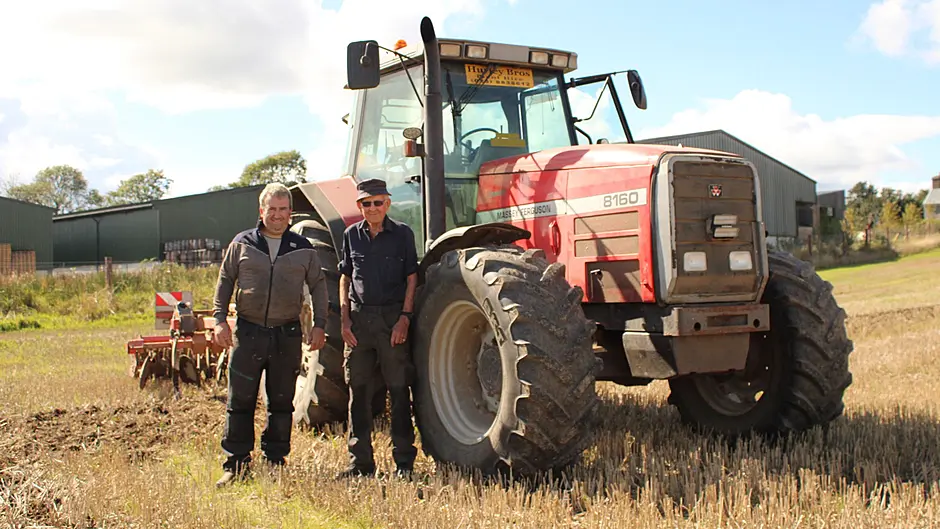
The Hurley family have been farming south of the Argideen river, west of Lyre, Clonakilty for generations.
Since 2018, Dan and Alan have been producing malting barley for the Clonakilty Atlantic distillery.
The whiskey, sold internationally, is made from malting barley, grown locally by seven farmers including the Hurleys, and this process is essential, says Alan: ‘It’s crucially important that Irish whiskey is made from Irish grain’.
Cover crops are also promoted by the distillery on land growing malting barley, as a measure to help meet their sustainability standards.
The Hurleys grow their cereals using the minimum till method and have been doing so for over 20 years.
Familiar with this approach, they were quick to embrace the Farming for Water EIP cover crop option, which specifies the catch crop to be established in this way.
‘We are interested in seeing how the cover crops will work following the min till system’, says Alan, who is aware of the benefits of diversity on their farm.
This year they followed both winter and spring cereals with brassicas for cover crops. As no brassicas are currently grown, it was an ideal way to increase diversity in their rotation.
The fact that 2025 was an early harvest allowed for early establishment of the cover crops, something which is also key to their success.
Alan is hopeful that his soil will benefit by having a growing cover crop over winter and that the nutrients that would previously have been lost, will be captured by the cover crop.
On a national scale the estuarine habitat along the south and east coasts have been impacted from nutrient losses as a result of modern agricultural activities in recent decades.
This uptake of the Farming for Water EIP will help to address the losses of leftover nutrients as well as naturally occurring mineralised nitrogen from bare stubble fields, down into ground water which eventually arrives to the estuaries via streams and rivers.
Other benefits to water include stabilising the soil in the fields instead of losing it to the riverbeds.
These benefits to water make cover crops an essential component of our plan to improve water quality nationally.
Lane Giles is Teagasc advisor, with the Agricultural Sustainability Support and Advisory Programme (ASSAP), Clonakilty.