PLANS to reopen a disused quarry near Dunmanway, which operated for years without a licence, will be decided before the end of November.
Murray Brothers Tarmacadam Ltd is seeking permission to extract up to 3.7m tonnes of quartzitic sandstone and siltstone over a 20-year period on 10.4 hectares of the 25-hectare Ardcahan quarry.
If the application is approved the quarry would supply the company’s adjoining Tarmacadam plant.
ADVERTISEMENT
The current application includes an Environmental Impact Assessment Report (EIAR) and a Natura Impact Statement (NIS).
An Coimisiún Pleanála will decide the case by November 23.
The site was used as a quarry from 1963 and was previously operated by Mid-Cork Quarries Ltd under a Cork County Council licence until 1996.
Murray Brothers then operated the Ardcahan quarry without a licence for nine years, from 2005 until 2014.
Operators were required to register quarries under planning rules introduced in 2005, which the company failed to do which meant the quarry became unauthorised.
Cork County Council later issued an enforcement notice to stop quarrying within six months.
It ceased operations in October 2014, the local authority confirmed the notice had been complied with and closed the case.
In its assessment of the current application to An Coimisiún Pleanála, Cork County Council said the industry supports jobs and supplies materials for construction.
The council’s ecology officer warned that the proposed expansion could remove about five hectares of natural and semi-natural habitat.
More detail was needed from Murray Brothers on how damaged habitats would be restored and further losses offset, said the officer.
The area includes marsh, woodland, scrub and heath.
Surveys recorded 28 breeding bird species, including peregrine falcons, along with frogs, newts, badgers, bats, pine martens, foxes, stoats and red squirrels.
Freshwater pearl mussels are found within 300m of the quarry.
The Caha River runs near the quarry and flows into the Bandon River.
The council said proposed drainage, environmental controls and monitoring could protect local waterways and groundwater, provided mitigation measures are properly carried out.
A local couple objecting to the application said the quarrying had permanently destroyed two protected habitats , pointing out that assessing the quarry application on its own without the true effect of the operation in conjunction with the neighbouring Tarmacadam plant was “impermissible project-splitting”, under EU law.
The company expects to extract 175,000 to 200,000 tonnes of aggregate per year, with a maximum of 225,000 tonnes.
The council’s area engineer estimated that 3.7m tonnes would amount to about 185,000 lorry loads, based on a 15-year operating period.
The engineer called for a wheel-wash to keep mud off public roads, for limits on annual output to manage traffic.
He also calculated a €386,400 special contribution to the council towards resurfacing part of the local road and its junction with the R587.
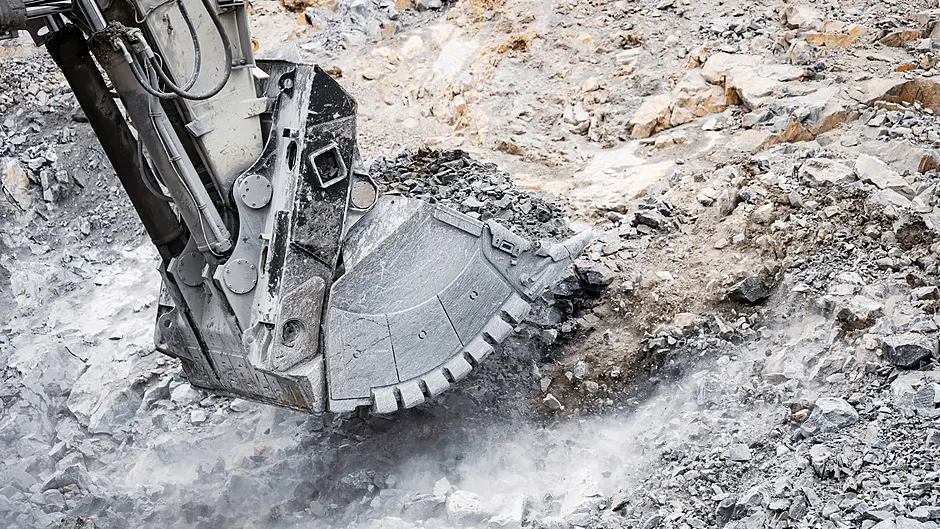
The quarry operation would involve drilling exposed rock and blasting up to 12 times a year.
The council said significant noise or vibration impacts were not expected, but recommended conditions to manage the operation.
Blasting would be limited to 10am to 6pm, Monday to Friday, with residents within 500m notified in advance.
A council engineer said she had no major concerns in principle, describing the proposal as similar to the quarry’s previous operation.
She said the established site was well screened and had a relatively low visual impact.
Planning consultants McCutcheon Halley argue that reopening the existing site would be preferable to developing a new quarry.
“The resumption of quarrying at this site, which has already been extensively worked and would feed the existing macadam plant, is a significantly more sustainable and environmentally sensitive proposition than quarrying on a greenfield site,” they said.