
I WAS recently amazed, while scrolling through social media, to see a starling mimicking human speech. Looking further on YouTube, I discovered that this is not particularly unusual. I knew starlings were excellent mimics and lifelong song learners, often copying the calls of other birds and expanding their vocal repertoire as they age. However, this parrot-like behaviour, including apparently speaking in sentences, was new to me. In North America, starlings are non-native and classed as an invasive species. When injured or too young to survive in the wild, some are kept in captivity rather than being released. This appears to be where they have learnt to copy human speech in the videos I watched.
Here in Ireland, starlings are native, and it’s not appropriate to take one from the wild and keep them. However, it is still marvellous to see just how intelligent and entertaining these birds are. They are wonderful mimics, imitating the calls of other birds, as well as car alarms, barking dogs, screaming foxes, and chainsaws, to name just a few of their specialities. In my own garden, I have often heard a bird call and looked up expecting to see a buzzard, only to find a starling perched on the electric wire above me, cheekily copying the larger bird.
ADVERTISEMENT
Shiny stars
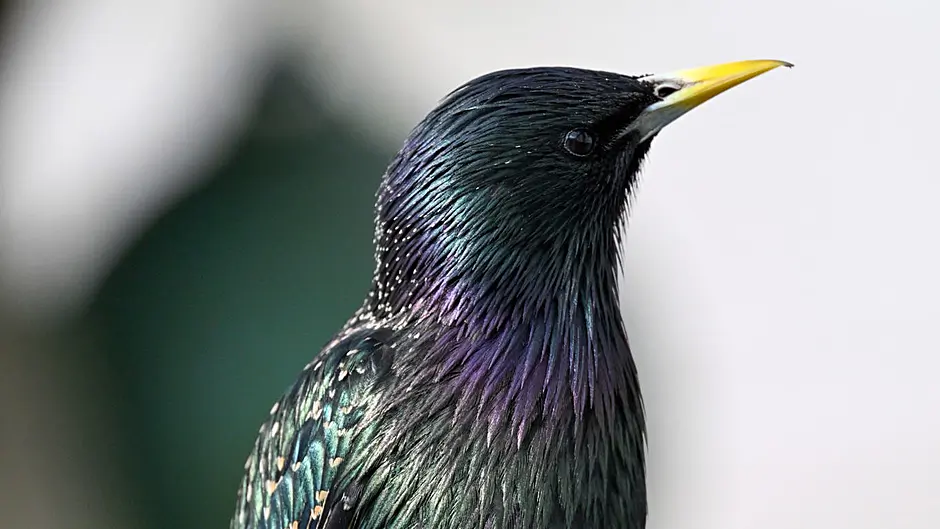
There are many species of starling worldwide, but our resident species, present throughout the year, is the common starling (Sturnus vulgaris), usually simply referred to as the starling. They are one of Ireland’s top 20 garden birds. In certain lights, starlings are stunningly attractive, with iridescent green plumage across their necks, breasts, and backs. Their black wings can also show a green or purple sheen, while white speckles cover their bodies, becoming particularly prominent in winter.
The common starling is native to Europe, North Africa, and parts of Asia, but has been introduced extensively around the world. They are considered non-native in North and South America, Australia, and New Zealand. According to a popular story, European starlings were introduced to the United States as part of an effort to bring all the birds mentioned in Shakespeare’s works to North America. Starlings are highly adaptable and can be found in a wide range of lowland habitats, including woodland, farmland, towns, and cities.
Feeding frenzy
Not only are they adaptable in their choice of habitat, but they also have a varied omnivorous diet. They feed on both animal and plant material, including insects, worms, snails, spiders, fruits, berries, and seeds.
In our garden, we often see starlings visiting the bird feeders. They are greedy guests, sometimes intimidating other birds, and thoroughly enjoy our high-energy offerings, such as fat balls and suet pellets. BirdWatch Ireland recently advised against feeding garden birds during the summer months, but now that colder weather has arrived, this advice has been lifted. It is still very important, however, to follow their guidance on feeding garden birds safely during winter.
Cavity nesting
Starlings do not weave or build their own nests. Instead, they use existing cavities in trees, rocks, and the eaves or roofs of houses, lining them with materials such as grasses, leaves, and moss. They typically nest between April and June and may raise one or two broods each year, with around four to six chicks
in each.
One important dietary requirement is that young starling chicks must be fed invertebrates. This makes wildlife- and pollinator-friendly gardening and land management particularly important. Encouraging native plants and avoiding pesticides helps ensure there is enough insect food for growing chicks.
Starlings live for an average of five years, although bird ringing studies have shown that some can survive for up to 22 years in the wild.
Mesmerising murmurations
In winter, our resident starlings are joined by birds arriving from northern and central Europe to enjoy our temperate climate. With these additional birds swelling their numbers, starlings put on one of nature’s most spectacular aerial displays between November and February.
As the sun sets, hundreds, and sometimes thousands, of starlings gather in vast flocks, swooping and swirling in synchrony across the sky. These mesmerising formations are known as
murmurations.
Very occasionally, and much to the excitement of birdwatchers, a different species of starling makes a visit to our shores. Rose coloured starlings (Pastor roseus) may mingle with ordinary starling flocks but are easily distinguished by their bright pink bodies. Usually found in eastern Europe and Asia, they are rare visitors to Ireland, so keep your eyes peeled for an unusually coloured
starling.
Conservation concerns
Although starlings may appear numerous when gathering in magnificent murmurations, their overall population is sadly in decline. They have an amber conservation status in Ireland, according to BirdWatch
Ireland.
In the UK, the RSPB is also concerned about their dramatic decline, reporting a 61% decrease between 1995 and 2024. They are encouraging people with gardens to avoid pesticides to protect the insects that starlings depend on for food, maintain a mixture of short and long grass to help birds spot predators such as sparrowhawks, and allow native wildflowers to grow in lawns to encourage insect life. Putting up nest boxes can also help provide suitable nesting sites.
We can all play our part in ensuring that the wonderful spectacle of starlings remains a familiar feature of our landscape.
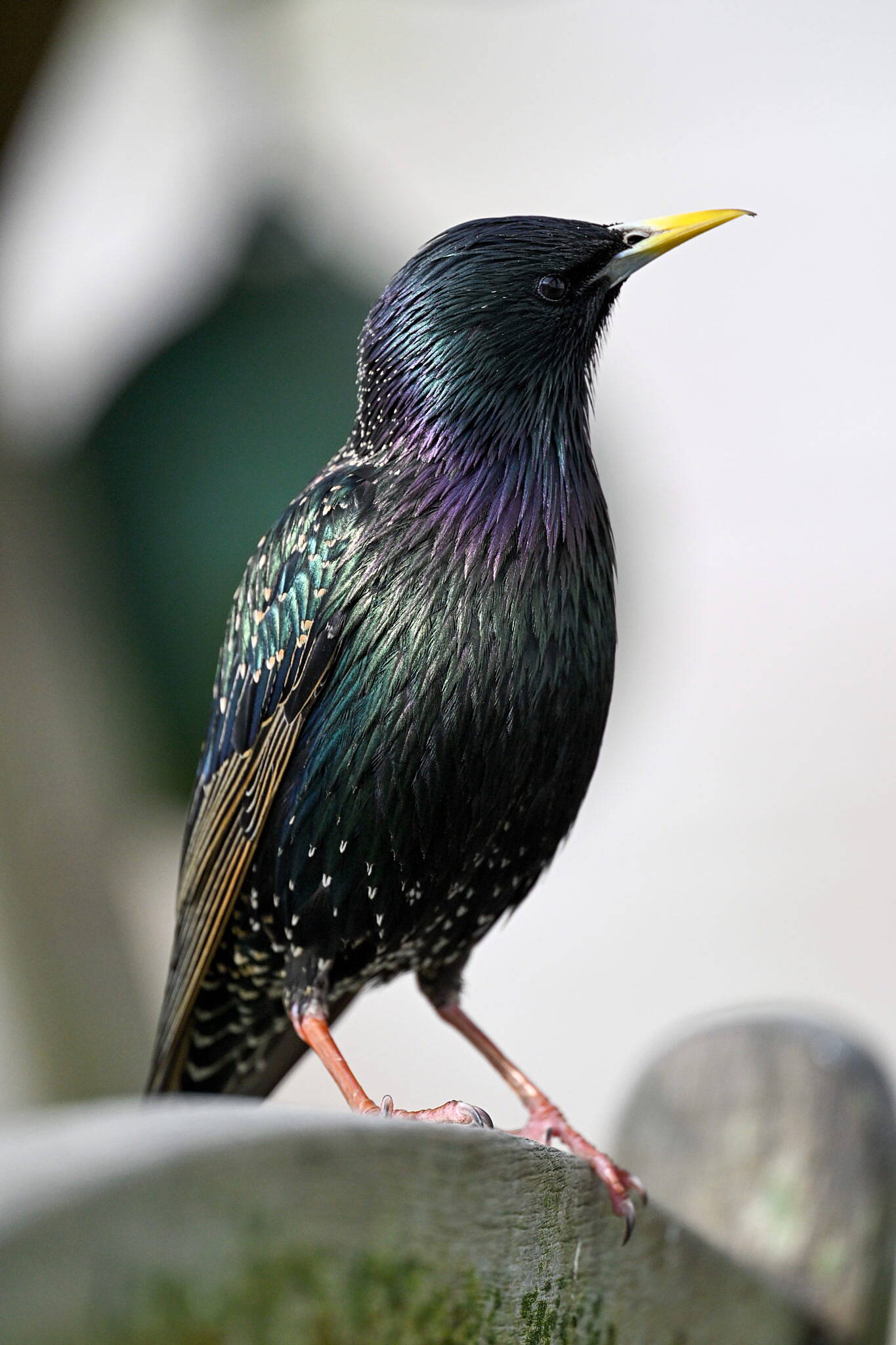 A starling showing their iridescent plumage. (Photo: Nick Haigh)