The ICMSA has released figures illustrating the financial shock that could be suffered by Cork dairy farmers through the next 12 months due to collapse in farmer milk price that began in August and is continuing – albeit at a slower pace.
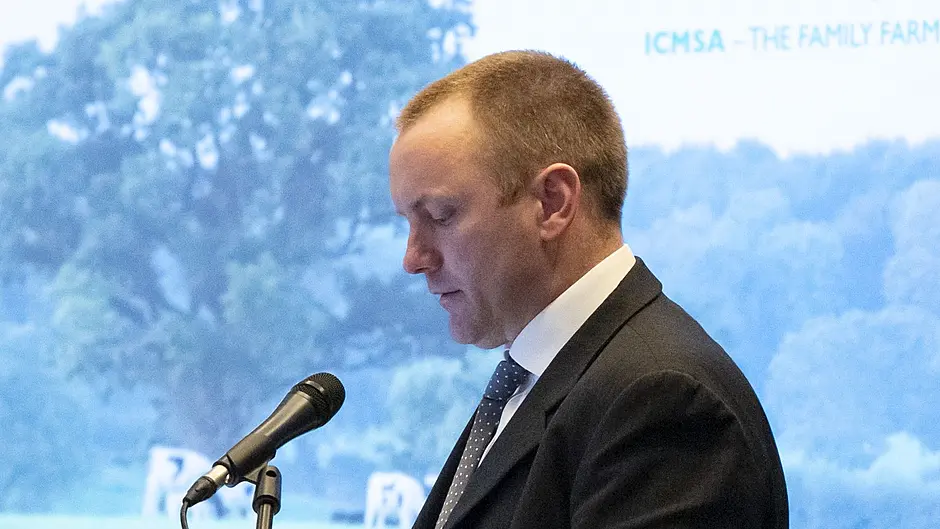
ICMSA President, Denis Drennan, said that approximately €1.3 billion will be wiped out directly in dairy farmer income with a directly resultant ‘hit’ in the order of almost €3 billion as the milk revenue went ‘out the farm gates’ and was multiplied into the wider rural communities.
ADVERTISEMENT
“Rural Ireland runs on milk. It’s the fuel; it’s the basis for prosperity, not just for the farmer-producers, but for the while host community as it goes out the farm gates and into the contractors, machinery, services, feed and all the other services and merchants supplying into it. The standard multiplier effect is 2.3 and when you apply that to the already sobering figures of €1.3 billion you begin to see the kind of economic hit that a collapse in milk price inflicts on the state as a whole – but very disproportionately on the big milk-producing counties like Cork, Tipperary, Limerick, Kerry. The kind of income ‘wipeout’ that we’re seeing on the basis of these price falls – where the price farmers are receiving is now below the costs of production – becomes disastrous in a county like Cork that produces near 25% of all the milk in the State. That means that a drop in direct dairy farmer income in just Cork of nearly €320 million with that rising to nearly €750 million out of Cork’s economy when that direct dairy multiplier of 2.3 is applied in reverse”, he said.
Over the last five years, the Irish dairy sector has seen both volume and cow numbers stabilise in comparison to the the growth phase of the previous decade, it’s now possible to see the full extent of volatility that is happening to revenues accruing to dairy farmers.
The average revenues come in at €4 billion per annum over the six years but the deviation from the mean is at €800m.
This, according to the specialist dairy farmer organisation, is an uncontrollable level of volatility in a sector that is showing such stability in production.
“Dairy farmers need to plan for their revenues to be either 20% higher or lower than the average. But even that means that in you could have a 40% swing in income over two successive years. We’re heading for 35% drop in milk income for this year compared to last. How does anyone plan or budget on the basis of that? It’s impossible”, declared the ICMSA President.
Mr Drennan said that these kinds of milk price collapses have occurred previously, most notably during the eerily similar 2016 milk price collapse and on that occasion ICMSA and the other constituent members of the European Milk Board (EMB) had lobbied for the introduction of a EU-wide Voluntary Supply Reduction Scheme which incentivised farmers to reduce milk production and which had an ‘overnight’ positive effect on milk price.
“It ‘put a floor’ under the market and the reality of lower volumes brought the buyers back into the market immediately to buy forward and secure supply.
ICMSA and the other specialist dairy associations right across the EU want this scheme taken back ‘off the shelf’ and reintroduced to effect a similar price stabilisation and then recovery.
Minister Heydon has to go to the Commission and Council of Ministers and point to the dairy farmer ‘wipeout’ being experienced across the EU.
When he calls for a Voluntary Supply Reduction Scheme he’s going to find a lot of receptive ears because EMP has already briefed the other ministers on this real, relatively cheap and ready-to-go option that worked successfully before and can work again”, continued Mr Drennan.
Pointing out that time is of the essence here, Mr Drennan said we need that ‘floor’ put under the market and recovery to begin before peak production and certainly no later than the end of April.