THIS IS A PAID FOR ARTICLE - SPONSORED
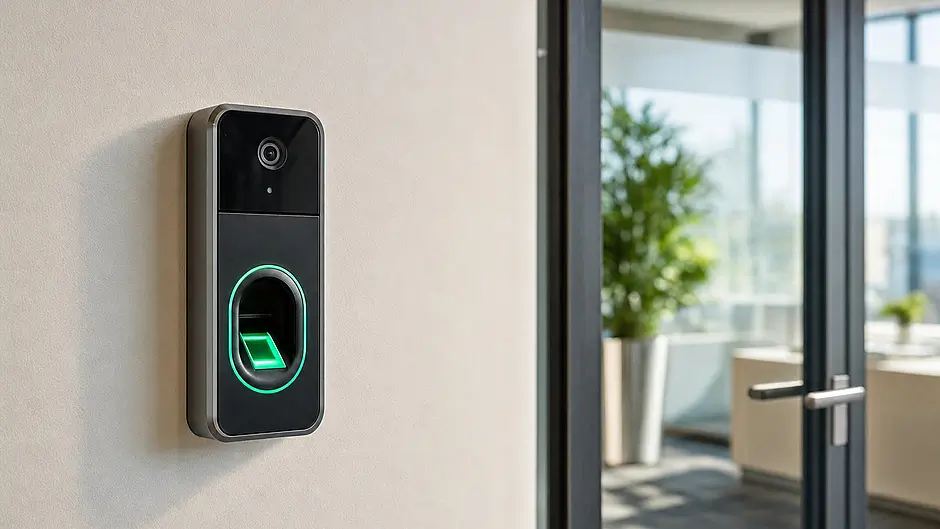
Biometric access control is transforming the way organisations approach security by using fingerprints, facial recognition, and other unique biological markers instead of traditional credentials. As the technology matures, it promises significant improvements in security, convenience, and accountability for modern workplaces. This shift also brings new challenges around privacy, reliability, and the responsible handling of sensitive data.
Growing concerns about unauthorised access and insider threats have led businesses to reconsider how best to protect their premises. Conventional security methods, such as keys, fobs, and PIN codes, are now often supplemented or replaced by biometric systems. The adoption of commercial biometric access control from fingerprint or facial recognition solutions is increasingly common, offering credentials that are harder to duplicate and more convenient for staff. As these technologies become more accessible, understanding their practical value, operational impacts, and privacy implications is crucial for effective workplace security management.
The fundamentals and practical operation of biometric access control
Biometric access control relies on using distinctive physiological characteristics to confirm identity before allowing entry. The most widespread methods include fingerprint, facial, and iris recognition, chosen for their uniqueness and difficulty to replicate. Unlike physical keys or passwords, which can be lost or shared, biometrics are closely tied to the individual user.
ADVERTISEMENT
Enrolment begins with capturing a user’s biometric data, which is converted into a digital template and stored securely within the system. When entry is requested, the system matches live input to the stored record, granting access only to verified users. This process is designed for efficiency, reducing reliance on memorised codes or physical items, and streamlining daily operations in busy workplaces.
The architecture of biometric systems typically consists of several interconnected components working in harmony. A capture device such as a scanner or camera collects the raw biometric data, which is then processed by specialised software that extracts distinctive features and converts them into a mathematical representation. This template is significantly smaller than the original image and cannot be reverse-engineered to recreate the physical characteristic. Storage solutions range from centralised databases to decentralised systems where templates are kept on individual smart cards, each approach offering different balances between convenience and data protection. Modern systems often incorporate multiple verification factors, combining biometrics with traditional credentials to create layered security that adapts to varying risk levels across different access points within a facility.
Technical advancements and operational benefits in the workplace
Recent innovations have enhanced the reliability and acceptance of biometric access control. Improved sensor technologies and sophisticated matching algorithms have boosted accuracy, helping to reduce both false acceptances and rejections. Liveness detection, a key development, helps ensure that only genuine biometric traits, not artificial representations, can be used to gain entry.
Touchless systems such as facial and iris recognition have become particularly valuable in environments where hygiene and efficiency matter. These options allow for rapid movement through entry points and do not require contact with surfaces, which can help limit germ transmission. Because of lowered failure rates and more intuitive user experiences, businesses are increasingly considering modern biometric controls over traditional approaches.
Privacy, compliance, and security considerations for organisations
Applying biometric access control involves careful handling of sensitive data, making privacy and compliance core concerns. Organisations must establish a clear legal basis for processing biometric information, keep staff informed about how their data is handled, and provide transparent guidelines on storage and deletion. Encryption and secure storage reduce the risk of unauthorised access, while regular security reviews help ensure records are not tampered with.
Employers need to prepare robust procedures for fallback and secondary verification should technology fail or produce false rejections, ensuring that access is not disrupted. As biometric data is unique and cannot be easily altered if compromised, maintaining rigorous protection standards is especially critical. When businesses evaluate commercial biometric access control, the quality of ongoing support, maintenance, and user training should be an integral part of the planning process.
Evaluating suitability and long-term adoption in modern business security
The decision to implement biometric access control depends on evaluating the workplace’s specific needs, including throughput speed, integration with current systems, and the nature of locations requiring secure entry. Businesses should assess whether biometric technologies meet their operational demands and risk profiles while also enhancing accountability and transparency.
Effective adoption involves user engagement, clear communication about rights and responsibilities, and periodic reassessment of system performance in light of evolving security risks. By approaching biometric access control from both a technical and ethical perspective, organisations can strengthen workplace security, support staff trust, and navigate the complexities of safeguarding sensitive data in the modern business environment.