
After the clocks change and the weather turns to wind, rain and cold, spring feels very far away.
Nature is in its decay phase, the light fades, and everything is stripped bare by winter.
ADVERTISEMENT
Nature lovers often yearn for the bright colours of the warmer seasons, when lush plants flower and a diversity of vibrant flying insects and butterflies appear.
In the total absence of these, we are very fortunate that our position on the southwest coast provides a welcome winter tonic and some relief from the grey.
At first glance, West Cork’s rocky shoreline might appear to share the same muted tones as the rest of the landscape.
However, a closer look reveals a wide spectrum of colour and otherworldly scenery in rockpools and just below the surface of our nearshore waters.
‘Tropical’ fish
During a typically damp and dark weekend earlier this month, I sought respite from the dullness of it all and headed for the shoreline with my two boys.
They are seven and nine, and thankfully still keen to join me on such wildlife adventures.
Rockpool fish are a particular favourite for most children of this age, along with crabs of course.
On this outing, much to everyone’s delight, we spotted a fish we had never seen in local rockpools before, proving that new (to us) discoveries are always possible.
This fish was a long-spined sea scorpion, a relatively common species in the intertidal area and certainly widespread in West Cork, but hard to spot due to their expert camouflage.
The rockpools at this time of year are wonderfully coloured, many adorned with red seaweeds of multiple shades, and the little sea scorpion was perfectly matching these rich and vibrant reds as they tried to blend in. Relying heavily on camouflage, they wait stock-still until an unsuspecting crab, shrimp, or smaller fish comes close, when suddenly their huge mouth engulfs it.
We also often find the shore clingfish, a fascinating little species that has a sucker on their underside allowing them to cling to rocks in the turbulent area near the low-water mark
They look almost like giant tadpoles, grow up to seven and a half centimetres long, and most wonderfully, have two bright blue iridescent spots on the upper surface of their head, giving them a truly tropical appearance.
Many of these rockpool fish look exotic and can give the illusion that we are in more tropical climes.
They allow us to forget, just for a moment, that we are still in West Cork on what may be a damp and dreary day.
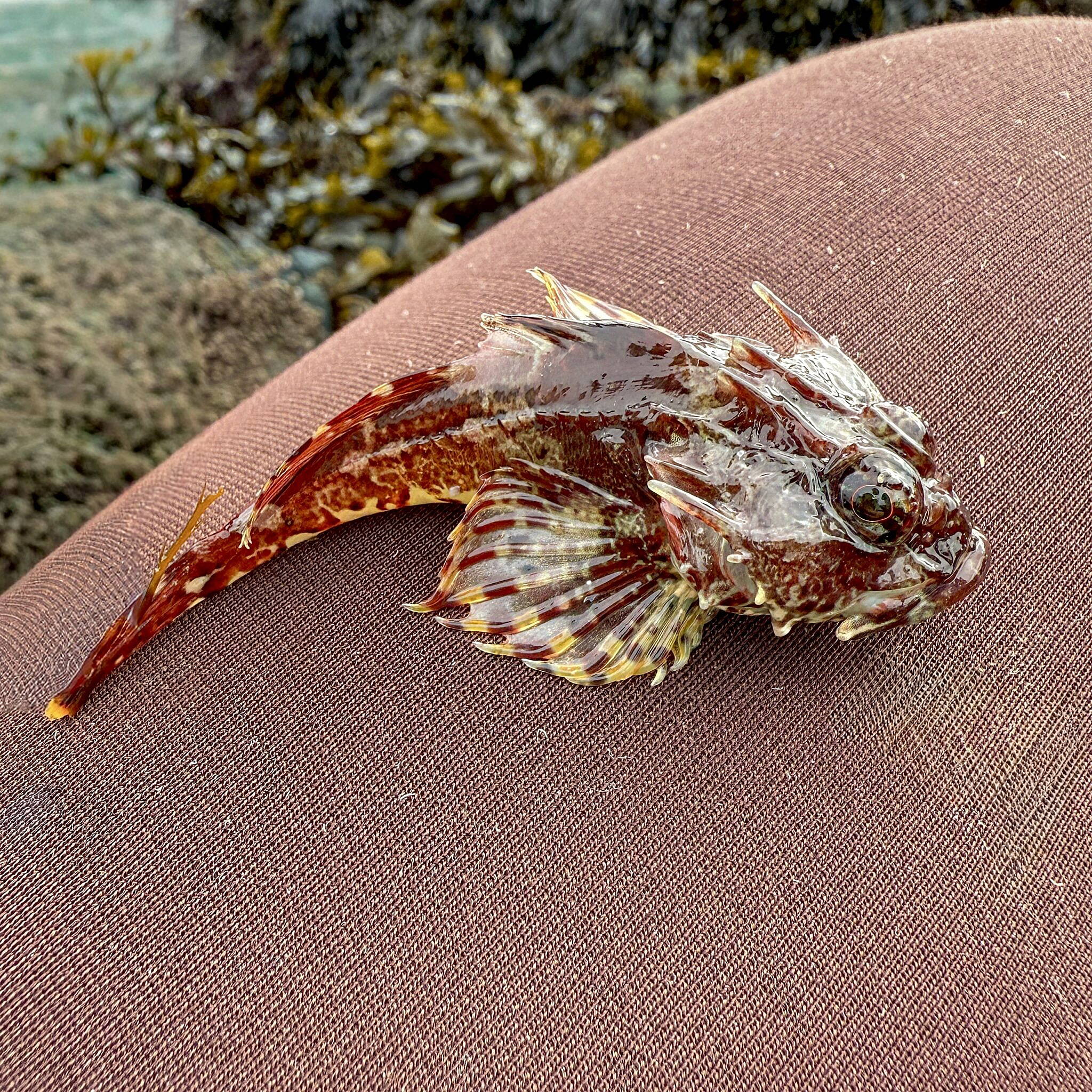 A long-spined sea scorpion making a dull and damp November day more exciting. (Photo Ann Haigh)
Stars of the show
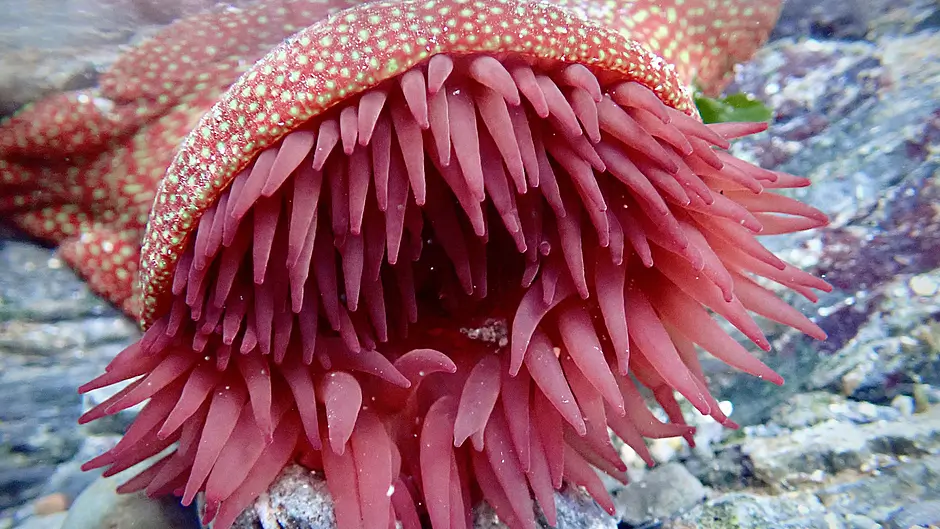
Rockpools have both literal stars, such as brightly coloured starfish like the common brittlestar, and figurative stars, which are most definitely sea anemones.
At first, you may spot them as dark red, green or orange jelly-like blobs adhered to rocks.
These are beadlet anemones, the most common species. However, take a closer look underwater in a rockpool and they reveal the full extent of their diversity and magnificence, with their feeding tentacles extending and undulating gently in the water.
Sea anemones are relatively simple creatures, attaching to rocks by their base and consisting of an upright tubular column with a single opening at the top which serves as both mouth and anus.
They range in diameter from just a few millimetres in certain species and in their juvenile forms to around 15 centimetres in larger species such as the descriptively named dahlia anemone.
These animals belong to the group Cnidaria, which also includes jellyfish. The word Cnidaria originates from the Greek word for nettle, knide.
Indeed, all sea anemones have stinging tentacles used to stun and immobilise their prey.
Fortunately, the sting of Irish species cannot easily penetrate human skin and rarely causes a reaction.
Winter blooms
Sea anemones are like underwater flowers, coming in an array of colours and forms, with multicoloured tentacles that emulate petals.
If you are sceptical that these creatures can provide a winter fix for flower lovers, consider some of their common names: the dahlia anemone already mentioned, as well as the daisy, elegant, and strawberry anemones.
On any shore, it is usually possible to spot three or four different sea anemone species with ease.
In total, just from exploring West Cork’s low-tide rockpools, we have found 12 different species. Each species is unique, and even within one there is great variation in colour, size and shape, so viewing sea anemones is never dull.
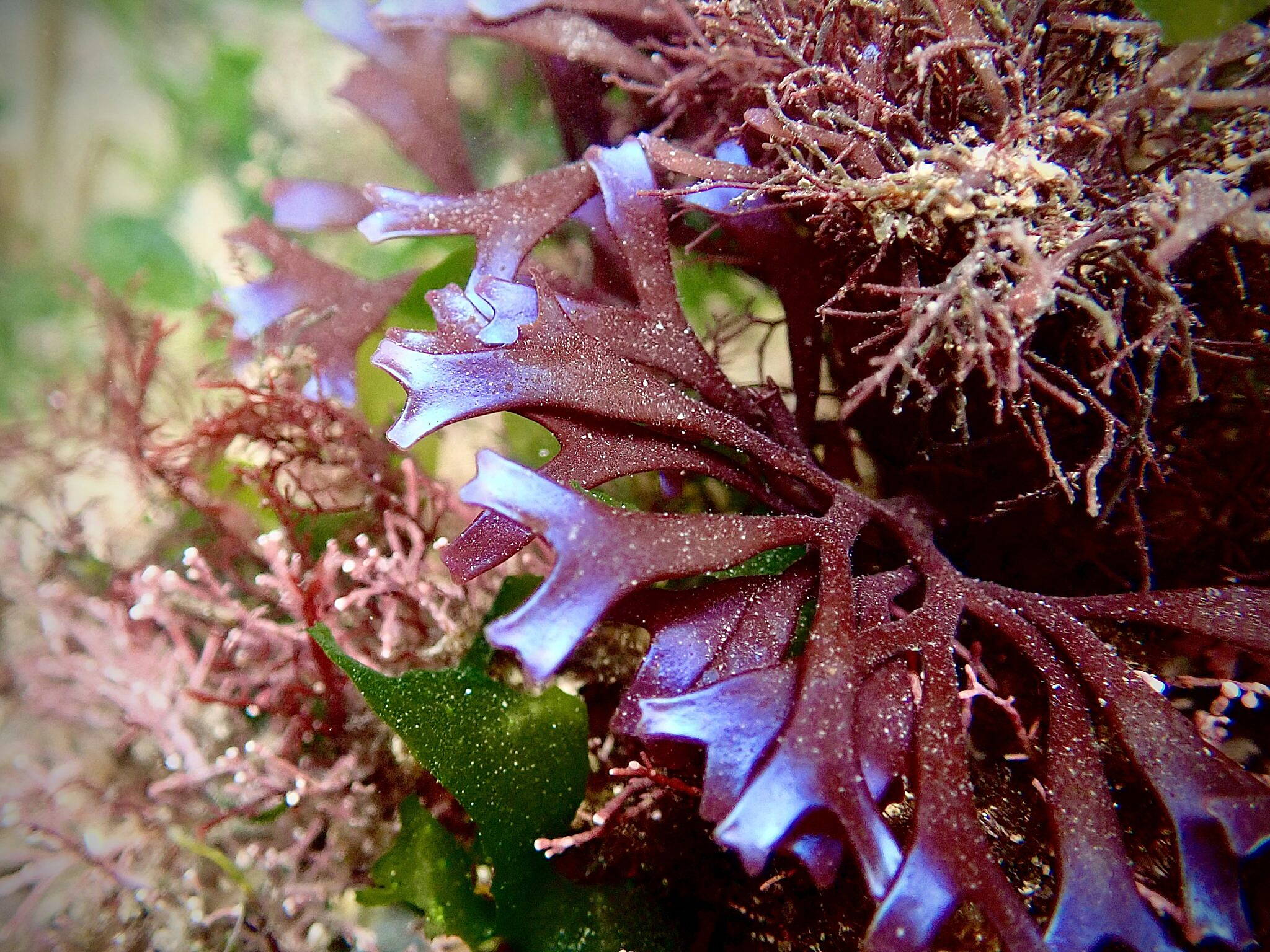 Carrageen or Irish moss, a red seaweed with a fabulous blue iridescent shine. (Photo Ann Haigh)
Colourful seaweed
Winter is by far the best time to appreciate colourful seaweeds. In summer, the bright sunshine often fades much of their vibrant colour, especially in the more accessible and shallow parts of the shoreline. There are three basic types of seaweed, grouped conveniently by colour: brown, green, and red.
Red seaweeds are a favourite of mine, especially as this grouping also includes pink forms. It is the mix of colours and their various shades that provides the full sensory experience. Pink is an unexpected but common colour in winter rockpools. Encrusting calcified pink coralline algae line the pools, while delicate pale pink coral weed (Corallina officinalis) extends gracefully into the water.
One red seaweed to look for in particular is Chondrus crispus, commonly known as Irish or carrageen moss. This small reddish-purple seaweed grows in branching fans on rocky shores. What makes it stand out in the crystal-clear winter rockpool water is a beautiful iridescent blue shine.
Even in the bleakness of November, we can take comfort in knowing that there is still colour and joy to be found in nature. It just takes a sense of adventure, wrapping up warmly, and knowing where to look.