
When a Sunday appears with no work, children’s parties, sports matches or other commitments, nothing delights our family more than a wildlife-spotting drive out west along the rugged coastline. We usually make our way through Ballydehob, Schull, Ballyrisode, Goleen, and Barleycove, watching for wildlife and keeping a list of the birds we see.
On one such Sunday last month, it felt as though we had hit the wildlife jackpot. This is an account of just a few of the wild wonders we encountered, but perhaps it will inspire your own trip out west.
ADVERTISEMENT
Otterly amazed
The first treat came as we pulled in by Ballydehob bridge. We were watching birds in the lagoon when a head appeared above the water, then dipped in an arched motion, followed by the flick of a thick tail. An otter.
For wildlife lovers, there are few moments more magical than watching an otter duck and dive at close range. ]
This one seemed unbothered by the steady stream of traffic from Main Street, though we were careful not to get too close. They performed barrel rolls in the water and even climbed onto the bank, giving us a full view of their sleek body. It was a fantastic experience.
Waterwoes
Otters are carnivores that mainly feed on fish, though they will also eat shellfish and forage on land for frogs, waterbirds, eggs, small mammals, or insects.
The otter in Ballydehob lagoon only seemed to find small mouthfuls, repeatedly diving and resurfacing to chew what may have been small fish, crabs, or other invertebrates
Local community groups are working hard to improve water quality in the lagoon, and seeing an otter searching for food shows why that work is so important. Otters need clean water and healthy prey to survive. They are protected by Irish and EU laws, which make it illegal to harm or disturb them, damage or destroy their habitat, keep an otter or any part of one, or block access to their resting places.
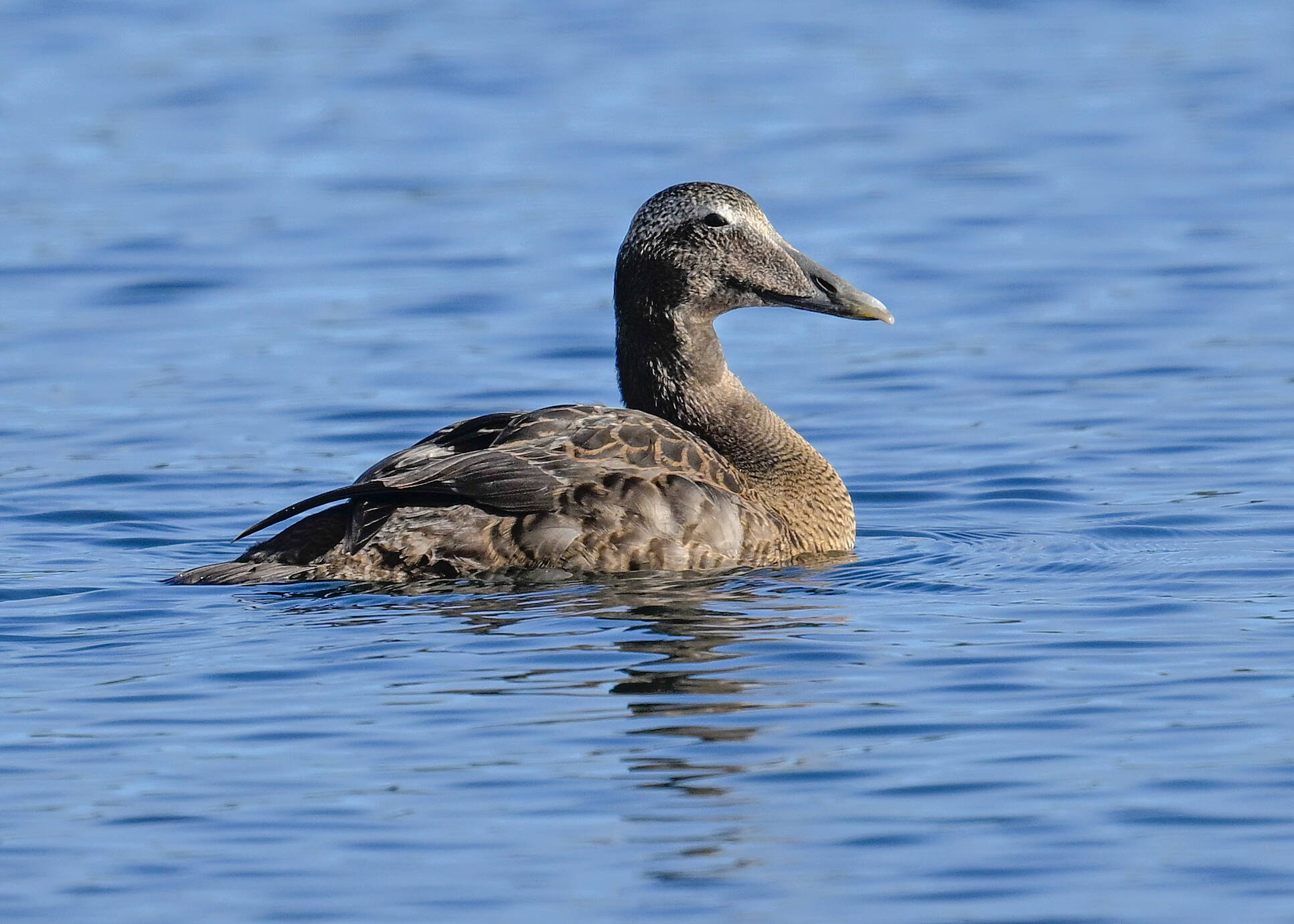 Female eider duck spotted from Schull pier.
Duck tales
Moving further west to Schull, we set out to find an eider duck. A sighting had been shared on social media by avid birdwatcher and Minister for Nature, Heritage and Biodiversity Christopher O’Sullivan, so we were hopeful. These handsome sea ducks are rare in West Cork, usually found along the coast in the north and northwest of Ireland, where they enjoy feeding on their favourite food, mussels.
We spotted the lone female from the pier, bobbing in the waves and diving to feed. Despite their sturdy build and wedge-shaped bill, eiders are the fastest ducks in Ireland in flight. Females have chocolate-brown and black barred feathers, while males are even more striking, with white heads, black crowns, black and white plumage, and pale green patches on their neck.
Keeping warm
Eider ducks are best known for producing the insulation for warm eiderdown duvets and puffer jackets. To care for their young, resourceful females pluck soft feathers from their breasts to line their nests, and for over a thousand years, people have continued to gather this down from nests the birds have naturally vacated. Unlike goose or duck feathers, which are by-products of the food industry, eiderdown has microscopic, Velcro-like hooks. These hooks make the tufts cling together, creating a light yet highly insulating layer.
Most eiderdown harvesting takes place in Iceland, but the practice is so unique and sustainable that in the Vega Archipelago off Norway, it has earned the islands a
UNESCO World Heritage Site award. While we will not be starting a new eiderdown industry from the solitary duck we spotted in Schull, it was a joy to host this lovely visitor and be reminded of the fascinating biology of the species and the special story behind eiderdown.
Slithering around
On our mini tour, we also stopped by the rock pools at Cadogan’s Strand. The highlight was spotting a juvenile European eel, an elver, to the delight of my two sons.
These mysterious creatures spawn in the Sargasso Sea, and their larvae drift to Ireland via the Gulf Stream, where they develop into the glass eel stage along the way. From the coastline, they move up rivers and streams, where they can grow for up to twenty years before returning to the Sargasso to breed. With populations having declined by around 95 per cent and the species now critically endangered, it was a rare and exciting find.
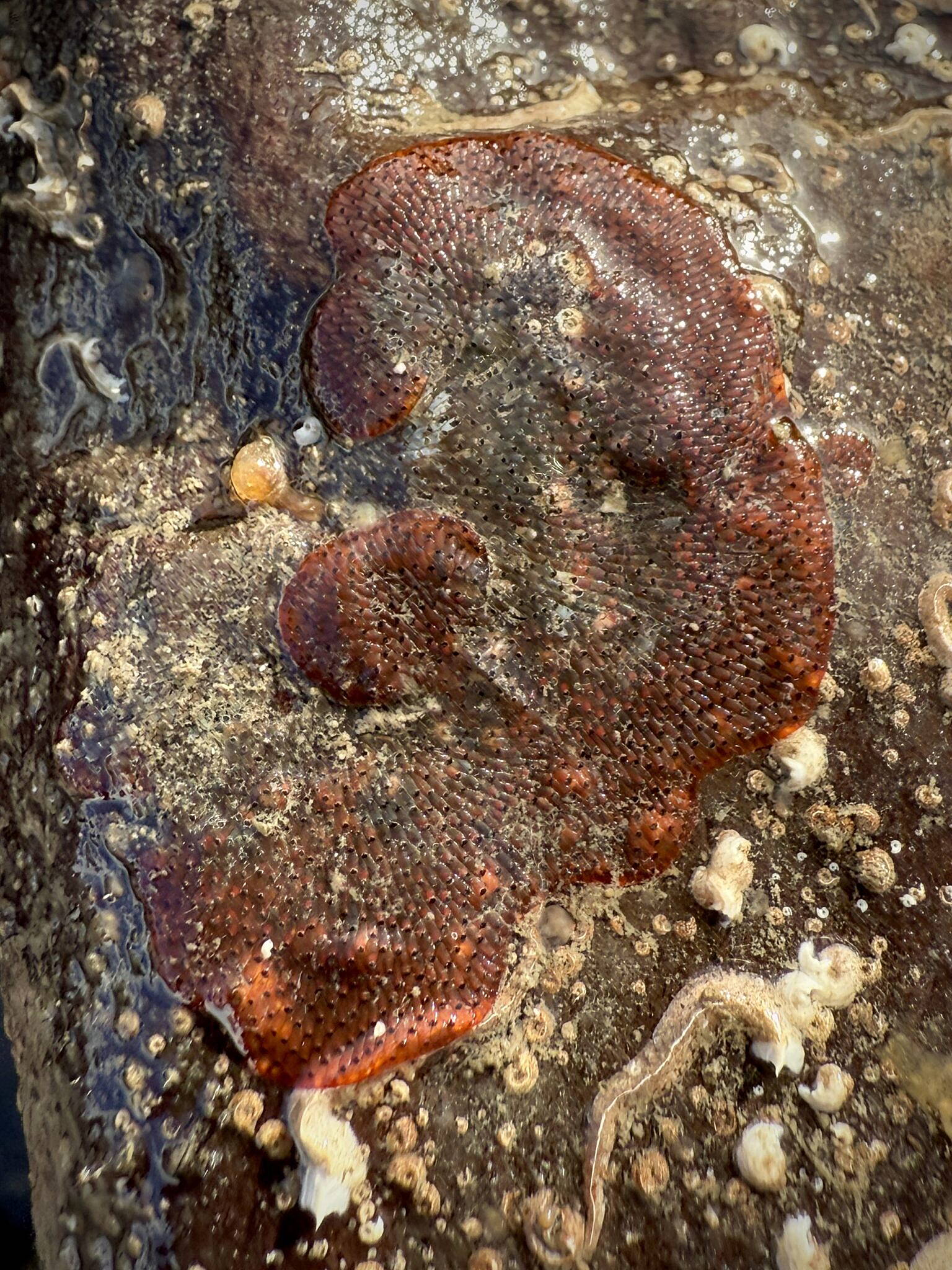 Red ripple bryozoan a new marine non-native species to keep an eye out for.
Ripple effect
Not all our sightings were native. Under a rock along the shore, we found the red ripple bryozoan, Watersipora subatra, a species thought to have arrived from Japan. It is uncertain how it travelled here, but most likely by hitching a ride to Europe on the hull of a boat and spreading from there. This species grows on hard surfaces in expanding red patches and is made up of thousands of tiny animals forming a colony. Each elongated individual has a small black spot at one end.
This seems to be the first record for West Cork, with previous sightings limited to Dublin. If you see it, please report it to the National Biodiversity Data Centre so the spread of this species can be tracked.
Banana seals
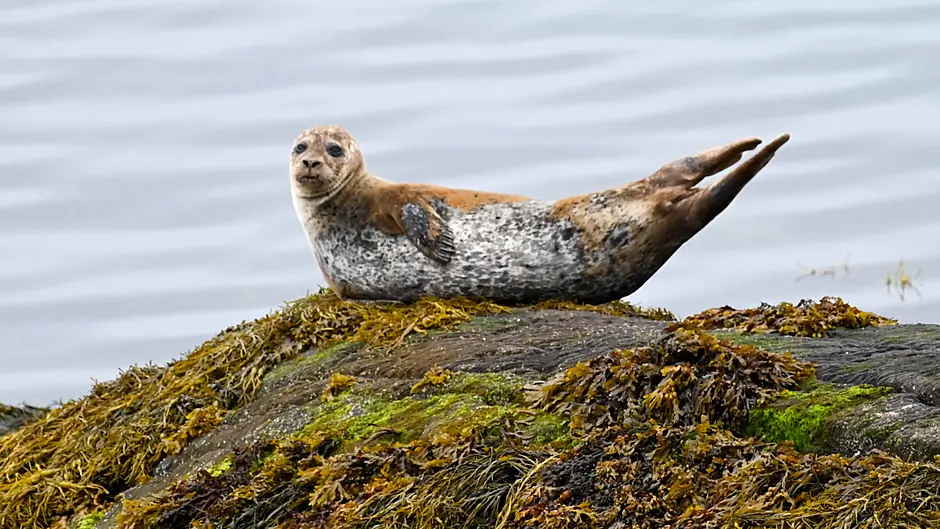
The day ended on a cheerful note as we watched harbour seals in Crookhaven. They were lounging on the rocks in a banana-shaped pose with their heads and tails raised. This pose, colloquially known as a ‘banana seal,’ is a sign that they are content and relaxed.
There is never a dull moment in the wilds of West Cork. With its rugged coastline, dynamic wildlife, and hidden treasures waiting to be discovered, every visit offers something new to explore and enjoy.