
This year has been a bumper one for visiting wildlife.
Many species that usually appear only occasionally have arrived in significant numbers, delighting nature lovers across the country.
ADVERTISEMENT
Often these are migratory animals that stop off to rest and refuel, or that have been blown off -ourse.
Some exotic species pose a threat to our native wildlife, attempting to establish and breed here.
One such example is the Asian hornet.
These harmful species are termed invasive. I have written about those previously, and the subjects of this week’s article are less worrisome but still worthy of note.
Why are we seeing so many unusual species this year?
Death’s head
Moth lovers have had a fair share of the excitement this year. The death’s head hawkmoth (Acherontia atropos), an unmistakable species with skull-like markings on its back, has made several appearances in Ireland and in West Cork specifically. Both the adult moth, with an impressive wingspan of up to 12 cm, and their striking caterpillars have been spotted.
These moths are fascinating, not only because of the skull pattern made famous by its eerie likeness in The Silence of the Lambs, but also because adults squeak when alarmed. They love honey and often raid beehives, avoiding detection by releasing a scent that mimics the bees themselves. The usual range for this migratory moth is between Africa and mainland Europe, with rare sightings in Ireland. Several reports from West Cork this year suggest they are well worth watching for.
Hummingbirds
I am currently writing this article in Croatia, where I have been delighted to see many individuals of a migratory moth that has also become more frequently reported in Ireland recently. Hummingbird hawkmoths are not hummingbirds, though they are easily mistaken for tiny versions of them. Beautiful daytime fliers, they hover steadily next to flowers, extending their long proboscis to sip nectar. Each year a few people are lucky enough to spot them in Ireland, but this year their numbers appear higher than usual.
Other unusual migrant moths reaching West Cork this year include the very large striped hawkmoth (Hyles livornica), which even made the Southern Star news pages, and the smaller small marbled moth, Eublemma parva. The striped hawkmoth is conspicuous due to its size and habit of flying by day as well as in darkness. The small marbled moth is less obvious, but enthusiasts have found them in light traps. Their usual range is from Africa across southern Europe to eastern Asia, so finding them in numbers in West Cork is remarkable and important to document.
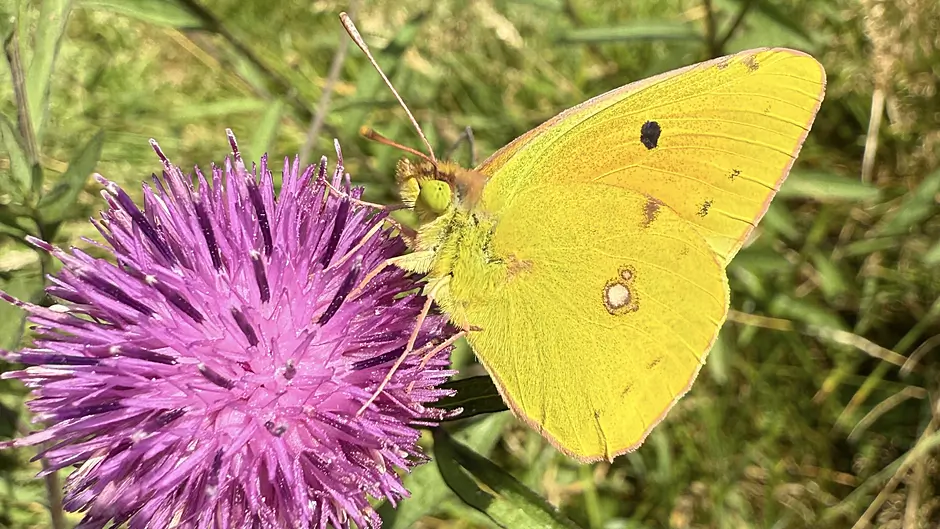
It has also been a good summer for the clouded yellow butterfly. While painted ladies and red admirals are our more familiar migrant butterflies, it is not every year that clouded yellows reach us in any real numbers. Spotting one in my own garden was a highlight of the summer.
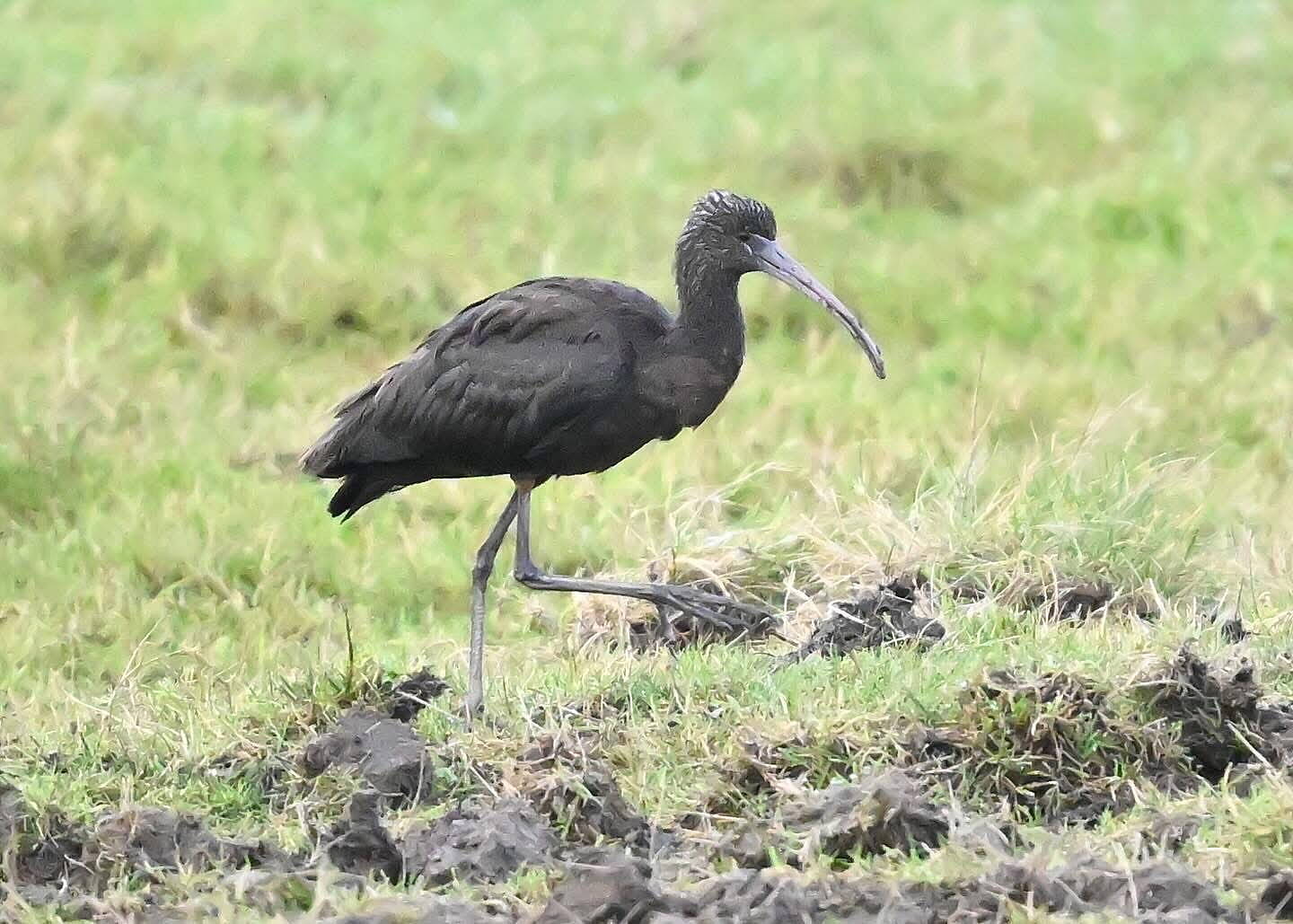 A glossy ibis in West Cork.
Winging it here
Earlier this year West Cork was visited by hoopoes. Named after their call, ‘hoo-poo’, these birds are fantastic to see. Slightly larger than a blackbird, they have a pinkish-brown body, bold black and white wings, and a fan-like crest on the head.
Currently another special visitor is here in numbers, the glossy ibis. Reports are coming from Bandon, Church Cross, and the Gearagh. Last week, 24 were spotted in Old Court, Skibbereen, alone. We saw one in White’s Marsh, Clonakilty, last year, but this year they have arrived in force.
Roughly the size of a curlew, they have glossy iridescent plumage that shimmers in the light, making them well worth watching for. It has also been a good year for other migrant and vagrant birds, with sightings of pied flycatchers, grey phalaropes, purple sandpipers, and curlew sandpipers.
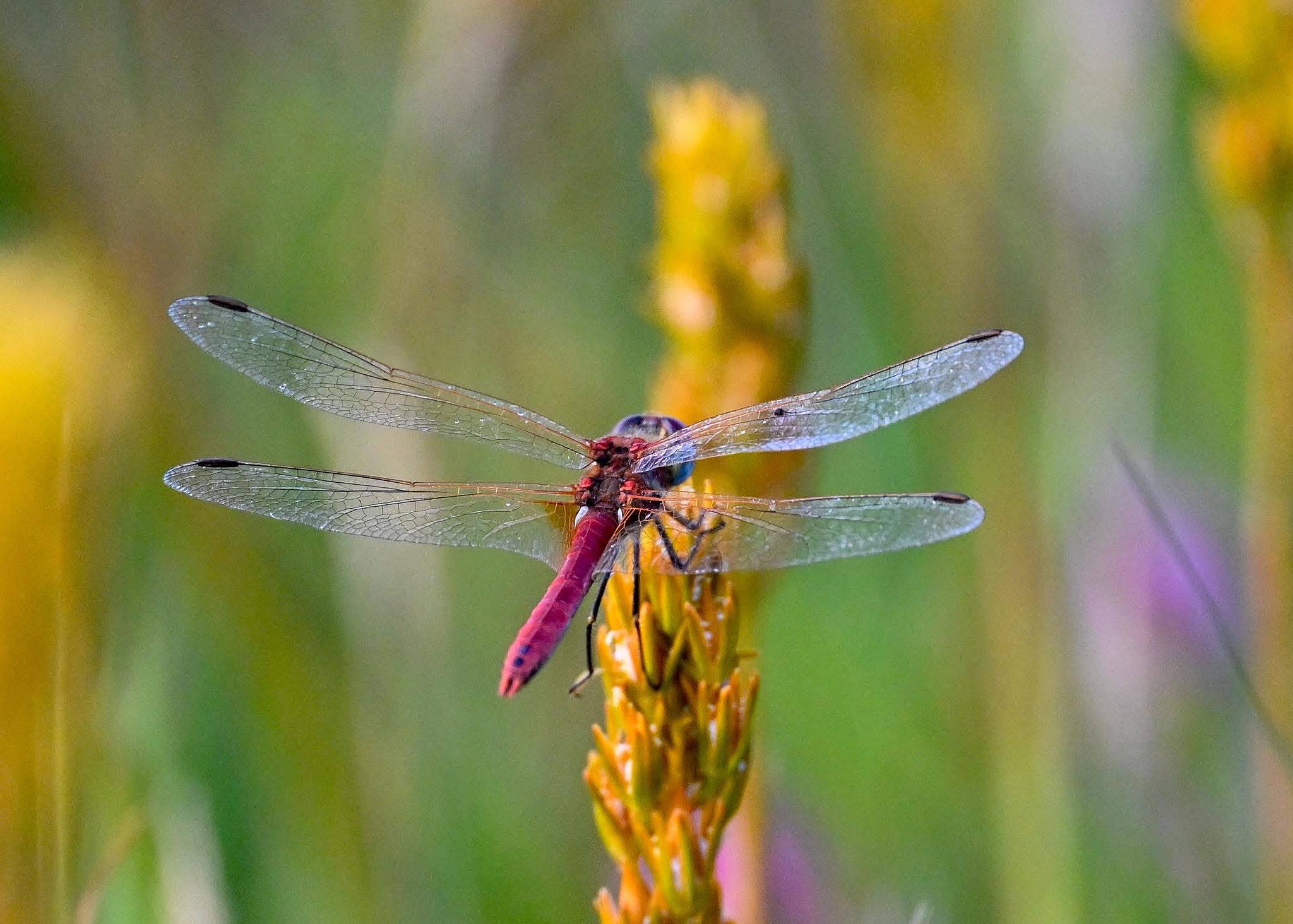 A migrant red-veined darter dragonfly seen out on An Móin Rua (Toe Head) in July. (Photo: Nick Haigh)
Reasons to visit
There is no single reason why we sometimes see these unusual creatures in West Cork. Weather patterns and wind directions can blow migrating species off course. Unfavourable conditions such as drought, fires, or loss of habitat may also disturb species. Warmer air can enable longer migratory flights for both insects and birds.
Other factors include populations moving closer to us, such as the glossy ibis and cattle egret expanding their range north and west in response to climate change.
Sightings of cattle egrets are increasing year on year. Cattle egrets are close in appearance to our resident little egrets, being bright white wading birds, but they have yellow legs and beaks instead of black. It may not be long until cattle egrets follow in the footsteps of the little egret, and start to breed and expand here, as little egrets did in the late 1990s.
Times are changing
In July we spotted a migrant dragonfly, a red-veined darter (Sympetrum fonscolombii), out on Móin Rua (Toe Head). This was unusual, with only 67 records in the National Biodiversity Data Centre since the first one in 1941. On a short break in Wexford in August we met fellow nature enthusiasts at Tacumshin who had been monitoring the species there for years.
Initially they observed them only as migrants, but more recently have discovered newly emerged adults, proof that they are breeding in Ireland. This is striking because the species usually breeds in shallow water bodies such as rice paddies in southern Europe.
For some visiting species conditions are now warm enough to allow breeding here. What will the flora and fauna of Ireland look like in 50 or 100 years? No one can say for certain.