While idling away time in a local park recently during my son’s GAA training, I noticed bats darting and swooping between the treetops. With the evenings unfortunately drawing in, dusk had already fallen and the light was fading fast. The air was still mild, and the bats were making the most of it, feeding on the last of the season’s midges and stocking up on energy before their winter hibernation. Watching them, I found myself wondering why so many people remain wary of bats. The answer, I realised, largely lies in a host of long-held misconceptions.
Bats in your hair
One of the most persistent is the belief that bats deliberately fly at people to tangle in their hair. Some accounts suggest it was originally promoted as a way of keeping young women indoors after dark. Whatever the origin, it is not true.
ADVERTISEMENT
Bats are not remotely interested in humans; their focus is on insects. If a midge or moth happens to be hovering near someone’s head, a bat may swoop to catch it, but their finely tuned echolocation, essentially a natural sonar system, means they are able to navigate with remarkable accuracy. They emit high-pitched calls, undetectable to our ears, which bounce off surrounding objects and return as detailed information. Thanks to this, accidental collisions with people are rare, and reports of bats caught in hair even rarer.
Blind as a bat
Bats seem to attract more myths than almost any other animal. The phrase “blind as a bat” has been in use for centuries and yet bats can see, having better vision than most humans in low light conditions. Combined with echolocation, this dual system of sight and sound makes them exceptional hunters. Perhaps because they rely so much on sound, people assumed they were blind and the saying stuck.
Another common assumption is that bats always sleep dangling upside down with wings wrapped tightly around their bodies. In truth, their roosting habits vary. All nine of Ireland’s bat species do rest with heads lower than their bodies to conserve energy, but only one, the lesser horseshoe bat, hangs freely from a ceiling with wings enveloping its body. The others prefer to tuck themselves into narrow crevices and cavities, under roof tiles, or beneath loose bark on trees.
Unnatural ideas
Owls are no strangers to exaggeration either. They are often said to be able to rotate their heads right around, a full 360 degrees. The truth is almost as impressive but less extreme: they can turn their heads 270 degrees in either direction. This extraordinary flexibility compensates for the fact that, unlike us, owls cannot move their eyes within their sockets.
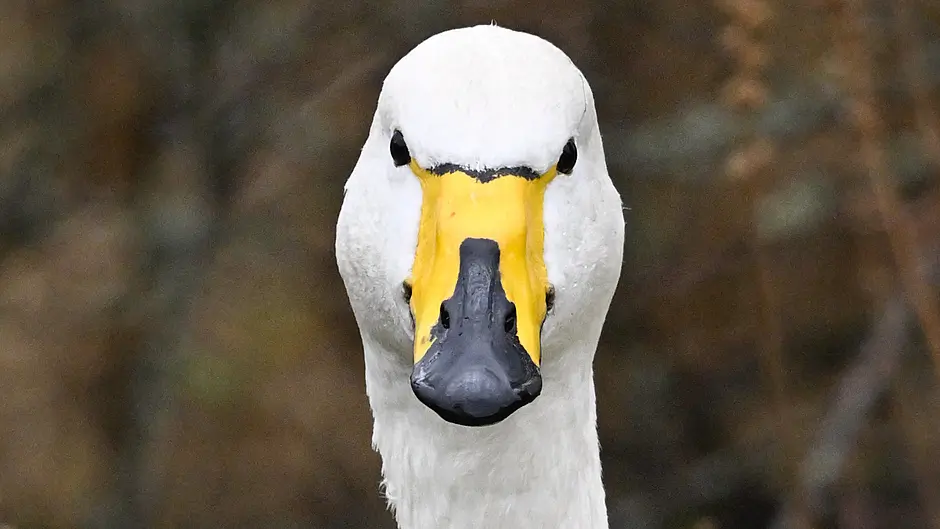
Swans, too, are surrounded by folklore. The oft-repeated warning that a swan can break your arm with a wingbeat has little evidence to support it. Swans can certainly be aggressive if disturbed and cause injuries, particularly when nesting or with young cygnets. However, it is far more likely that someone would injure themselves in the scramble to get away than suffer a broken bone directly from a swan.
Another misconception is that swans need water to take off. While they do require a long run-up, at least 25 metres of clear space, they are quite capable of launching from both land and water, provided there are no obstacles in the way.
Cover your ears
Invertebrates, or ‘minibeasts’, carry their own share of myths. Wasps, for example, are often labelled as pointless. In reality, they play a vital role in the ecosystem. They act as natural pest controllers, preying on greenfly, caterpillars and other insects that damage crops and gardens. Wasps are also pollinators, and on top of that, they form part of the food chain, providing nourishment for birds, badgers and even other insects such as dragonflies. Far from being pointless, they are integral to balance in the
natural world.
Another widespread belief is that all bees die after stinging. This is only true for female worker honeybees, whose barbed stingers lodge in the victim’s skin and fatally tear away from
their bodies.
Bumblebees and queen honeybees, by contrast, have smooth stingers and can sting repeatedly without harm to themselves. The same goes for wasps, which live on after stinging.
Then there is the age-old fear of earwigs creeping into ears to burrow into the brain and lay eggs. Despite their name, this is nothing more than a myth. Earwigs seek dark, narrow spaces, but not preferentially human ears, and they certainly could not bore through to the brain.
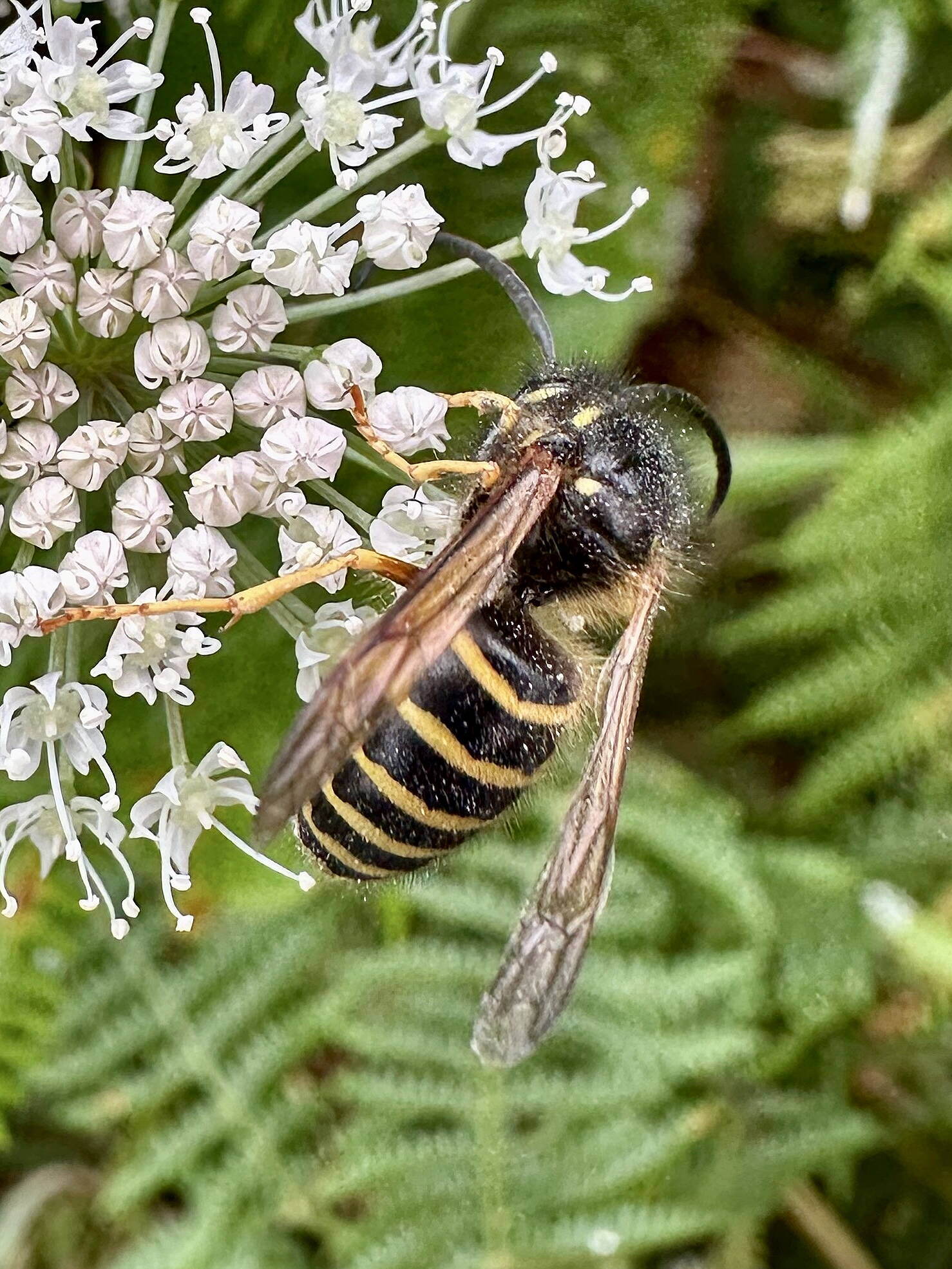 Despite what you may hear, wasps aren’t pointless and have important roles in the ecosystem.
Worms and spiders
Another familiar tale is that cutting an earthworm in two produces two new worms. While earthworms are capable of regenerating lost tissue, their powers are limited. If severed at the right point, a worm may regrow its tail, but it cannot replace its head.
Spiders, meanwhile, are the subject of what is perhaps the most widely believed wildlife myth of our generation; that we each swallow an average of eight during sleep every year. There is no evidence to support this, and in fact science (and common sense) shows it to be highly unlikely. Human breathing would deter spiders from coming close to a face, and they have no reason to enter a mouth.
Be vigilant for nonsense
Duck quacks don’t echo, rubbing snails on warts cures them, a ladybird’s spots reveal their age, badgers break bones, fruit with maggots gives you worms, daddy long-legs are venomous: the list of myths goes on.
While we’ve long since abandoned old notions such as swallows hibernating in pond mud for the winter, plenty of misconceptions persist. Nature is full of surprises, and while myths can be entertaining, the truth is often more remarkable. Next time you hear a tall tale about wildlife, be curious, pause and look closer, you may find reality even more fascinating than the stor