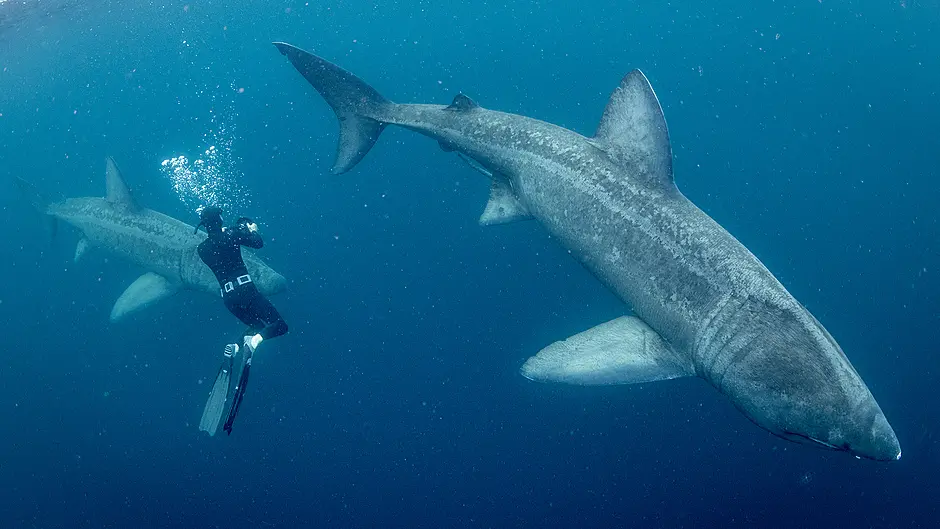
SHARKS off the West Cork coast have been captivating television audiences across the country since the 1960s.
Preserved in the RTÉ archives is a report from Terry Wogan documenting Kinsale’s emergence as a tourist destination, with the thriving shark angling industry credited for its transformation.
“Having traditionally been seafarers and fishermen, now some of them find employment as skippers of the deep-sea angling boats,” Wogan explained.
ADVERTISEMENT
The report showed sharks displayed along the pier, hanging from hooks in front of onlooking tourists.
In those days for the small charge of £2.10, anyone interested could secure a seat on a deep-sea angling boat.
Holiday goers could rent a light tackle for ten and sixpence, or fork up a guinea for a heavy rod and wheel, in the hopes of catching one of the many porbeagle sharks or blue sharks that inhabited Irish waters.
However, it took another half century for West Cork’s world-famous shark population to be caught on camera in their natural habitat, when in 2013 Ken O’Sullivan and his crew in Sea Fever Productions managed to capture footage off the coast of Courtmacsherry.
Ken has been diving across the globe for more than two decades, filming underwater scenes and producing more than 20 natural history documentaries for RTÉ, TG4 and BBC.
He’s currently travelling the country presenting his new live show Stories from the Sea, bringing it to the Celtic Ross Hotel in Rosscarbery this Thursday November 5.
“That wasn't the first time anyone had filmed them, but it was probably the first time anyone made a real decent effort at it,” Ken said, explaining that it was actually one of those famous deep-sea angling boats that took them out to film off the coast of West Cork.
“We approached Mark Gannon, in Courtmacsherry, he's a master shark angler, and said, ‘Could you bring us out? We want to swim with them’. He said, ‘Are you sure?’ We did and we got amazing footage.”
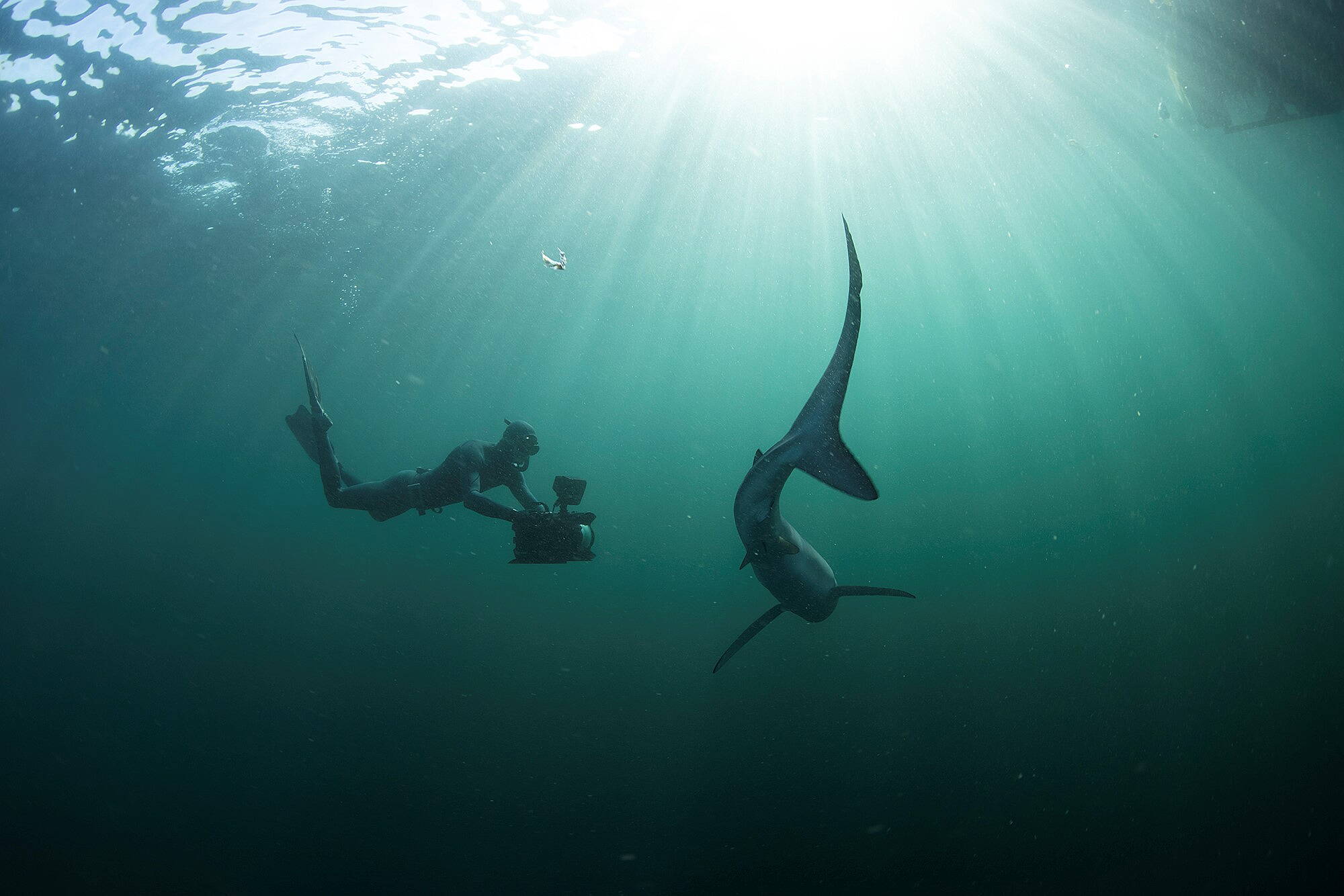 Ken swimming with a blue shark off West Cork coast.
Despite having worked all over the world, those first dives in West Cork still stand out all these years later. After an uneventful eight days of searching for blue sharks without much luck, the crew would have been forgiven for expecting more of the same the following day.
“We knew the Irish Navy were doing a munitions test that day. And there was like a 10 or 20 mile exclusion zone and so Mark thought he was outside that,” Ken explained.
“So I finally got in the water and I got two [sharks] to stay around me. Just hit record my camera and there was this ferocious noise and I looked up to see a military helicopter. It turned out these guys reckoned we were inside their exclusion zone for the munitions test and they said, ‘you've got to go, you've got to go’.
“And so Mark comes over and he said, ‘Ken, we've got to go. It's the army, the navy, you know, we have to go’. And I said, ‘Mark, tell them it's for RTÉ, tell them it's for doc, tell them anything’.”
Mark tried to convince the pilot to allow them to stay, but had no success. Ken was forced to come back to the boat, but was interrupted when Mark burst out laughing, before calling over to him saying: “The pilot says, ‘Will you tell the man in the water, does he know there's two sharks around him?’”
While Ken has been a long-time advocate for the protection of the 40 shark species in Ireland he insisted they’re not to be treated as “teddy bears” either. He said the fear never quite goes away but taking precautions on how to approach sharks and what clothing to wear certainly helps, explaining that “you shouldn't have bare hands or bare feet because in the water, it looks very pale, it might look like a fish to them.”
“I've been in the water where we got 12 or 13 and when the numbers get big, you have to get out because I definitely have seen them being aggressive with each other and that could easily be me.
“But without a doubt, when you get over that initial fear, and with blue sharks, especially, you're struck by the beauty of their form. I mean, they have this pastel blue colour, which of course, camouflages them when any other predators look down in the blue sea.
“When you see them in the water, dinosaurs come to mind because they are so prehistoric looking, and the thing to remember about sharks is that they're older than trees. Sharks have been in existence for 400 million years.”
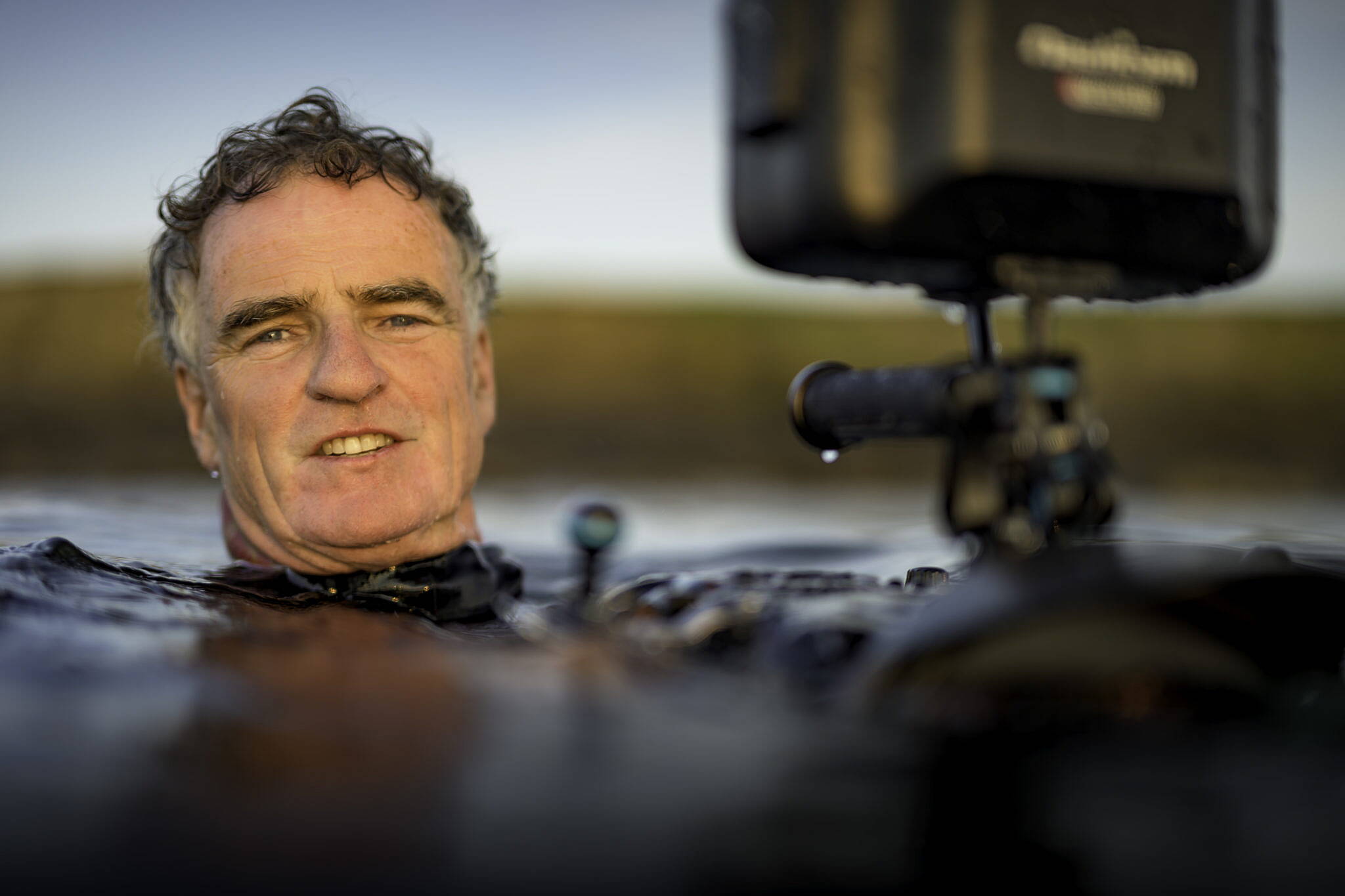 Ken O'Sullivan.
It’s this sense of appreciation, along with other scientific reasons, that makes Ken dream of one day encountering a great white shark off the coast of Ireland.
“To un-demonise them, if that's a word,” he said, explaining himself. “It would be incredible to do that. Because everybody, everybody, everybody, bar three or four people in Ireland, thinks if [a great white] sees you that they'll eat your boat, never mind eat you.
“But more than anything the presence of sharks is evidence of a functioning marine ecosystem, we really need them because they're the keystone species in the ecosystem. So if I saw a great white, it would be amazing to know that the area they're in, obviously, there's food there for them.”
However in the years sense he first dove off West Cork Ken said he has seen a big change in the numbers of marine wildlife. A decade ago he can remember swimming with countless species of whales, dolphins and sharks but claimed “that's all now gone. It's gone”.
“The primary food for humpback whales are sprat and herring. Herring are fished out, and sprat has been unregulated,” Ken continued. “Colin Barnes, he was probably the first whale watch operator in Ireland. He was in Reen Pier and he gave up last year, the year before. He said I can't do this anymore. He said I can't be bringing clients out and charging them when there's no whales to see.”