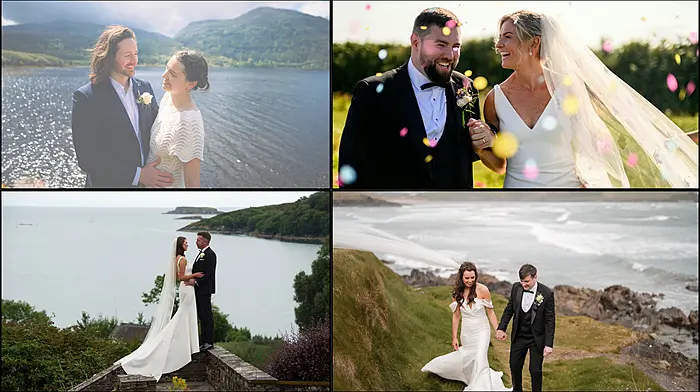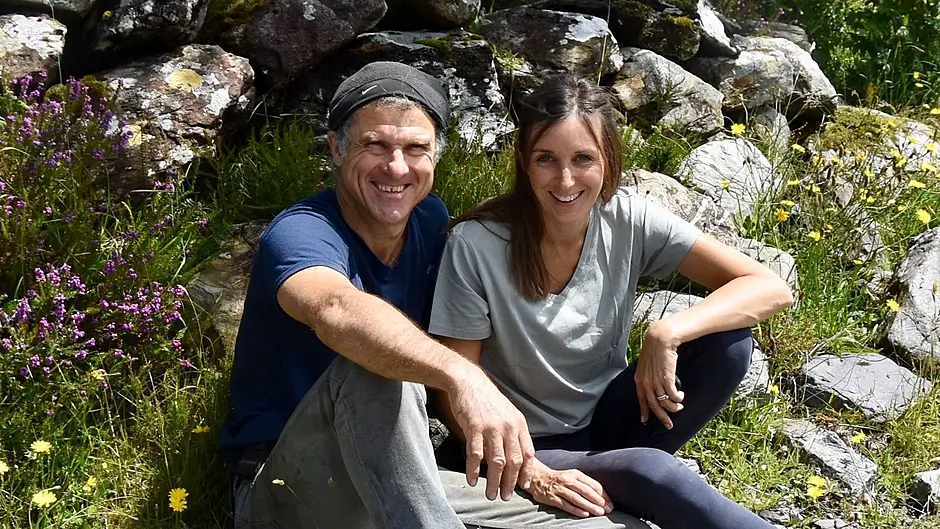
CLAIRE Collins was working for charities in Dublin when she met Steve.
BY KATHRYN M CROWLEY
Little did she know that she would end up moving to a derelict farm in West Cork.
ADVERTISEMENT
Like the aronia berries grown on their land, which are resilient to climate change, Claire had to adapt.
After they married the early years were rough. ‘We were living in a tiny wooden shed, not fit for a family or even for people,’ Claire recalls.
‘No running water. No bathroom. I’d to fill a big tub with a hose for washing. It was like being back in the dark ages, lighting a fire every day to generate heat and look after the basics.’
From four years of living off grid, the couple now live in a light-filled home with their three children.
‘We designed the house ourselves. I did all the interior design and enjoyed it. I really enjoyed living in the house too. All this light, my mood changed dramatically,’ Claire admitted.
The Collins’ home is octagonal, high-tech, and almost passive. Claire taught herself everything. Learning online was ‘a huge learning curve’. By the time her third child was at primary school she wasn't formally working, and needed a change.
‘I was privileged to have that time with them, but I didn't want a nine to five city job gone from them. Friends visited and found the space calming and restorative. I was effectively running a B&B and thought at one stage maybe I could monetise this. Whatever I did had to fit in with the family.’
Initially she thought about transforming the shed, but it was too close to the farmyard. ‘Privacy was very important. People like having a sense of isolation and peace, not next door to other buildings,’ Claire said. ‘Getting planning permission was massively difficult. It was eventually granted the Christmas before COVID, but planning was inundated with requests during the pandemic. They had to get as many generic cabins approved as possible. Bespoke works took longer.’
Claire acknowledges her privileges. She considered making a yoga space or wedding venue, but wedding season coincides with school summer holidays so that was out.
Choosing to provide luxury accommodation turned out to be wise.
A survey of 5,000 people from nine different countries found that 60% are willing to build sustainable tourism practices into holidays.
Businesses that include sustainable practices enhance their standing, cut expenses, draw capital, and future-proof operations. Prioritising sustainability forges closer bonds with consumers, who are more socially and environmentally aware.
Claire uses eco-friendly products and shops at Organico in Bantry which is a 25-minute drive away. The Hidden Haven had 96% occupation so far in 2026, and 94% last year. Guests enjoy home-made soda bread, Glenstal butter, honey from the farm, Gubbeen rashers, and eggs from Derry Duff’s hens.
‘I prepare a hamper while I'm making the kids’ lunch before I bring them to the school bus. I can make granola for the guests while I'm preparing family dinner,’ Claire explained.
What are the challenges? ‘Maintenance. Straight away, no procrastination like you might with your own house. If a doorknob is not working properly, that's a bit of a pressure. If things go wrong at the farm, like there’s a problem with the pipes, Steve can fix most of it because he's set up the water system.
‘But sometimes we have to wait for a builder, like an issue with the sliding doors lately. The guy who built the house is very good, but all the work has to be done on changeover days, between eleven in the morning and four in the afternoon.’
There is always laundry. She hires cleaners to help, and tries to work while the kids are in school.
They need lifts to basketball and other classes in the evening. ‘The third one will be in secondary school from autumn, so when they're all in the one school, I'll have more time,’ Claire predicted.
The children put hampers together, stack firewood, do some painting. ‘There's plenty of jobs to be done and have them involved. I pay them. They understand the work. It's not an abstract.’
For people seeking business support, Local Enterprise Cork (LEO) offers workshops and training. Phone 023 8834700 for more information.