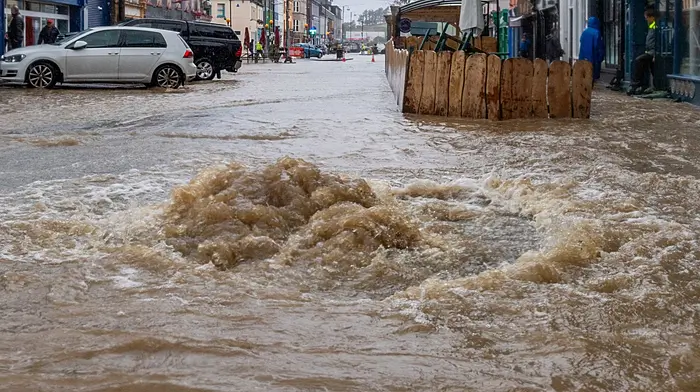
WEST Cork farmers are urged to get on board with a national campaign aiming to support and accelerate the adoption of actions on all farms to improve water quality.
With latest EPA figures showing a worrying decline in some local catchments and given the clock is ticking on the three-year extension to the nitrates derogation, up for review in 2028, intervention has been deemed critical.
ADVERTISEMENT
Called the ‘Better Farming for Water’ (BFFW) campaign, the objective of the seven-year government initiative being run by Teagasc is to support all farmers to reduce the loads of nitrogen, phosphate, sediment and pesticides entering river networks.
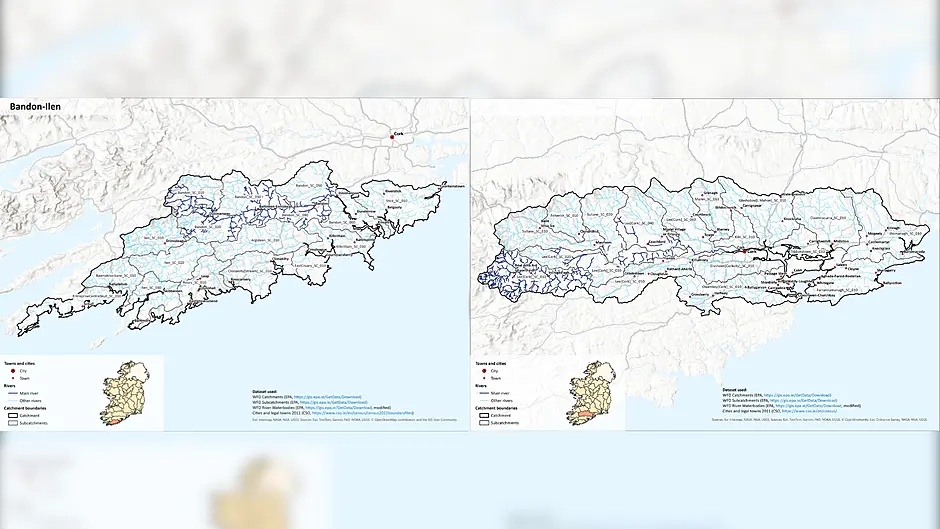
Eight priority catchments have been identified nationwide to focus on, including the Bandon-Ilen catchment which is home to some of the most productive agricultural land in the country with 83% under grassland.
The catchment stretches from Templebreedy Battery on the outer Cork Harbour coastline to Brow Head on the Mizen Peninsula and drains the Rivers Bandon and Ilen and their associated tributaries, forming a diverse and extensive hydrological system. In total there are 180,300 Ha of which 152,684 Ha is farmland, among 5,698 farmers.
The Lee catchment which takes in parts of Macroom has also been singled out for attention.
Oisín Coakley of Teagasc has been appointed catchment coordinator for both areas and is responsible for leading and implementing a targeted programme aimed at improving water quality across the region.
Despite the great work being done by the majority of farmers, and the work done by existing water quality programmes such as Teagasc’s ACP, ACRES and ASSAP, latest water-quality trends by the EPA underscore the urgency of intervention, emphasised Oisín.
‘According to the most recent EPA Water Quality in Ireland Report (released at the end of last year), 61% of assigned surface waterbodies (68 of 111) in the greater Bandon–Ilen catchment are achieving Good or High Ecological Status — which is a decline from the previous figure (EPA report 2016 – 2021) of 75% (83 of 111). In that report the Bandon-Ilen catchment was performing among the best in class on a national level alongside its neighbouring catchments of the Dunmanus-Bantry-Kenmare Catchment which has seen a similar fall in the proportion of monitored surface waters achieving good or high (82% down to 68%).
‘On the neighbouring side is the Lee catchment where the figure has been hovering at around 63% (68 of 110 in 2021; and 69 of 110 in 2024) in the latest and previous EPA report of all assigned surface waters achieving good status or above.
‘Having said that, 61% is still considerably above the national average figure of 52% delivered in the latest report, but this deterioration highlights the need for targeted measures to halt and reverse recent trends,’ he said.
Land use in the catchment is dominated by dairy and drystock agriculture, alongside tillage, commercial forestry, and several significant urban centres.
‘Bandon is the largest of these, with Kinsale, Clonakilty, Skibbereen, and Dunmanway also playing key roles. EPA assessments identify agriculture as the single largest pressure on water quality, compounded in some areas by urban wastewater, domestic treatment systems, urban run-off, forestry activity, and hydromorphological change,’ said Oisín.
He pointed out how a growing number of waterbodies in the catchment are now classed as ‘At Risk’ of failing to meet their Water Framework Directive (WFD) objectives.
‘The catchment also holds 12 High Status Objective (HSO) waterbodies, designated for their historically pristine condition, long-standing ecological stability, and minimal disturbance, reflecting the stewardship of local communities and generations of farming families. However, the latest EPA Water Quality in Ireland 2019–2024 report shows eight of these HSO waterbodies are now failing to meet High Status—a significant decline compared with three failing in the previous (2016–2021) assessment cycle. This represents a notable deterioration in some of the catchment’s most valuable and sensitive waterways,’ he said.
‘The catchment’s substantial agricultural footprint, the intensity of its pressure profile, and the presence of high-value waterbodies in need of protection all highlight the need for coordinated, decisive action. To deliver this, BFFW is built on a multi-actor collaborative model, centred on the establishment of a local Catchment Implementation Group (CIG),’ said Oisín.
The CIG comprises: an Oversight Committee, with strong farmer representation from all farming sectors alongside the relevant agricultural industry actors, and chaired by local retired dairy, beef, and tillage farmer Roy Kingston; and a dedicated on-the-ground Delivery Team, responsible for implementing required actions at farm level.
‘This structure is supported by our main industry lead, Carbery Group in Ballineen, and brings together the full range of available expertise, from scientific evidence and hydrological assessment to on-farm advisory capacity and practical experience. This integrated approach ensures targeted advisory support, practical mitigation measures, and strong on-farm implementation.’
Oisín explains how the plan will involve targeting three critical management areas: nutrient management; farmyard management and land management. This will be achieved through the on-farm adoption of eight actions for change.
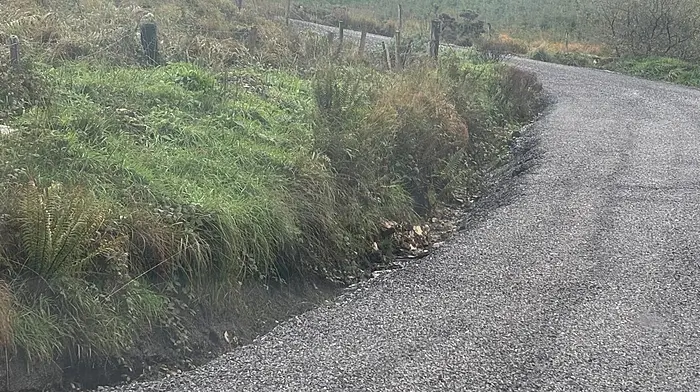
These include reducing purchased nitrogen and phosphorus surplus per hectare; ensuring application of fertiliser and organic manure at appropriate times and conditions; managing and minimising nutrient loss from farmyards and roadways; promoting targeted use of mitigation actions such as riparian margins, buffer strips and sediment traps to mitigate nutrient and sediment loss to water and maintaining over-winter green cover to reduce nutrient leaching from tillage soils.
‘Given both the scale and complexity of the Bandon–Ilen catchment it represents a critical landscape where a science-led catchment approach informing an all of industry collaborative effort spearheaded by sensible and implementable on-farm actions has the potential to deliver real, measurable improvements in our local water quality in the years ahead,’ concluded Oisín.