FARMERS are blamed for water pollution, yet there are other contributors such as malfunctioning urban wastewater treatment plants, chemicals, and human waste.
BY KATHRYN M CROWLEY
Human urine accounts for about 70% of the nitrogen and 50% of phosphorus in Irish waters, which is like a massive dose of fertiliser upsetting the ecosystem.
ADVERTISEMENT
Painkillers, antibiotics and hormone treatments travel in our urine to wastewater treatment and septic tanks.
Those systems are unable to filter out the medicines entirely.
Almost two-thirds (64%) of all pharmaceuticals are excreted through urine, and they seep into the water table and rivers.
Ethers
Polybrominated Diphenyl Ethers (PBDE) compounds spoil water, too. They are found in building materials, electronics, furnishings, motor vehicles, air planes, plastics. So unless you live in a crocheted tent, eat like a hare, and only travel within a few metres, you contribute to water pollution just like everyone else.
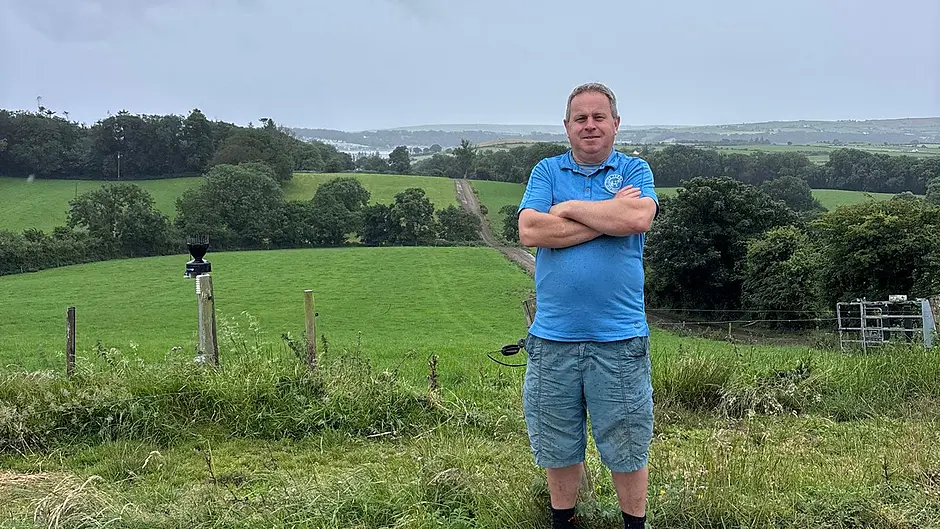
Kilbrittain farmer Lawrence Sexton shares his views. ‘Farmers I suppose didn’t realise until recently that if they kept a wider margin for their vegetations and streams, that it would protect the stream a bit more from excess nutrients,’ he conceded.
‘You’re better off giving it a bit more room, if you can, rather than having it fenced too close to the edge. It helps the nutrients that you have in your field from being released. You keep them in your field rather than release them into water.
Simple measures
Simple and practical measures are always good. Lawrence agrees. ‘Oh, there’s loads of simple stuff. Like, look at the nitrogen. There’s got to be nitrogen, whether it’s natural or it’s artificial, that’s going to be released in the second half of the year. Nature creates its own nitrogen from torrents and decaying matter and so on.
‘If you have a wet autumn, that’s going to be released anyway, and it’s going to run. But there are ways and means of mitigating that. It’s not so easy in nature to do it, but maybe in farming it can be done, you know? To me, there’s a lot of positive things, but farmers have got such a hammering recently that they are just almost, like ‘don’t tell me to do one more thing, or I’m just fed up with it’. There’s a bit of that seeping in, and we’re to blame for every last thing. That is unfortunate.’
It must be hard to find alternatives, especially when faced with constant changes, mountains of bureaucracy, and ‘support’ funding that may be withdrawn at any moment?
‘Farming is a business, and it’s very important that farmers are prosperous,’ reasoned Lawrence. ‘That gives them the money to spend on stuff. Then they can go and do extra measures, no bother. Our business, and a businesses on the side of the street are the same.
‘They need certainty. If everyone keeps coming in and changing a new rule this year, another rule next year, it makes business a lot more difficult. I’m lucky to be dairying because it’s reasonably prosperous most of the time. I’m not saying every year. This year is more difficult.’
The strain is real. ‘Derogation and the uncertainty about it is hanging over us. Farmers in Ireland have a grass-growing system, which is very unusual in the rest of Europe. We’re allowed to put out nitrogen at a higher rate than other countries that have much shorter summers, much longer, colder winters.
‘And they’re a lot more crop-based, whereas Ireland is more grass-based, so it’s able to use the nutrients. Grass grows nearly 12 months of the year, so it uses up nutrients for most of that year. Not all the year, but most of it.’
On the topic of water pollution, Lawrence said: ‘Some years it goes down, some years it’s up. Some good things are happening, but the conditions make it difficult for people to do business.’
Funding and the future
Depending on funding makes people vulnerable. ‘Yeah,’ agrees Lawrence, ‘you won’t get it, or they run out of funds, and next thing you won’t get what you were promised. The conditions are so severe nowadays.
‘I think what we’ll have in the future is commercial farms, and we’ll have other farms that don’t have to be commercial, but are often very dependent on subsidies, which aren’t always there. They can broken very easily nowadays.
‘If you’re not allowed a certain level of production, you could be looking for subsistence from the government. And there’s a whole lot of us who just want to be allowed to farm freely and have a prosperous farm. That’s what we need. Otherwise, farming turns part-time. If you’ve been years on subsidies, the minute there’s a crisis, the subsidies are pulled from you. There’s a huge change.’