WHEN Union Hall woman Pamela Deasy was told she was cancer free in September 2019 she expected to be able to draw a line under the gruelling ordeal, and move on with her life.
She never imagined that six years later she’d be living with chronic fatigue, debilitating digestive issues and balance problems, and she had no clue that she’d be hit with an overwhelming feeling of survivor’s guilt.
Neither did she envisage that she’d be the co-founder of Pancreatic Cancer Ireland and UCAN (United Cancer Advocacy Network of Ireland), and a member of the patient advocacy committee for Digestive Cancers Europe; or that she’d be speaking in the Dáil and in Croke Park on November 20th to mark World Pancreatic Cancer Day.
ADVERTISEMENT
‘I feel a sense of duty to turn pain into purpose and use my voice for hope,’ said Pamela (53). ‘I feel obliged to raise the profile of pancreatic cancer which around 600 people in Ireland are diagnosed with each year as there’s just so few of us survivors around to do it, because of the poor prognosis. That’s the reality.’
Often by the time pancreatic cancer is diagnosed, all that’s on offer is palliative care so it’s also about raising awareness of symptoms including diabetes, sudden weight loss, indigestion, jaundice, fatigue and a change in bowel habits, she said.
Pamela’s only symptom was extreme fatigue, when led to her diagnosis in 2018 when she was 46. She hadn’t been feeling great that summer in general, and had some stomach issues, and had a kidney stone queried.
‘As winter kicked in, I still wasn’t feeling great. I was getting really tired and everyday tasks were becoming a burden,’ said Pamela, who at the time worked in Kalbos café in Skibbereen.
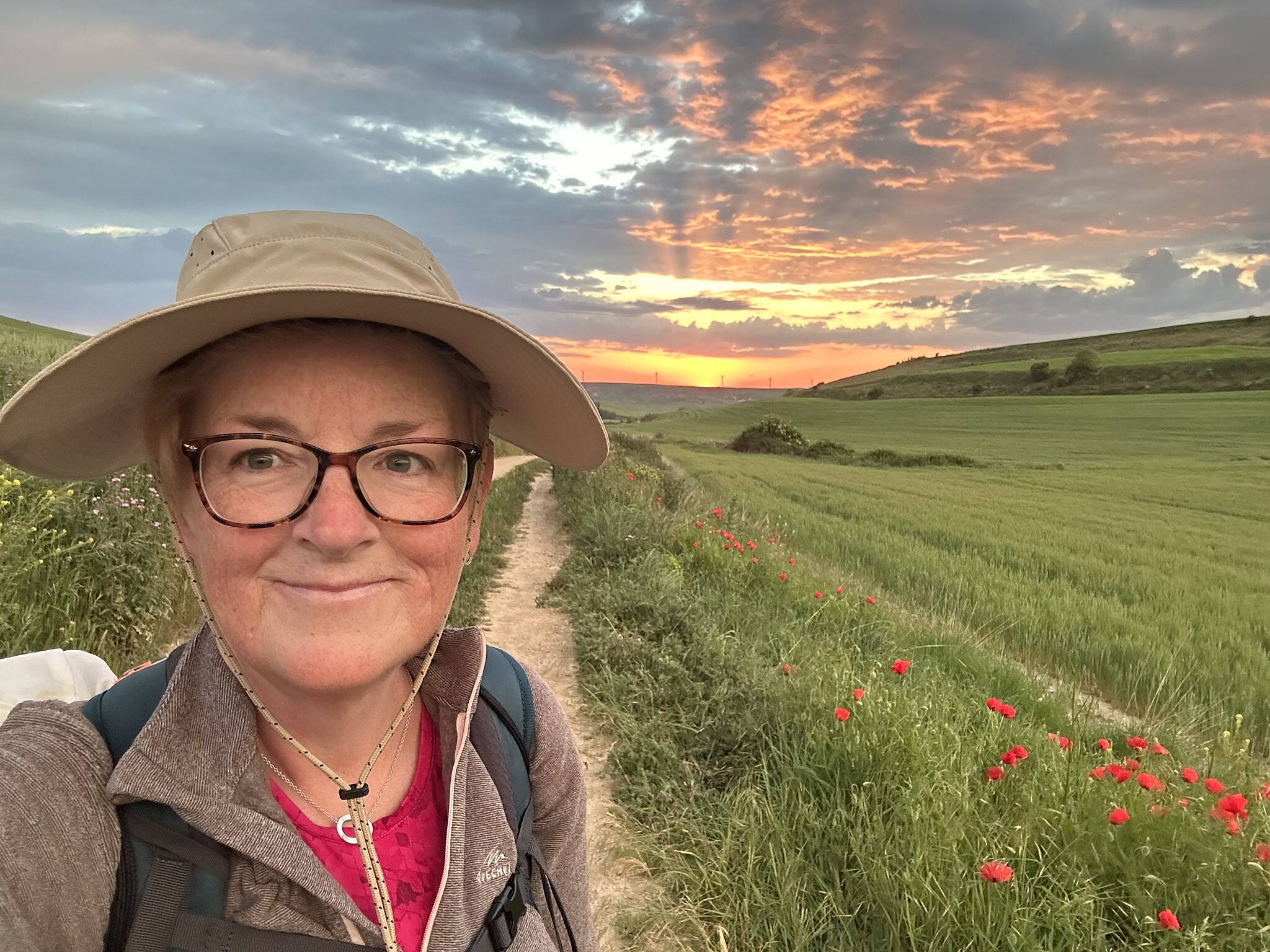 Tough going: Pamela survived pancreatic cancer and walked the Camino.
As part of her treatment she underwent an 11-and-a-half hour surgery and had a piece of her pancreas, stomach, intestine, gall bladder, spleen, and all surrounding lymph nodes removed, and after scans in September 2019 was told she was cancer free.
‘I had this assumption that my life would go back to the way it was pre-cancer but that didn’t happen, and won’t ever happen. I’ll always be battling fatigue, and I’ll always have occasional digestive and balance issues and will need ongoing physiotherapy.
‘These are essentially hidden disabilities which I’ll have for the rest of my life. I didn’t cook for two years, even getting dressed was hell. I needed support walking around as I had such severe muscle wastage. But I look absolutely fine so naturally people think I’m fine but inside my body, it’s a completely different story.
‘I have to be so careful about what I eat and drink and am constantly making changes to my life. It’s about living life with a new version of yourself even if you look the same,’ she said.
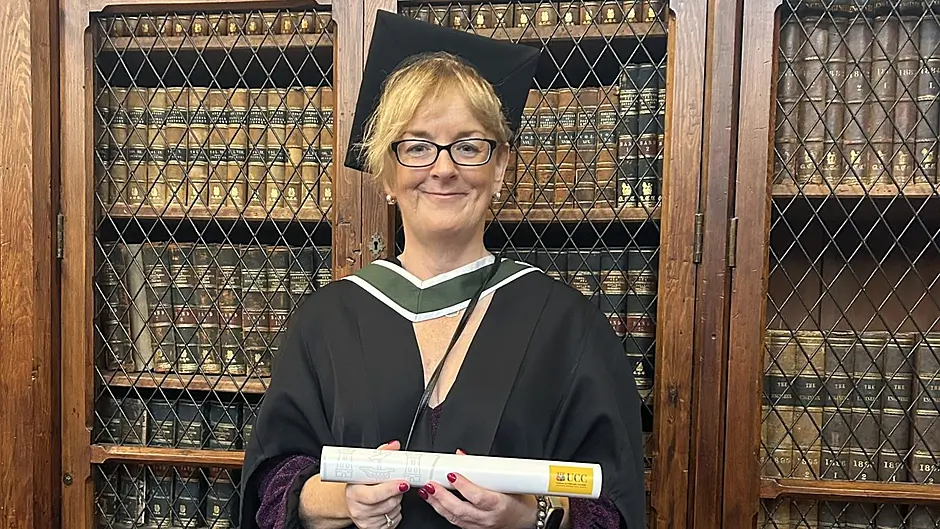
Despite these challenges Pamela graduated from UCC earlier this month with a BA in sociology and religion. It was a proud day, and a milestone that at one point seemed unreachable.
‘I had a two hour commute morning and evening, on top of the lectures and assignments and I was only one month in when I was ready to give up. Physically it was so hard,’ she recalls.
Fortunately she reached out to disability supports in the college and was assigned a disability officer, which helped turn things around. Graduation day was an emotional occasion.
‘The five year survival rate for pancreatic cancer is 14%... that can feel overwhelming so I remembered those that didn’t make it, some of whom I knew, and did it for them as much as myself.’
In the middle of her studies she also walked part of the Camino to raise money for Pancreatic Cancer Ireland.
‘That was a big step out of my comfort zone,’ she admitted. ‘It was stressful to not always have easy access to toilet facilities and that caused additional anxiety, but to complete the walk
was brilliant.’
Pamela availed of supports from Cork ARC Cancer Support House to help her work through her survivors guilt and has also trained to facilitate the charity’s ‘Thrive and Survive’ course.
She also feels there should be more compassion shown to the family of the patient as the illness hits everyone, and in Pamela’s case her son was her carer for two years.
‘There’s not enough understanding about this, and that nothing returns to the way it was which is something else I am highlighting through the groups,’ she said.
‘But more positively, there’s a lot more information available now, just two years on from my diagnosis and prognosis is improving. The five year survival rate for me was 9% and is now 14%’
For now she’s focussed on her Masters in Sociology, and is undertaking a 13-month patient education programme with the Irish Patient for Patient Organisations, Science & Industry (IPPOSI).
‘By 2030, pancreatic cancer is projected to become the second leading cause of cancer related deaths worldwide, and we cannot afford to wait. I urge everyone to join me in raising awareness, demanding earlier detection, urgent pathways and pushing for more research funding because together we can change the future of this disease.’