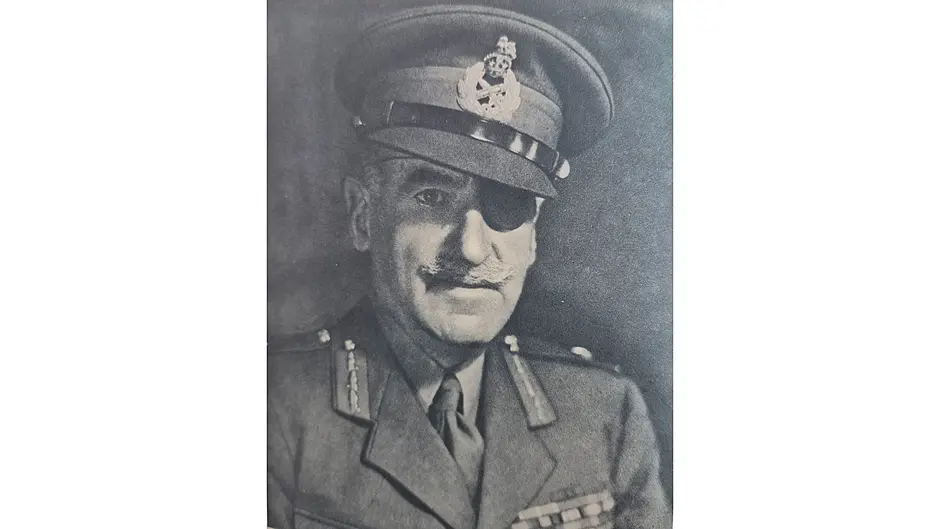
AT the back of a little graveyard in Aghinagh a few miles east of Macroom is where General de Wiart is interred.
BY ADRIENNE ACTON
You wouldn’t see his plot at first glance as you have to climb over the back wall, avoiding the farmer’s electric fence, before the scale of this monument becomes apparent.
ADVERTISEMENT
How he ended up here is a bit of a dubious tale, he claimed to have an Irish grandmother, but historians are finding it difficult to find this particular link.
How and ever, this Victoria Cross awarded Lieutenant General and his second wife Joan (who is remembered fondly by the locals) lie in settled slumber beneath this ostentatious slab.
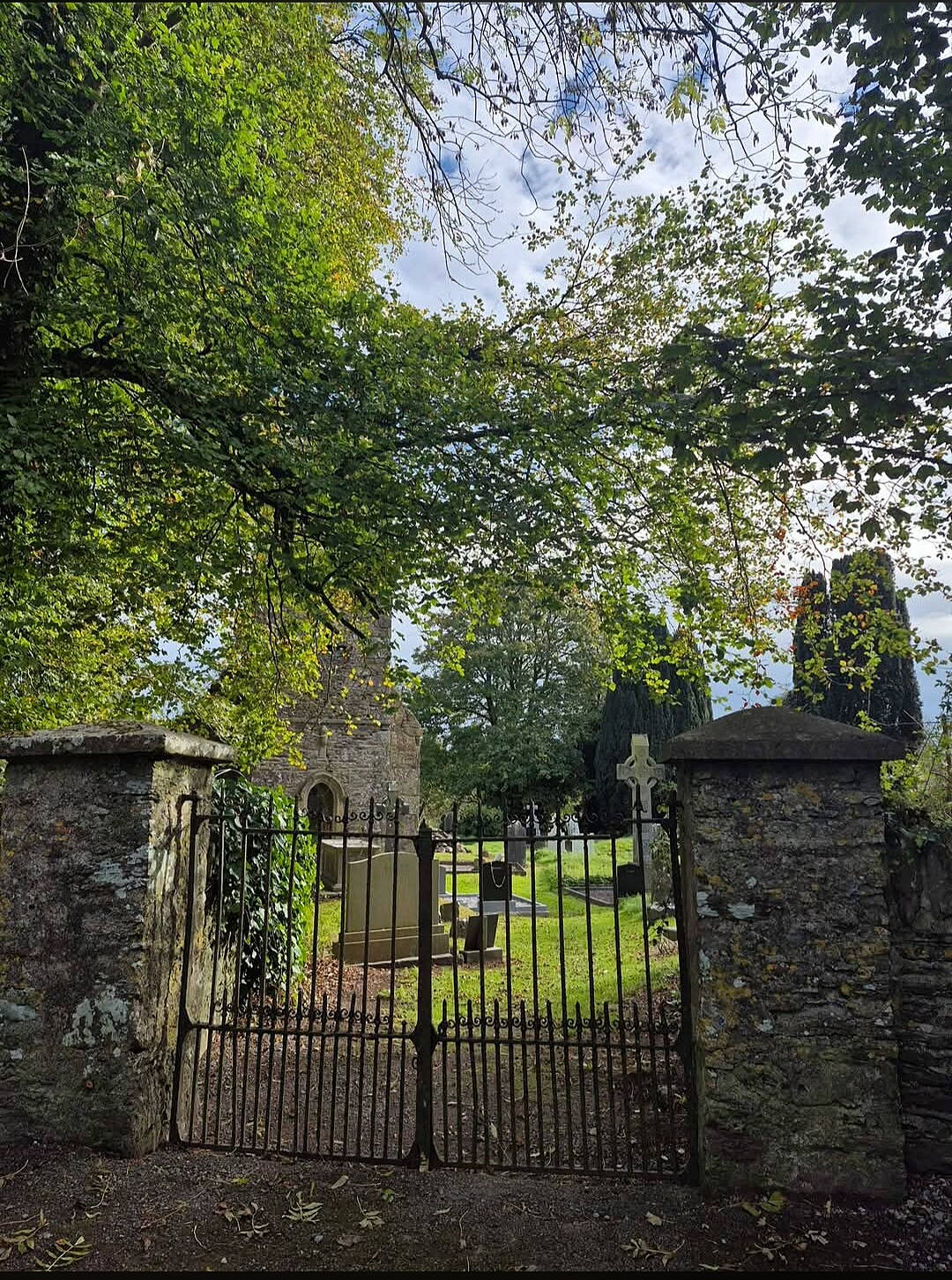 Aghinagh Graveyard near Macroom.
By all accounts he settled quietly into retirement and took long walks with his wife and favourite springer spaniel; a sedate contrast to his hectic life. A quick Google search on the man will furnish you with the following:
His full name is Lieutenant-General Sir Adrian Paul Ghislain Carton de Wiart, (VC, KBE, CB, CMG, DSO) .He was born on the May 5 1880 and died on the June 5 1963.
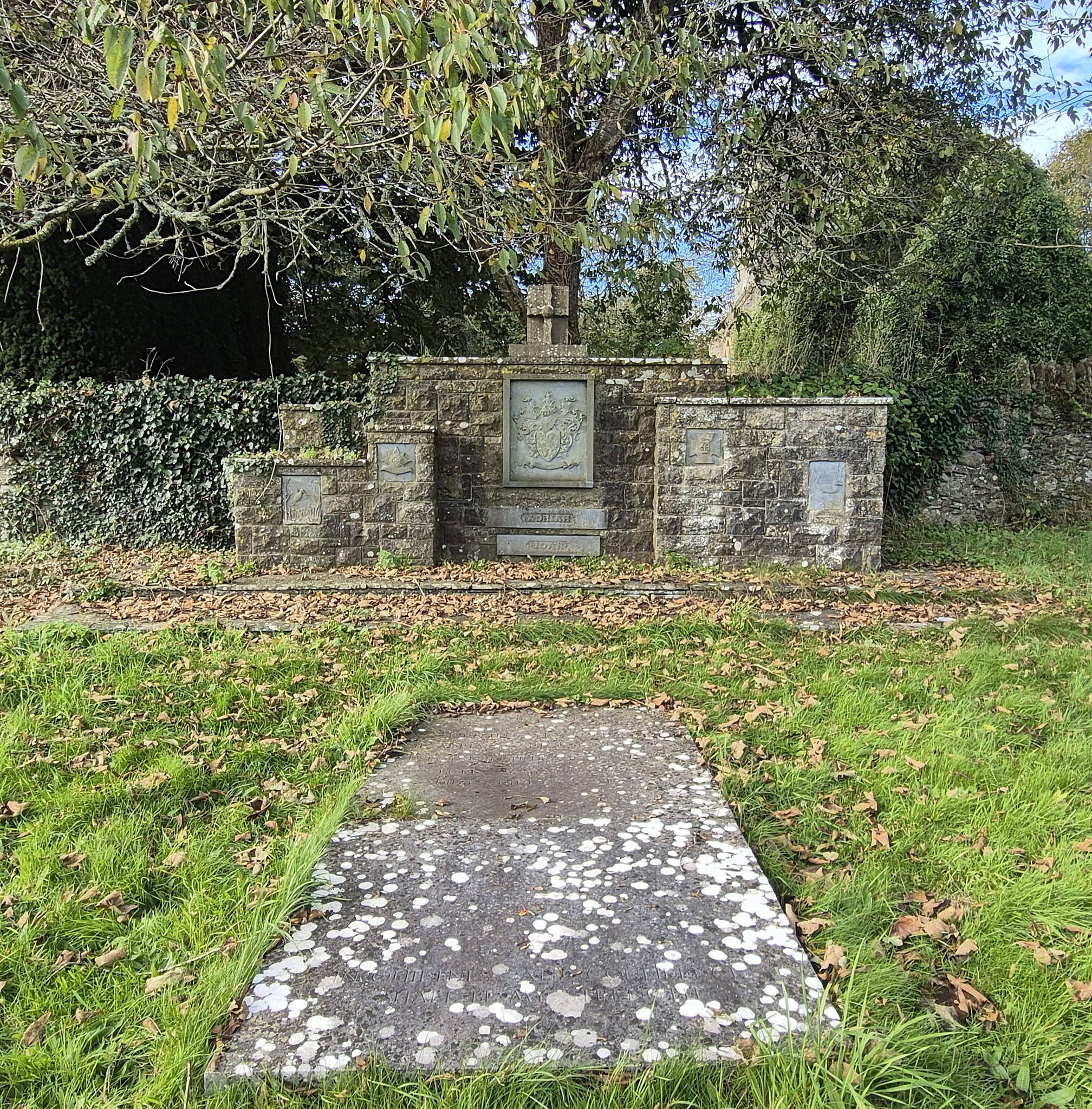 Sir Adrian Carton de Wiart's headstone at the cemetery.
He was awarded the Victoria Cross, the highest military decoration awarded for valour in the face of the enemy in various Commonwealth countries. He served in the Boer War, First World War, and Second World War. He was shot in the face, head, stomach, groin, ankle, leg, hip, and ear. He was also blinded in his left eye, survived two plane crashes, tunnelled out of a prisoner-of-war camp, and ripped off his own severely injured fingers when a doctor declined to amputate them.
How in the name of all that’s holy did he survive all that, I hear you cry. It’s hardly surprising that he got the nickname ‘the man who wouldn’t die.’ Describing his experiences in the First World War, he wrote, ‘Frankly, I had enjoyed the war’.
After returning home from service (including a period as a prisoner-of-war) in the Second World War, he was sent to China as Winston Churchill’s personal representative.
In his memoirs, Carton de Wiart wrote, “Governments may think and say as they like, but force cannot be eliminated, and it is the only real and unanswerable power. We are told that the pen is mightier than the sword, but I know which of these weapons I would choose’.
Touche.
This is all hugely impressive. But, as with everyone everywhere the essence of the man lies somewhere away from his curriculum vitae, so I tracked down a copy of his book, printed in 1950, and while trying to be open-minded about one of his besties being Winston Churchill, I dived into his memoir.
Firstly, the opening line reveals a little about the world he lived in. “A childhood of shifting scene and a mixed nationality may be responsible for my useful knack of growing roots wherever I happen to find myself.” So, he was hugely independent, whether by choice or by circumstance could be argued. Next, he says when he was 6 years of age he lost his mother. This would lead most of us to think she passed away but in fact his parents had just divorced and she went on to remarry.
This to me is indicative of a family of males that gloss over the uncomfortable by completely dismissing her existence. His father uprooted them to Cairo and Adrian was reared by an aunt. By 1888 his father had remarried, a woman the young man describes as having a fiery temper, and she removed all trace of the aunt and her family.
Adrian was taught French and Arabic, was expected to excel in sports, which he did, and was gifted a pony and a gun which he says he used to torment the sparrows.
He says that he rebelled when an Italian governess was employed to teach him yet another language. She didn’t last long and he was placed in a school run by French priests.
It seems to me that he was rebellious, independent, and with parents that preferred to remove him to school when he showed a dislike to the regime.
This could be considered a standard upbringing for the wealthy elite in the late 19th century, but it tells us something about the young man.
Masculinity overrode emotional expression or attachment. He shot animals with impunity through his whole life which shows a lack of empathy or caring to my eyes. He says “It was a life too lonely and formal to be truly happy, and I knew nothing of nurseries, lump kind nannies and buttered toast.”
Adrian goes on to talk about being bullied when he was dispatched to an English public school in 1891, he says “the bullying was very overwhelming for a Belgian boy who felt, and probably looked, a strange little object.”
However, he preserved, as opposed to falling behind or being a dejected young man, he began to excel at sports becoming captain of the cricket and football elevens, he won the billiards, tennis and racquets tournaments and said this stood to him when handling men in later years.
He says that the two relatives that meant the most to him were his cousins Count Henry Carton de Wiart, former prime minister, and Baron Edmund Carton de Wiart, secretary to King Leopold II. Surely his association and friendship with these two men spurred him on during his lifetime in the military, as he mentions the competitiveness between the group.
Occasionally through the memoir he touches on a personal note, for example, saying he remained terrified of the dark throughout his life having discovered a man who had taken his own life, but the overall take from the book is a man with extraordinary courage and determination to fulfil his potential at every turn.
He makes little mention of his two daughters throughout and is blasé about the many injuries he received in battle. He considered all of his incapacitating and life-changing injuries an inconvenience.
His end game always seemed to be his plans for the next battle, the only thing holding him back was his bodies unwillingness to keep up! He could have been forgotten had he been killed in the second Boer War, or even the First World War, but because he survived into old age like a cat with nine lives, we have a rare memoir to study and learn from.
He died in 1963, peacefully, at his home in Aghinagh and is buried in a beautiful graveyard behind a wall. For me where the grave is placed makes me smile. A large imposing presence, adjacent to, but never near, the ordinary man.