A SECOND generation market gardener is working his land in a considered and sustainable way to protect both the soil and the family’s legacy, and enjoying considerable success showing that one doesn’t have to be at the expense of the other.
Robinson’s is a family run farm in Cork, based on 30 acres. The produce is sold at local markets, and Dermot Robinson has been at the helm of the family’s chemical-free vegetable farm near Cloghduv since 2012.
ADVERTISEMENT
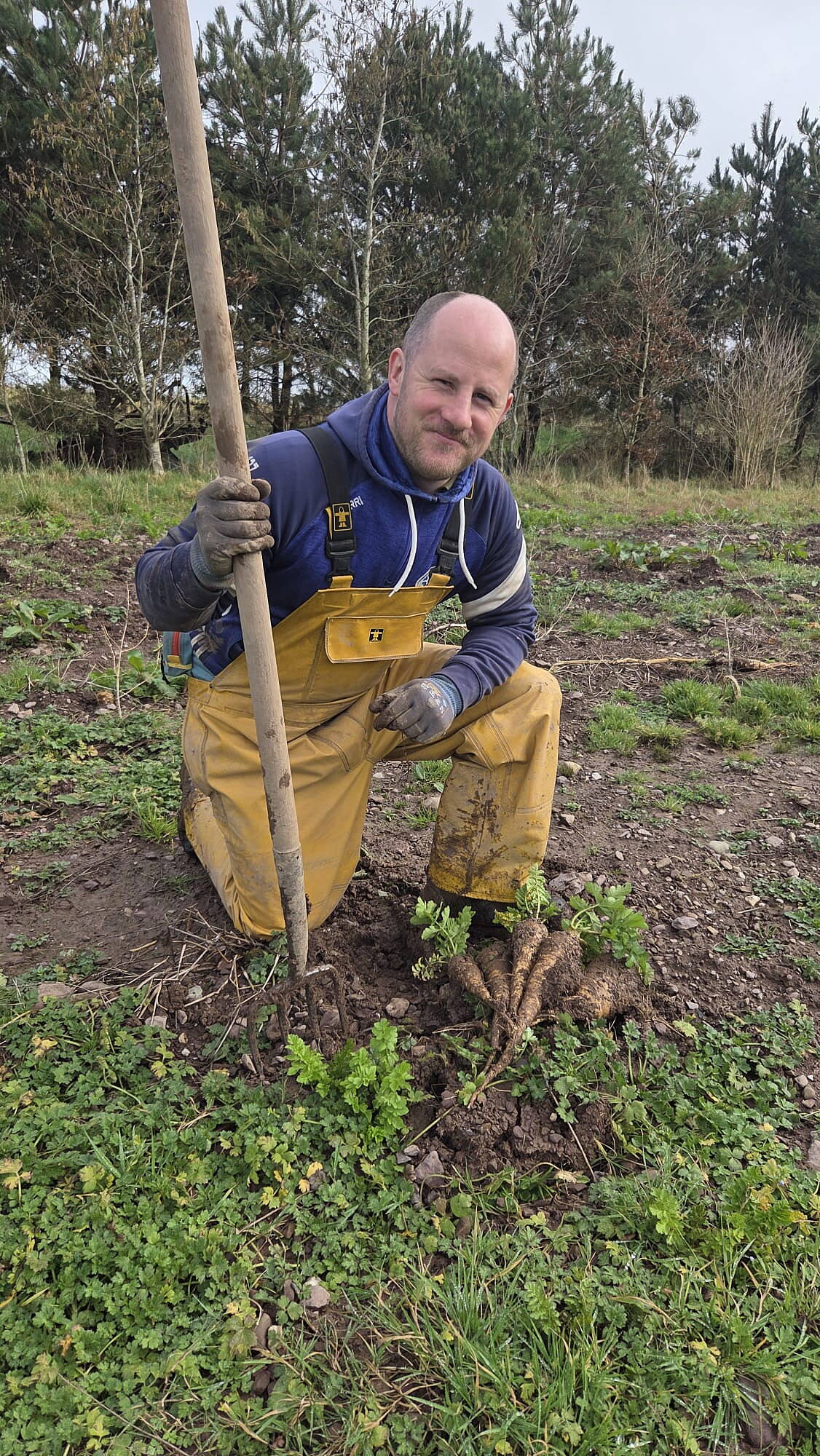 Dermot Robinson.
‘My parents, Eddie and Caroline met in Kenya. My dad is from there and my mum was travelling and working there as a teacher. We lived there until I was around three and when we came back they worked on my grandad’s farm in Carrigaline, growing vegetables, before they luckily bought this farm in 1997. I’ve been working on and off here since I graduated with a degree in Geography, and full-time with my wife Erin, for the past eight years,’ said Dermot.
The Robinson farm extends to 30 acres in total, 20 of which is arable land for vegetable growing. Their list of crops grown without chemicals (for which they’ve been won an award) is long and varied and includes: potatoes, cabbage, broccoli, turnips, onions, leeks, beetroots, carrots, parsnips, lettuce, mixed salads, tomatoes, beans, courgette, pumpkins and cucumbers. Some of this produce is grown in their nine tunnels.
The family are familiar sights at the Coal Quay market in Cork City on Saturdays, at the Tuesday market in Macroom, where they sell their produce, and they also supply restaurants and a small number of box orders for pickup at the farm gate.
‘Mum has been a regular at the Coal Quay market since 1997. On her first day she was hoping to make £40 and she made £42 so she returned! She goes 50 weeks of the year!’ said Dermot proudly.
Meanwhile, of the arable portion of the farm, only 10 acres is planted at a time so it rotates between vegetables, cover crops and grass.
Cognisant of the dangers of soil degradation and forest removal, the family have given over areas to wildlife and tree planting, and they practice cover cropping and crop rotation. All this provides shelter from increasingly stormy winters, creates beneficial predator habitats and provides a reliable source of water, while improving the aesthetics of the farm, explains Dermot.
‘On our wettest six acres we have planted a mixed wood of willows, alder, hazel and oak. In the middle of this we have dug out a lake for wetland habitat. We have also widened hedgerows, and planted shelterbelts. A total of four acres of marginal land has been given over to our agroforestry experiment. We have made sure our plantings of trees have been diverse, including wild fruit bearing trees, hardwoods and softwoods. The arable portion of the farm rotates between vegetables, cover crops and grass, creating a diverse patchwork of different habitats. We often allow our overwintered brassicas to go to flower and provide early bee forage in the spring,’ he said.
Dermot says it’s completely possible to make a viable living from market gardening, at the scale he’s operating at.
‘We sell directly, giving us control which allows us to use our ground as we see fit. We’re not under any pressure to plant all the land,’ he pointed out.
The Robinsons have never sought an organic certification: ‘We call ourselves chemical-free farmers. We have an open day during the summer and that allows people to give their own certification to what we do! It’s also a good chance for customers to connect with where their food comes from. Our customers are very loyal and really value what we do and are prepared to pay what’s more than the supermarket. Most of them are foodies and it’s the flavours from what we grow that keeps them coming back,’ said Dermot.
The ‘ultimate dream’ isn’t to supply supermarkets; it’s to invest in a storage shed.
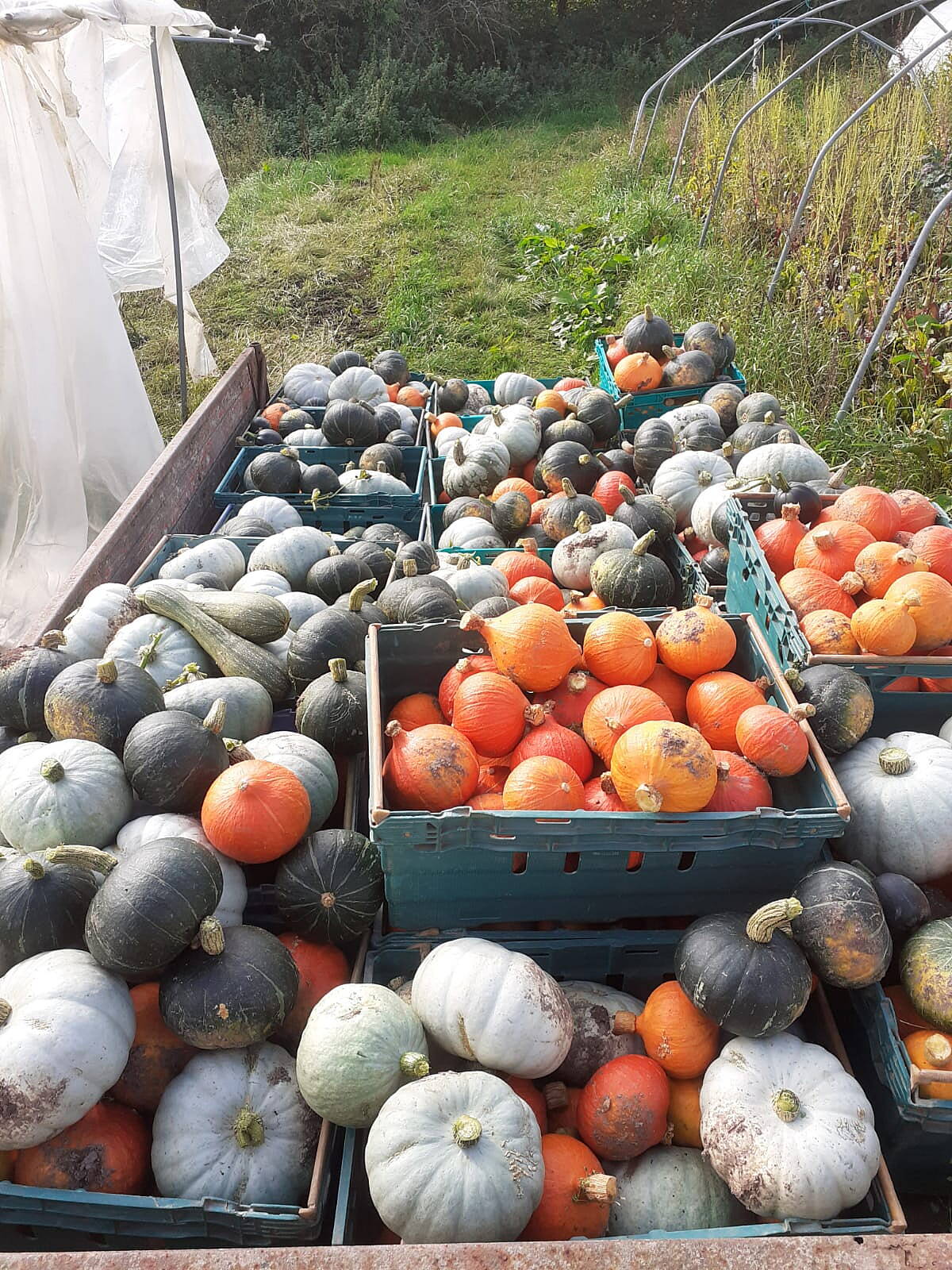 Some of the produce from the farm.
‘The potatoes are stored in the drills they grow in and it can be challenging to pick them in poor weather. This has been the wettest spell I remember for a while. A few years ago I recall that it rained from February to April and it seems like we’re stuck in that bad weather pattern now every year at that time; in the summer too we’re on the edge of Europe’s heatwaves, so a storage shed would be a future hope.’
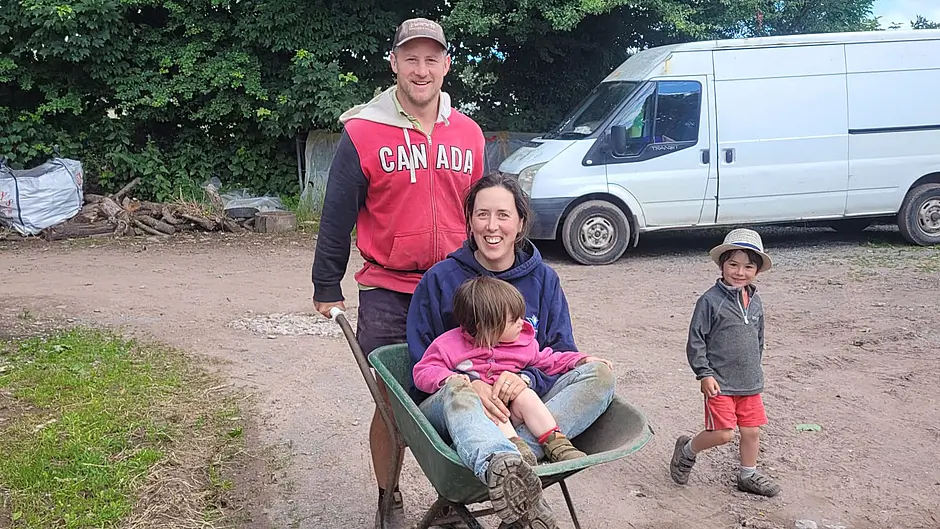
Currently Dermot, his parents and Canadian wife Erin work on the farm along with one full-time and two part-time staff, and he’s recruiting for further seasonal workers.
The work is physically demanding, but he says he finds it very fulfilling, and he’s very conscious of achieving a sustainable work-life balance.
They’re parents of a six and three year old and Dermot says that setting a positive example of what life on the farm is like, is important to them, and while there’s lots to do a typical day spans from 8.30am to 5pm.
‘It’s like running a marathon. You don’t want to be sprinting from the start.’