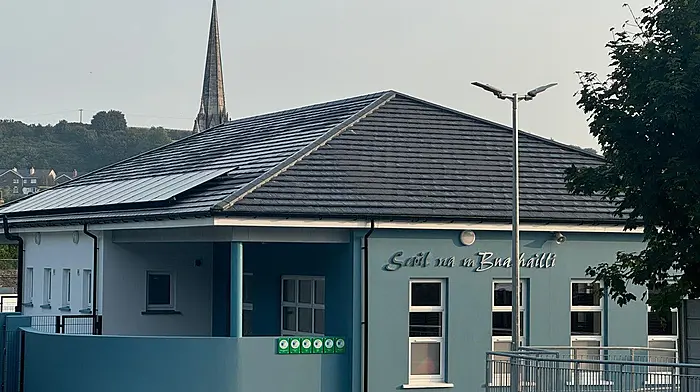
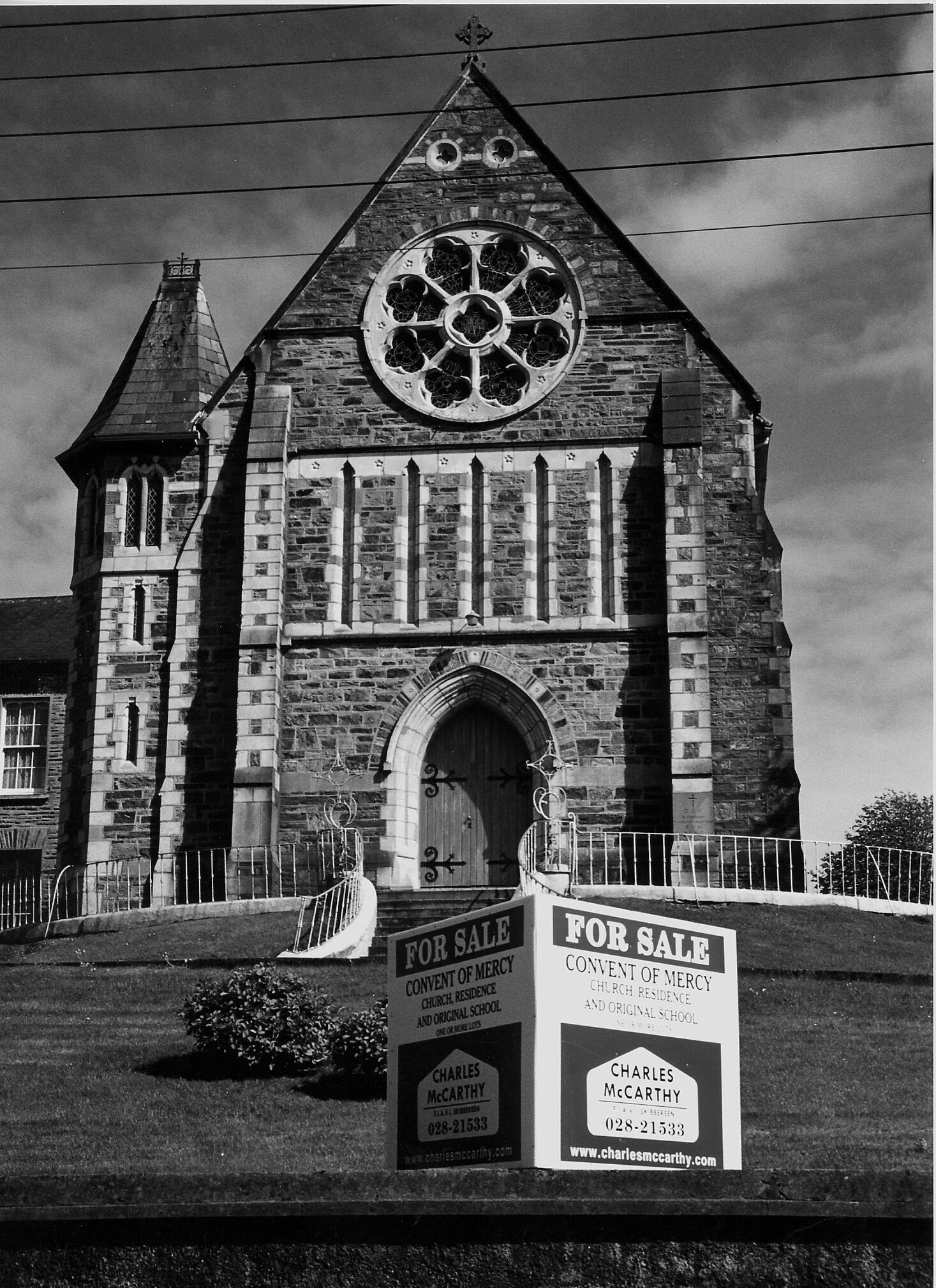
As the former convent building in Skibbereen lies idle, with no sign of a start date for a new development, we revisit the history of the landmark religious site.
The Sisters, and the convent, shaped Skibbereen profoundly and their contribution to the area was immense, writes Sr Cóirle McCarthy, Southern Branch Leader of the Sisters of Mercy
The Sisters of Mercy were founded in 1831 by Catherine McAuley.
Catherine’s priority was availability for ministry which was not typical of religious orders at that time.
Catherine and her companions took as their special works the instruction of poor girls, visitation of the sick, and the protection of distressed women of good character.
ADVERTISEMENT
They became known as the ‘walking nuns’.
These Sisters, who were without the usual strict enclosure and whose convents quickly became part of many dioceses, inspired local girls to see and meet local needs, and the new institute began to spread rapidly.
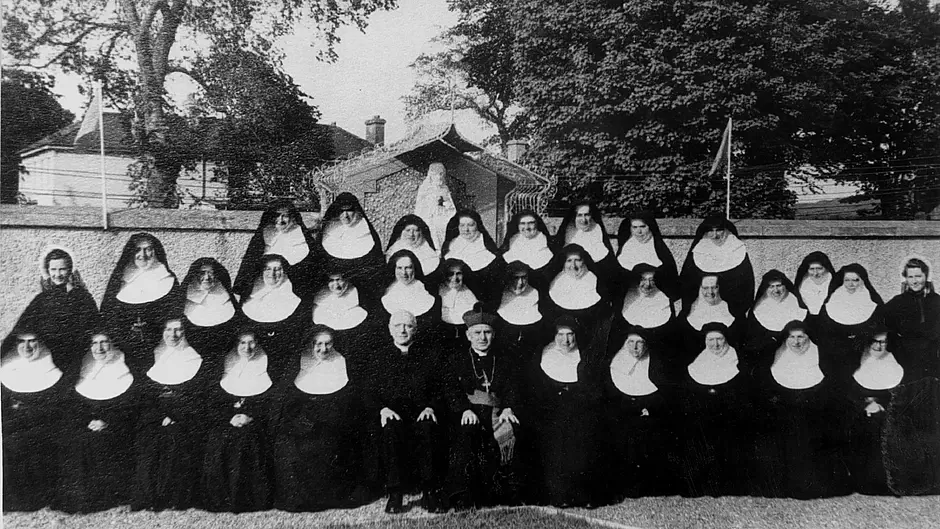
The foundation stone of the Convent of Mercy, Skibbereen, was laid on September 8th 1856, and on the 24th of May 1860 the building was opened.
Three Sisters came from Kinsale to start the community in Skibbereen. On May 28th 1860, children were enrolled and on June 4th, the school opened.
Subsequently it often accommodated an enrolment of over 500 pupils.
Girls of all ages attended the school, and a monitor system was introduced whereby the older pupils instructed the younger ones.
Sunday school was introduced to accommodate country children. In September the school was put under the Board of Education, providing security.
According to the annals, relief in Skibbereen took the form of helping people with their rents and encouraging those who did not want to publicise their needs to come privately to the convent.
This suggests that poverty was quite widespread: some who had once been solvent were now trapped.
Scarcely a decade had passed since Skibbereen had been ravaged by famine, and recovery was slow.
At this time visitation of the sick began, and the Sisters opened a dispensary to help the poor.
Owing to unemployment, the Sisters sought to provide work for young girls to stem emigration and started a weaving industry in 1889 with advice and looms from Sir William Ewart of Belfast.
Local funding was raised through a concert promoted by Mrs Downes, granddaughter of Daniel O’Connell. With £30 collected, more handlooms were ordered.
When the first cloth samples were produced, they were bleached and finished at Ewart’s factory in Belfast, and dress lengths were presented to Lady Aberdeen, Miss Brady, and others who followed suit.
In all, 23 looms were donated.
Experienced textile teachers were engaged by the Sisters, and while initially their wages were covered by the congregation, the state later paid them after successful applications to the education commissioners.
The weaving industry’s success is evident in inspectors’ reports and the press, who noted the high quality of textiles which attracted commissions and sales.
Items produced at the Convent won first prize at the Working Men’s and Women’s Exhibition in London in 1893, and more were exhibited at the World’s Fair in Chicago.
An address to Lady Aberdeen from the Skibbereen weavers, reported in The Southern Star, expressed their gratitude that the industry gave them the chance to live respectably at home rather than emigrate.
Some 47 students passed weaving exams in 1891, and 43 more in 1892.
From Skibbereen, weaving spread to other parts of the country until the outbreak of World War I.
Education advanced further with the opening of a ‘secondary top’ in 1935 to prepare pupils for examinations.
A full secondary school followed in 1939, beginning with 30 students. In the decades that followed, extensions and a new primary school were added, with the old primary given to the secondary.
The school’s name was changed to Mercy Heights Secondary in the 1980s. In 2016 it amalgamated into Skibbereen Community School.
The Sisters also ran a much-loved lending library from the 1940s, providing an affordable source of books until the county library service replaced the need.
From 1875 the Sisters also served as nurses in the Workhouse, later providing clinics on islands and caring for the sick during epidemics, sometimes at the cost of their own lives.
During the War of Independence in 1921, the Workhouse was burned and the Sisters helped relocate 130 patients.
St Anne’s Hospital was built soon after, providing care for the elderly and sick, and remains in operation today as Skibbereen Community Hospital.
In 1970, the Sisters supported the launch of Meals on Wheels through the Vincent de Paul Society and community, serving older adults locally.
The Skibbereen Sisters also made foundations beyond the town: Rosscarbery in 1894, Bodmin in 1902, Boca Raton in 1960, and missions in Peru from 1971.
The story of the Mercy Sisters in Skibbereen, up to the convent’s closure in 2003, illustrates Catherine McAuley’s spirit of generous response.
Through education, work, care for the sick, and compassion for the poor, they shaped the community profoundly, always trusting in the providence of God.