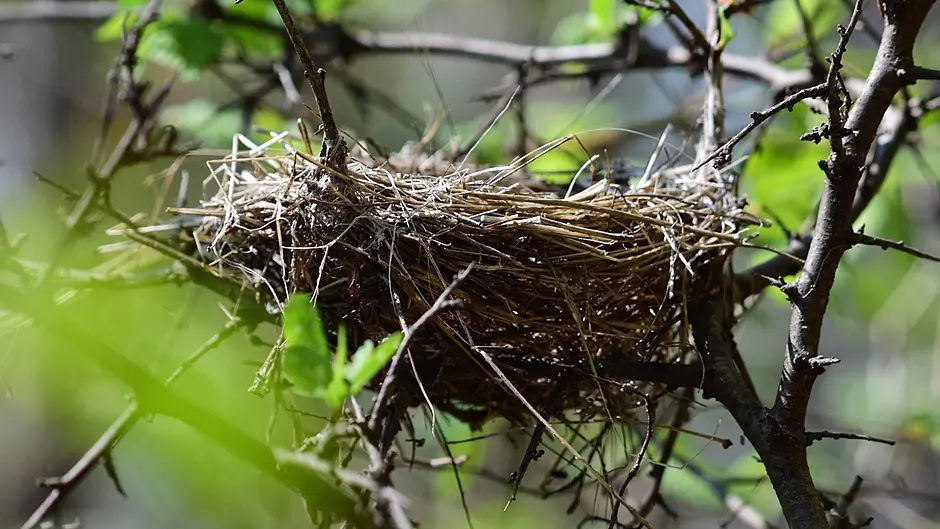
IT’S officially bird nesting season, and the National Parks and Wildlife Service (NPWS) has set out the legal restrictions that apply to hedge cutting and other vegetation removal from March 1st each year.
NPWS explains that Section 40 of the Wildlife Act 1976 prohibits the cutting, grubbing, burning or other destruction of vegetation growing on 'any land not then cultivated' between 1 March and 31 August annually.
NPWS states that the closed period is intended to protect bird life during nesting, help prevent forest fires and protect vegetation and wildlife habitats during key months of growth and reproduction.
ADVERTISEMENT
Minister of State for Nature, Heritage and Biodiversity Christopher O’Sullivan stressed that nesting season from March 1st to August 31st is a ‘critical’ time for birds and wildlife.
He asked everyone to play their part in protecting birds as they start to build their nests, lay eggs and raise their young.
‘Hedgerows are a unique feature of the Irish landscape,’ said the Fianna Fáil TD. ‘These living fences provide food and shelter for our birds and pollinators, and serve as corridors for wildlife to move across fragmented habitats.
‘Hedgerows can benefit from cutting from time to time, but it is important that this activity takes place outside of nesting season to avoid disturbing nesting birds and other wildlife. I encourage everyone to familiarise themselves with the guidance and their responsibilities. Breaches of legislation is a matter that NPWS takes very seriously with 17 prosecution cases initiated in 2025 under Section 40 of the Wildlife Act.’
The NPWS guidance also highlights that the law contains limited exemptions.
These include vegetation destroyed in the ordinary course of agriculture or forestry, clearance carried out as part of road or other construction works or the preparation of building sites, and works carried out under Section 70 of the Roads Act 1993.
NPWS notes that suspected breaches of Section 40 can be reported to its wildlife enforcement contact, and warns that breaches are treated as wildlife crime and may result in prosecution.
Separately, NPWS also references Section 22 of the Wildlife Acts, which makes it an offence to destroy a wild bird’s eggs or nest, or to disturb a bird on or near a nest, at any time of year.
Five cases taken by the NPWS last year resulted in convictions and there are a further 12 before the courts. The most significant penalty was a €14,000 fine.