As the hare coursing season begins for the 2025/26 season, records from the National Parks and Wildlife Service (NPWS) show that across West Cork clubs, one hare was euthanised in the 2024/25 season.
Reports published by the NPWS show that 50 hares were netted last year between December 5th and 28th by Clonakilty Coursing Club; 49 were released on January 12th, the final day of the meet, over a month after some had been captured.
One hare was released a week later, on January 19th 2025, after it had been injured during the meet. Over the three days a total of six hares were ‘hit’, and none were ‘pinned’.
ADVERTISEMENT
Meanwhile in advance of the Bandon and Carey’s Cross meet in late November 2024, 41 hares were netted. 39 were later released, while one was euthanised, and one other escaped.
Over the three days of the meet, five hares were ‘pinned’, and one was ‘hit’.
Of eight hares examined by the vet, five needed treatment.
Fixtures for this season are scheduled for Bandon and Carey’s Cross/Macroom late in November this year, and in Clonakilty in January 2026.
Enclosed hare coursing is legal in just three EU countries, Ireland, Spain, and Portugal.The Irish hare is Ireland’s national animal and protected under the Wildlife Act.
Despite this, it is legal to hunt hares with a pack of beagles of harriers, and it is legal to capture hares for coursing, under licence.
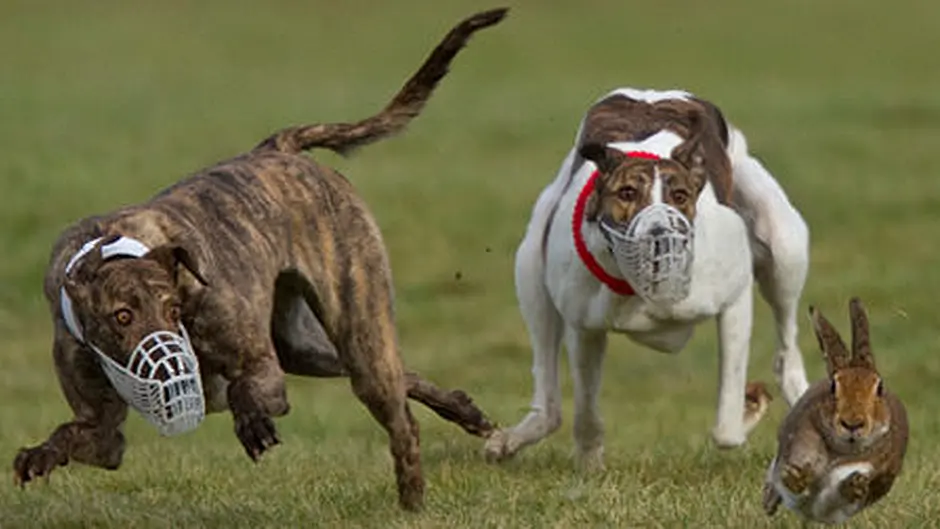
In enclosed coursing, the course is about 400 metres long, and the hare is given a 100 metre head start and pursued by two dogs.
The dog that causes the hare to ‘turn’ is the victor.
The ‘sport’ is contentious, as nature writer Niall Mac Coitir succinctly describes it: ‘Coursing differs from hunting in that the object is not to catch or kill the hare, but to test the skill of the greyhounds against each other as they vie to catch it’.
‘The hare is then allowed to go free – none the worse for the experience, according to supporters of coursing, but stressed and traumatised, according to opponents’.
The Irish Coursing Club claims that Ireland has been associated with the coursing of greyhounds ‘for generations’, although the club itself was not formed until 1916.
The continuation of the ‘sport’, say the ICC, is the reason that the hare exists in such numbers: ‘Without the efforts of our sport, the hare population would be without the significant layer of protection it presently enjoys from the hare husbandry initiatives afforded by coursing clubs’.
However, opponents say the practice of trapping hares for coursing is, amongst other allegations of cruelty, particularly stressful to the animal in the weeks before the event, when the hares are locked up.
‘During these training weeks, the hares are kept herded together in a enclosure. This adds considerably to the stress suffered by the hares since hares are solitary creatures, keeping to themselves in the wild and not living together in groups’.
A Bill to ban hare coursing in Ireland is currently before the Dáil, introduced by Social Democrat’s Deputy Laura Whitmore, with backing from Labour and People Before Profit.