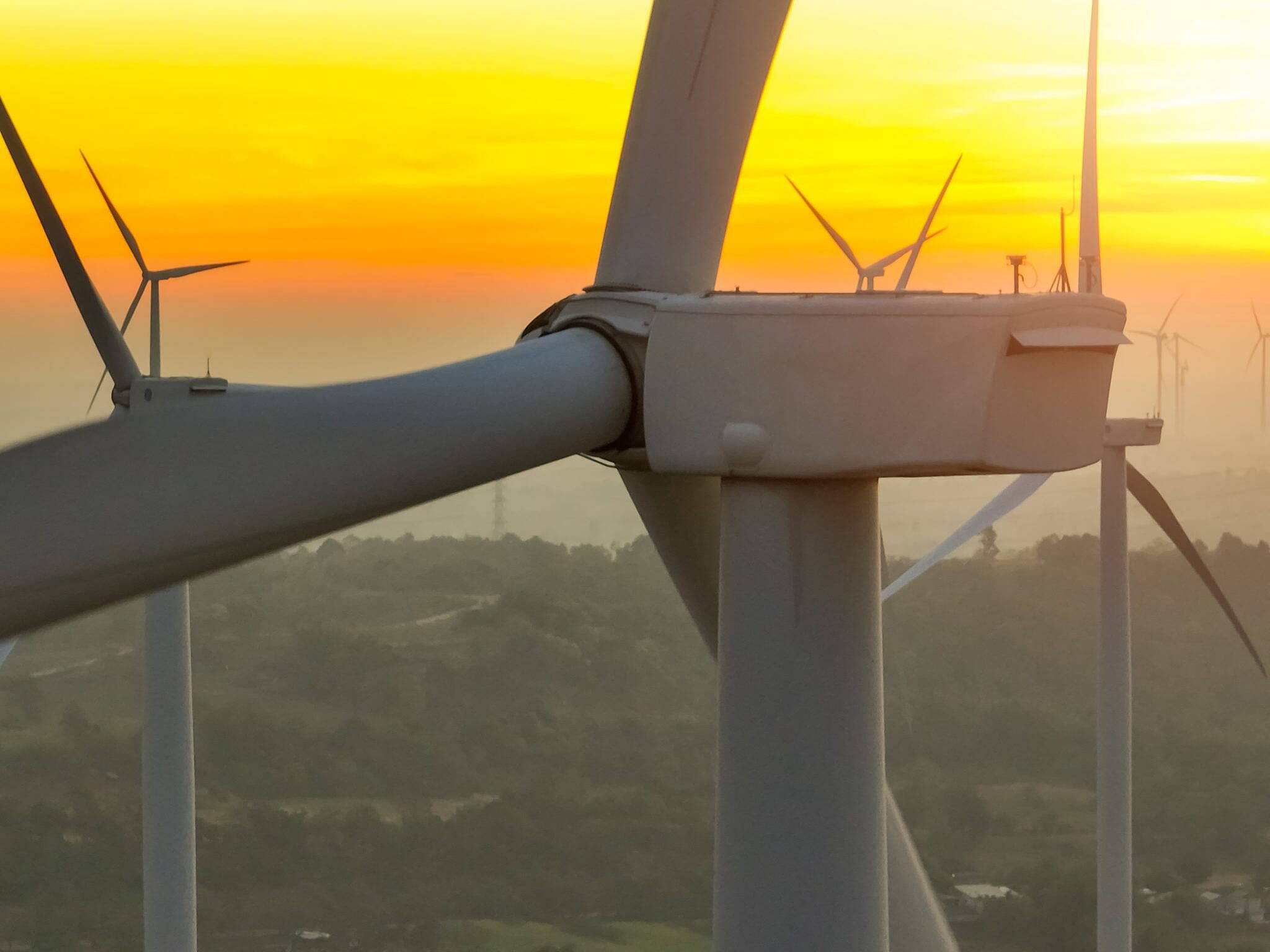
EDITOR – As the industry body for the wind industry, Wind Energy Ireland greatly respects the communities of West Cork and other communities round the country where wind farms are proposed or built.
Our world is full of misinformation and disinformation, which heightens worries.
Feeling concerns and fears is part of human nature. Building familiarity and understanding often eases fears.
ADVERTISEMENT
To understand wind farms, we encourage people to walk or drive onto a wind farm; many wind farms are open to the public.
Stand under the turbines and experience the sounds for yourself.
Read up on wind farms from reputable sources. Each wind farm has a community liaison officer who is available to answer any and all questions and point you to information which you can put to the test and verify by reference to expert sources.
Wind farms are being built onshore in Ireland since 1992. With more than 100,000 wind turbines installed across Europe, millions of Europeans have been living and working close to wind turbines for several decades without any issues.
Irish planning legislation has recently been reviewed. In October 2024, our then-government enacted a comprehensive 870 pages of planning and development legislation, so far from being outdated, it is brand new.
We too call for the publication of updated wind energy guidelines. Wind Energy Ireland and its members have long been calling on government to update the wind energy guidelines. We are hopeful this government will fulfil its promise to publish new guidelines shortly.
Last week during his budget speech, Minister Jack Chambers spoke about the need to radically overhaul how we deliver infrastructure for the public good, and also about the need to face head-on the mindsets which hold back our progress in building vital infrastructure. Generating electricity from our own sustainable wind resource is something that is for the common good: let’s choose to view it with a positive mindset.
We need to be honest with each other, we can’t all claim to be supportive of renewable energy, but only where we don’t have to see the infrastructure. Wind turbines, which are clean energy generators, have to go somewhere. Our planning and development systems have to be relied on to make impartial decisions. A call for the suspension of all new wind farm applications is a call for higher electricity prices, which drives up our cost of living, a call to remain stuck in neutral when it comes to economic advancement, and a call to sit back without taking the one substantial action, building wind farms, which we in Ireland can take in relation to climate change.
Infrastructure cannot be out of sight, out of mind for every person, and every community. Wind turbines are modern power generators, and we need to look at them with accepting, appreciative eyes as our homes, our hospitals, and our businesses benefit from them. Onshore wind makes the most affordable electricity in the world.
Ireland spends a million euro an hour importing fossil fuels to make electricity. This drives up the cost of electricity for consumers and businesses. Wind Energy Ireland publishes a report every month which shows that the wholesale price of electricity, on days when there is a large amount of wind energy, is often half the price it is on days when we need to rely on expensive imported fossil fuels. Every year, for many years now, onshore wind energy provides one-third of our electricity. Or put another way, one in every three times you boil your kettle for a cuppa, it’s made by wind energy.
Ireland can make clean and abundant electricity from the wind. Having abundant and affordable electricity is a source of opportunity and security for us all and something we should strive to understand and embrace.
Yvonne O’Brien,
On behalf of Wind Energy Ireland.
Stand with people of Gaza in time of hope
EDITOR – As the airstrikes and bombing stops in Gaza following the long-awaited ceasefire, ActionAid Ireland is calling on communities in Cork to help families whose lives have been shattered.
While the ceasefire brings a moment of relief and hope, the humanitarian situation on the ground remains catastrophic with entire neighbourhoods in ruins, hospitals not functioning, children left orphans, and clean water and food still in short supply.
We urgently need to send supplies including nutritious food, clean water and medicine into Gaza where people are starving. The epic devastation affects everyone. But it has been especially brutal for women and children who shocking account for 62% of civilian deaths.
Our teams on the ground in Gaza are providing emergency food parcels, hygiene kits, and safe spaces for women and children traumatised by the violence. But the needs are vast and growing, with infrastructure, livelihoods and entire communities destroyed.’
Over half of Gaza’s population are children and thousands will now require lifelong care because they’ve had to endure trauma, loss, injuries and amputations without anaesthesia. Countless children are now completely on their own having lost their parents and siblings.
ActionAid, through its local staff and partners, is working around the clock reaching tens of thousands of people in dire need.
The ceasefire offers a vital pause in the violence, but for families in Gaza, the crisis is far from over. The extreme suffering of the last two years of genocide is easing thankfully, but Palestinians remain under brutal occupation, including in the West Banks and East Jerusalem. People need urgent humanitarian aid right now as well as long-term support to recover, rebuild and heal. Communities across Ireland, including in Cork have always shown immense compassion and solidarity, and we’re asking you once again to stand with the people of Gaza in this moment of fragile hope.
Karol Balfe CEO,
ActionAid Ireland.
Greenways and the Constitution
EDITR – The landowners affected by the CPOs being used to acquire land compulsorily for the ‘non-essential’ infrastructure for the proposed greenways (October 11th edition of The Southern Star) may consider how this can be reconciled with the constitutional rights of property owners in the Irish Constitution.
Article 43 of the Constitution deals with Property Rights. Paragraph 1 (2) states that ‘The State accordingly guarantees to pass no law attempting to abolish the right to private ownership…’
There is a proviso in paragraph 2 (2) that ‘the State may as occasion requires delimit by law the exercise of said right….for the common good’.
In my view it is incumbent upon the State to establish – in the Supreme Court as a last resort – that the compulsory acquisition of land currently used productively, in order to build greenways, complies with the Constitution given that these greenways are ‘non-essential’.
Tim Barry,
Innishannon.