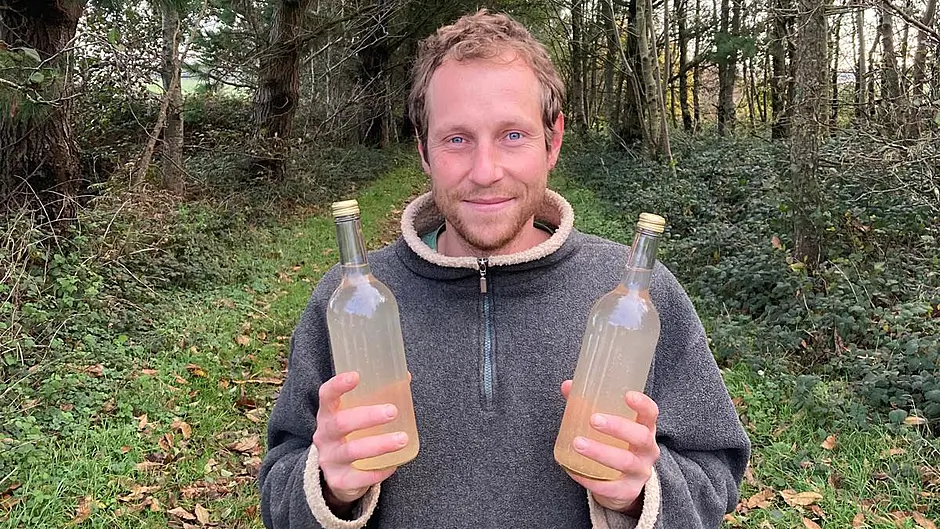
A FRENCH man who had no prior farming experience before coming to West Cork is running a hugely successful vegetable garden that’s supplying, among other places, a Michelin-acclaimed restaurant.
And Vincent Piel, who farms near Kinsale, is intent on showing that it’s possible to make a decent livelihood from market growing while also promoting and protecting biodiversity.
ADVERTISEMENT
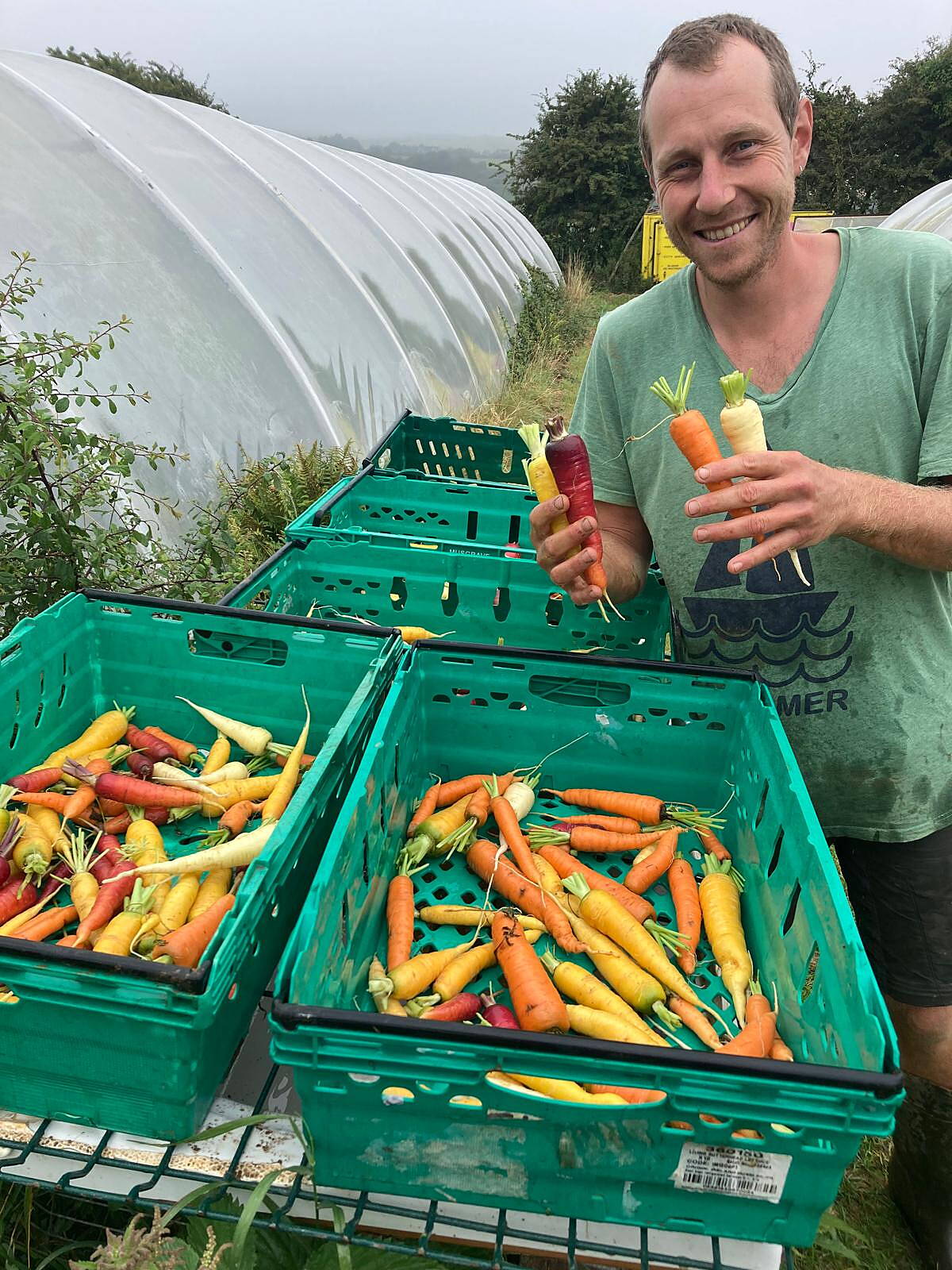 Vincent Piel with some of the produce from the nine-acre horticulture farm, where they practice bio-intensive market gardening with high yields on a small plot.
Vincent came to Ireland from his native Brittany in 2020 with his partner, Anna from Dublin, to study horticulture in Kinsale College. His path crossed with Ultan Walsh and Lucy Stewart of Gort na Nain Farm, a nine-acre horticulture farm in Nohoval, and just over a year ago he took over the running of a large part of their operation.
The farm, which translates as ‘field of the birds’ comprises an apple orchard, native woodlands, a pond, a meadow exclusively designed to promote biodiversity and hedgerows with thriving habitats, as well as planted ground and tunnels.
Vincent is responsible for six tunnels on one acre, and an acre and half of planted land along with the one-acre orchard while Lucy and Ultan have kept five tunnels that are planted with asparagus and one acre of globe artichoke.
Between them over 50 crops are grown including tomatoes, peppers, new potatoes, broccoli, salad leaves, fennel, leak, onions, sweet corn, aubergines and cucumbers.
‘Everything you can think of really!’ said Vincent.
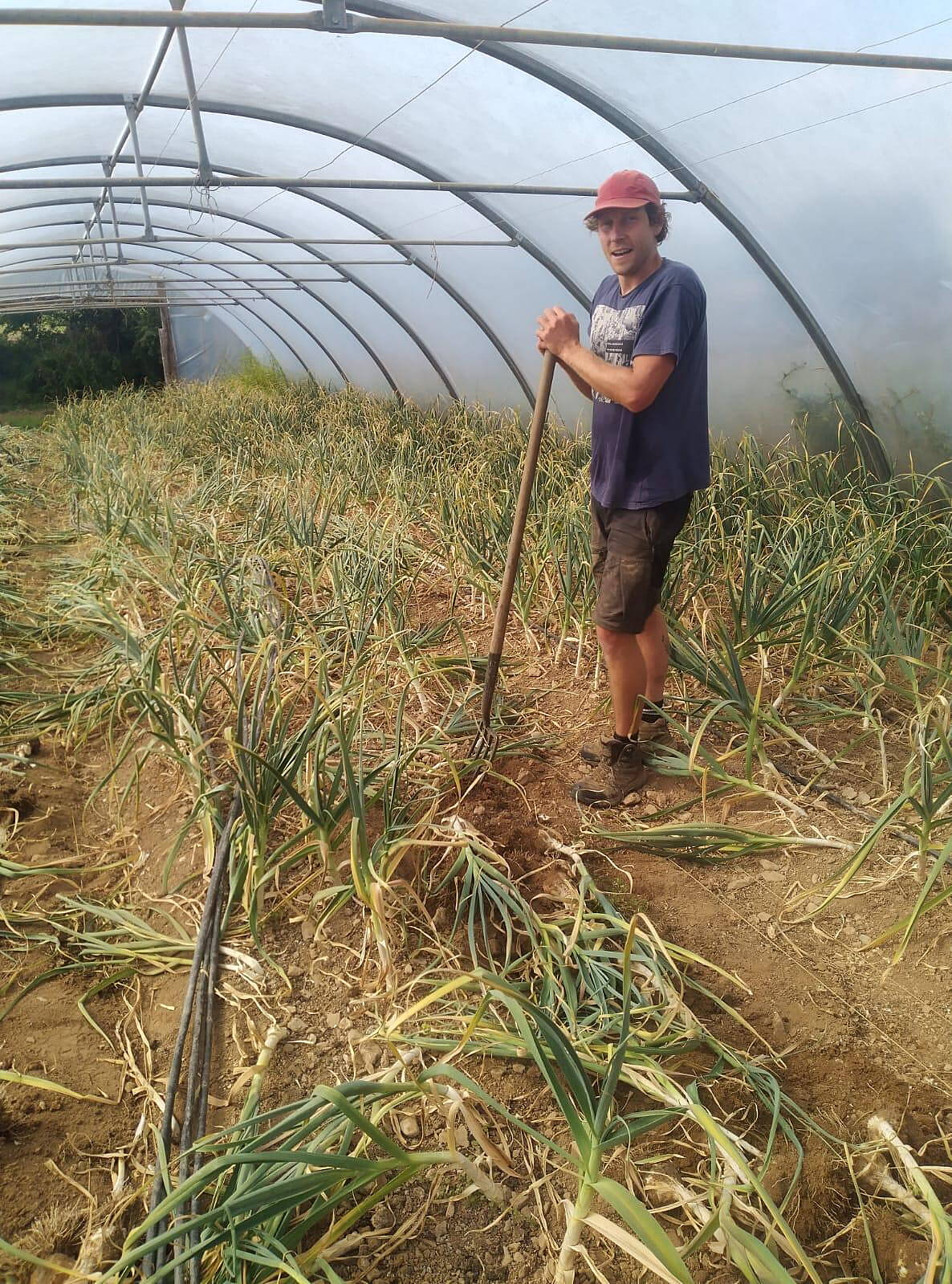 Onions in the polytunnels at Gort na Nain Farm.
Gort na Nain has long been associated with supplying the renowned Café Paradiso restaurant in Cork city, which Vincent continues, but he has expanded the list of clients since taking over.
‘I also supply The Glass Curtain and Good Day Deli in Cork city, OHK Café, Seeds bakery, Saint Francis Provisions (which recently received the Michelin Service Award), Black Pig in Kinsale, Diva bakery, the Gather grocery community store and Wild in Ballinspittle,’ he said. He also operates a farm store with an honesty box, and is currently operating at capacity.
He’s about to head into an intensive period of work with the launch of his second growing season and he’s full of excitement at the opportunities that lie ahead. Working pretty much exclusively on his own, he relies on a technique called bio-intensive market gardening which is a high-yield, small-scale farming method focusing on maximising production per square foot through intensive, organic, and manual techniques. It uses permanent, raised beds, tight plant spacing, and heavy compost application to build soil health, optimise space, and minimise reliance on machinery.
Labour is intensive and a 50-hour week is pretty average for Vincent but he thrives on it. Everything on the farm is done in an organic way, although it’s not certified organic, yet.
‘If I decide to stay on here longer, I will probably go down the certification route. Currently it’s all organic practices here, and all that’s missing is the label. The evidence is in the taste of what we produce,’ he said.
With a growing reputation and demand, he’s recently slightly increased his prices.
‘I have been increasing prices in line with my costs, and labour costs which are intensive. Nowadays when people pay €5 for a coffee I think it’s acceptable to charge €2.50 for a bag of veg. I feel we have been accustomed to spending so little on food, and that we will have to get used to having a bigger budget for food.’
Vincent’s success is even more impressive considering he doesn’t come from a farming background. Initially he studied history, before travelling throughout Europe, Australia and New Zealand.
‘My drive to make a success of this is about autonomy, but also a stance for better food sovereignty. We’re exploiting other parts of the world (and destroying it at the same time) to have the comfort of having tomatoes in winter when we should try to eat what can be produced locally. Farming for me is showing that it’s possible to make a livelihood from it and diversify our natural environment in the making, to show how the farm goes hand in hand with biodiversity. There’s nothing like a lively hedgerow birdsong, meadows and seeing the trees grow on my way to work, which is a five minute walking commute!’