Mary Neary came into the world at Tuam Mother and Baby Home and she ended up travelling the globe.
MARY NEARY reconnected with her birth mother five years before she died; but she fondly remembers it as one of the happiest times of her life.
The 77-year-old was born in Tuam Mother and Baby Home in 1948 and adopted to America, but decades later at the age of 52 she traced her family before eventually settling in her ‘spiritual place’ in Glengarriff.
ADVERTISEMENT
Mary is sharing her inspirational story for the first time as the excavation of the mass Tuam grave thought to contain the remains of 796 babies continues.
New York
She told The Southern Star: ‘My mother got pregnant when she was 17. She was very much in love with my father but the family disapproved.
She made her own way to Tuam Mother and Baby Home from Castlebar.’
Soon after her birth at the notorious institution run by the Bon Secours nuns Mary was taken to New York by a distant relative, Margaret Morley.
‘She was a single lady in her fifties at the time,’ recalled Mary. ‘All I know is I had a fantastic childhood, but it was all a very big secret. We lived in New York for the first couple of years, then she came back to her original family home in Claremorris and we lived there.
‘My adoptive mother never told me that I was adopted, she died when I was 21. My name never changed, I was known as Mary Morley, she was protecting me in a way.’
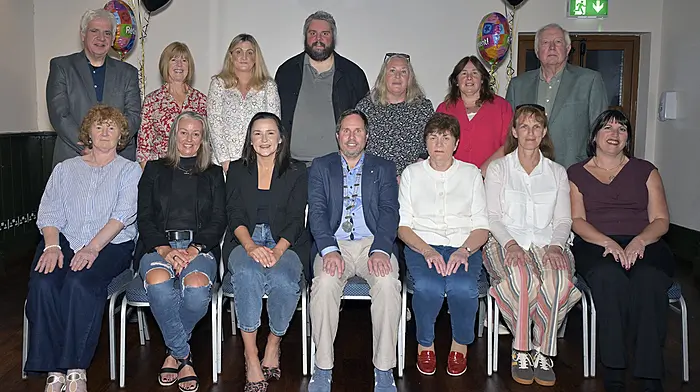
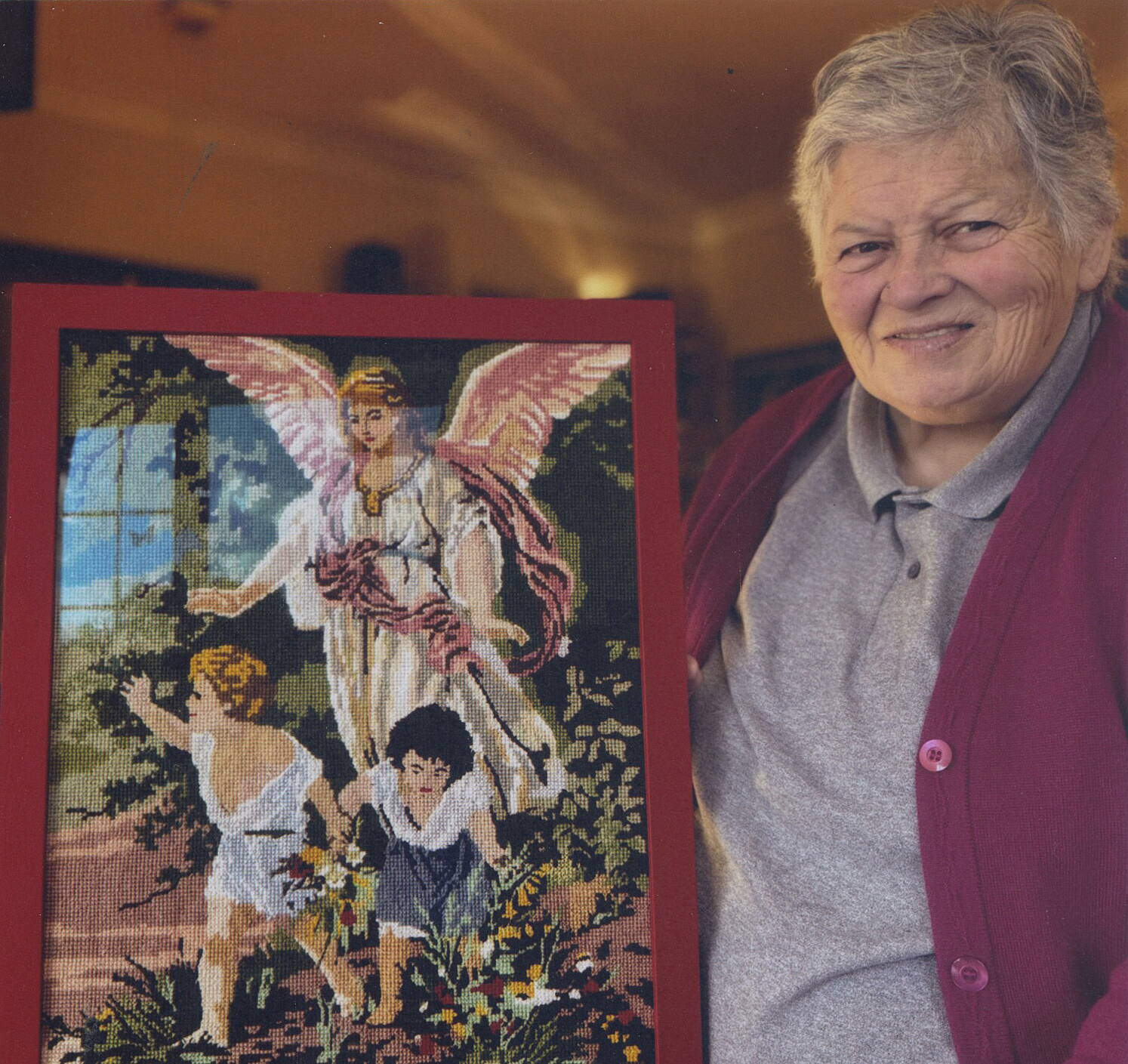 Breda Baker with the tapestry she completed in memory of the Tuam Babies.
Re-union
It was in the year 2000 after some investigating and support from others that Mary found her mother Ellie Neary.
She described it as a ‘fantastic moment’ and has been known as Mary Neary, or Dr Mary Neary as is her full title, ever since.
She described: ‘She lived near Clitheroe in Lancashire. I tracked down the Nearys of Shanvally in Castlebar, I met her brother Johnny Neary, a farmer.
‘He was sheepish, I told him he was my uncle. I had to promise him that I wouldn’t say he was the one who told me about my mother.’
Mary was living and working in Cardiff at the time and she brought a friend with her for moral support when she first met her mother, who was married to a Mayo man and had a son – her half-brother.
‘I wasn’t quite sure what was going to happen but I had enough confidence that if she didn’t accept me I could understand it,’ said Mary.
She was amazing. She stood at the door of the house looking at me and said ‘Oh my God are you not the spit out of your father’s mouth’.
‘I knew then we were going to get along. I was working in Wales at the time so I could get back and forth to see her. In 2005 she died very suddenly, but I had five wonderful years.’
Mary also got to know her extended family including her half-brother who, sadly, also died suddenly in 2014, and a vast network of cousins she reckons runs into the hundreds.
Now retired, she started off her career as a nurse, specialising in accident and emergency, then going on to lecture in A&E and eventually doing a PhD in teaching assessing and evaluating clinical competence.
Her thoughts have returned to Tuam in recent years as the story of 796 babies buried in a septic tank made international headlines and she has been in contact with Catherine Corless, the historian who uncovered the scandal over a decade ago.
Mary teamed up with her friend Breda Baker to make a tapestry depicting an angel and two children – framed by Bantry Glass & Glazing - which Catherine Corless now has in safe keeping until the excavation work is finished. Breda, from Kenmare, spent countless hours making the beautiful tapestry which took 32,000 stitches and which Mary describes as ‘a real labour of love’.
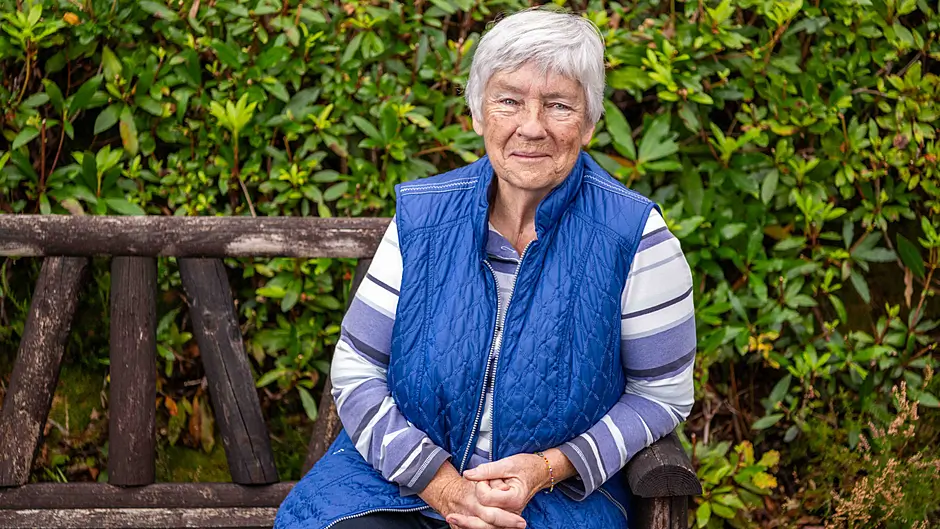
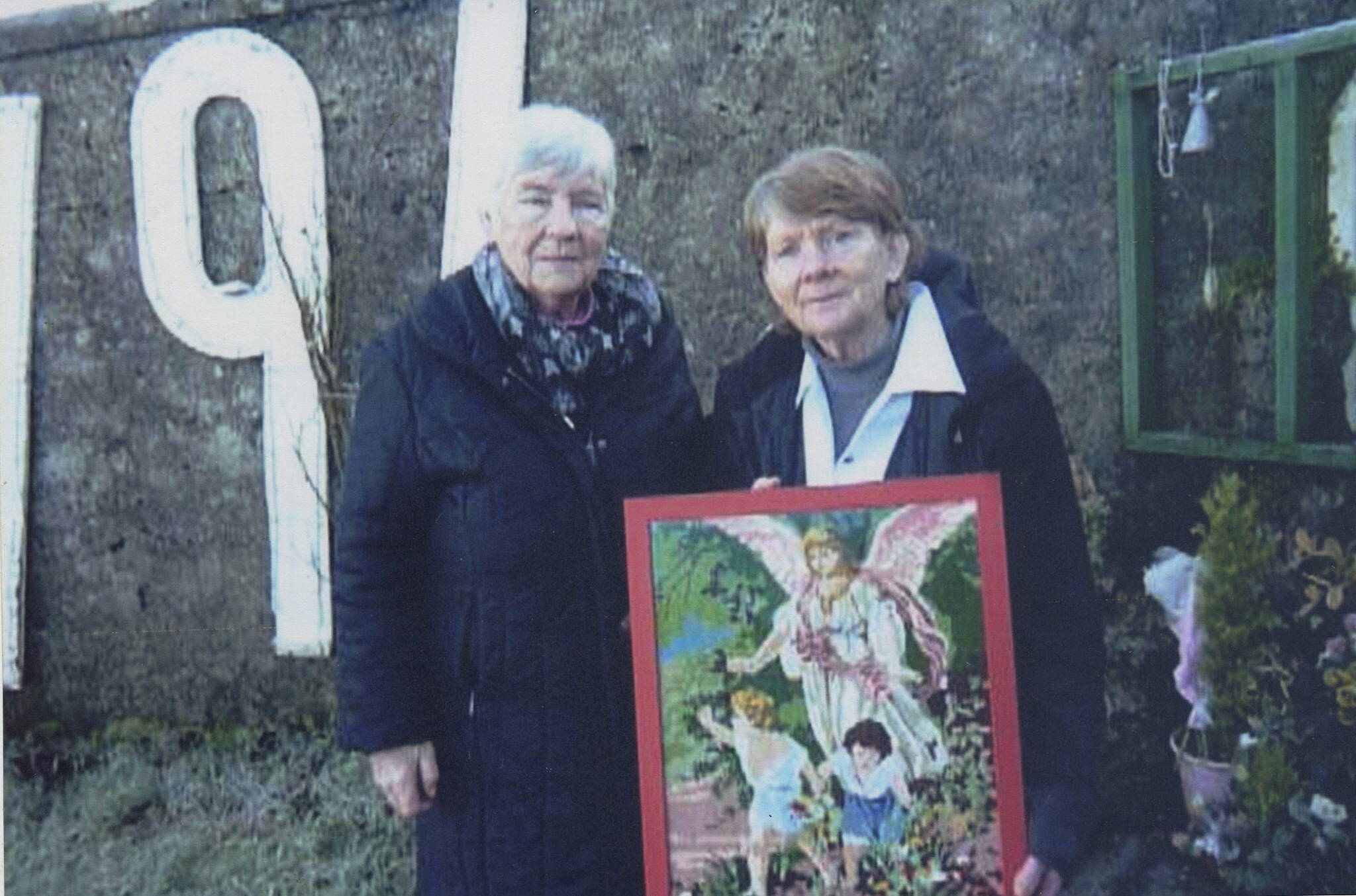 Mary Neary presenting the tapestry to Catherine Corless; Mary in her garden in Glengarriff. (Photo: Andy Gibson)
Angels
Mary explained: ‘I discovered Breda was a great woman with needlework. I said I wanted something with angels and she came up with the design.
‘When I discovered the very sad story of the 796 babies I did my artwork as a memory to my mother. They have a memorial site so we will go there. I’d like to see what else I could do. Catherine Corless is amazing.
‘Some people believe they [remains] should be left, but I think there are still people alive today who need to know if they could identify the DNA and match up with families who are still grieving a lost child, it would be closure for them.’
Glass baby bottle feeders and shoes have been uncovered at the site so far, but no bodies have yet been recovered.
Mary retired in 2007 and with friends and relatives in Westport and Glengarriff she couldn’t make up her mind where to settle – so she tossed a coin.
‘It was tails for Glengarriff, I stuck with that decision and it wasn’t the wrong one. The American side of the family is huge, I still visit there every two years or so for reunions. They still call me the new cousin.
‘When people talk about aacceptance, acceptance to me has a whole new meaning, It has such positive meaning for me that I live by it every day. I’ve got to the stage where I’m quite proud of my life.
‘I didn’t marry, I never had the time, I was too busy travelling the world. I don’t think there’s many countries I haven’t been to, I taught in Pakistan. Now my travelling is for pleasure. My other pleasure is my garden, it keeps me busy. It’s my spiritual place, that is where I do my thinking.’