
Is it too early to get going in the garden? Well that depends on what you want to do!
Fine days can be put to good use to get plenty of outdoor jobs done, but you should still think carefully before sowing seeds.
ADVERTISEMENT
The days are lengthening and it is possible to get some warm bright weather at this time of year that feels like spring.
However, this can be followed with freezing weather that reminds us we are still stuck in winter, with all the problems this brings for young and vulnerable growing things.
If you have heated propagators, and the space to keep plants warm over several weeks, and if you have a greenhouse, or other structure, to grow tender plants on to maturity, then sow aubergines and peppers this month, they can do well from an early start.
You can also try a few lettuce and spinach seeds. These can germinate in an unheated propagator, but be prepared for slow growth.
If you can reign in the desire to get sowing for another few weeks you will be able to get started with a wider range of things.
Give plants a boost
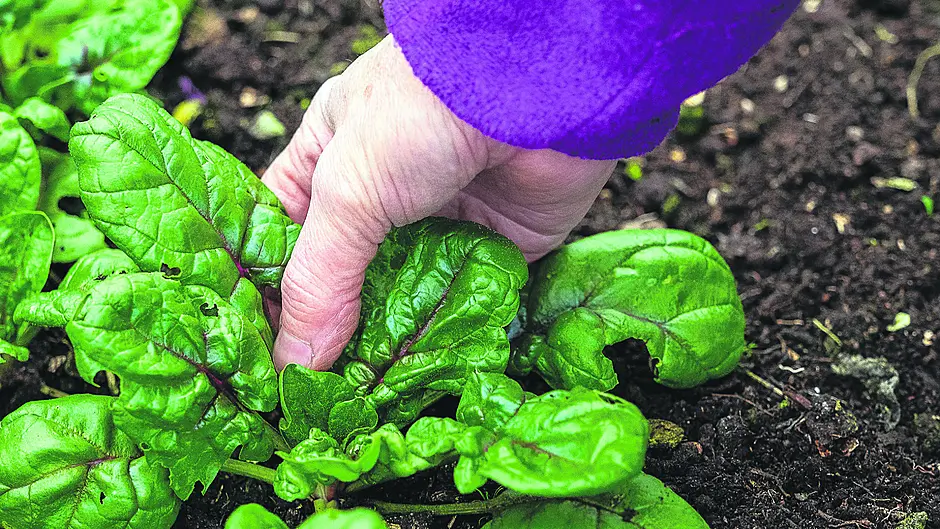
If you sowed winter spinach under cover in September, then plants should be coming into their own now. The same goes for lettuce and salad greens. It’s worth giving plants a nutrient boost with a liquid feed. This will keep them producing healthy vibrant leaves over several weeks. Spinach leaves are best picked when small, but don’t take out the tiny leaves that will keep the plant growing. Plants can last until late April or May if you keep picking to hold off the bolting
process.
Spring cabbage growth can be boosted by a liquid feed now. Fruit trees and bushes can really benefit from a scatter of a manure-based feed and add some wood ash to boost potassium uptake.
Winter soils are often depleted of nutrients by heavy rain, so look at ornamental bushes and flower beds too. A bit of feed in the next few weeks will go along way to producing beautiful and vibrant displays.
Seed potatoes
You can order these to be delivered to your door, or you may pick some up in a garden centre, or store that sells garden aids. Either way, avoid or reject potatoes that have long pale sprouts , as you are aiming to grow short green ones.
The first thing is to take the seed potatoes out of any packaging. Sort good sound tubers from damaged or discoloured ones, then put the best in a shallow box, or egg boxes, with the end that will produce shoots pointing upwards.
Leave the trays in a light, cool, frost-free place and healthy shoots will grow over the next few weeks. If there isn’t enough light, the shoots will stretch to find it and if it’s too warm the potatoes may suffer shock when planted outdoors into a cool soil.
Keep an eye on things, you can always adjust the position of your seed potato trays.
Tidy time in the polytunnel
Soil may be a little green and plants may have some yellow lower leaves. There might be a pile of unwashed pots and some plants may look half dead and just need clearing out. Has the door latch broken, or are the bed edges collapsing? Have weeds taken over in places?
There is plenty to do and this is a great time to get started. Don’t be critical of yourself if things look a mess, there is time to get all in order before the growing season begins in earnest. Work with the aim of creating a clean, clear, and healthy growing space. If you get set up now, then you will be ready to get sowing and growing in a few more weeks.
And don’t forget about your garden benches. Equipment can gather in piles and this needs to be sorted. Do the best you can to sweep off old compost and wash pots, covers, and labels. Check marker pens work and pencils are sharpened. Leave yourself a space for working – it’s good to be able to sow and pot-on at a height that suits you without bending.
Heather
I love the wild varieties that abound in this part of the world. I’m not fond of the peculiar bright-coloured unnatural ones, although some people have fun with planting them. At some point in the middle are the reliable pink, red and white types that are sold to grow as compact bushes. These are quite hardy and do well when planted in containers or in a good draining rockery; I’ve lost several in soggy growing conditions.
It is worth growing a few winter heathers for colour at this dull time of year, but also to help feed any early bumble bees that emerge.
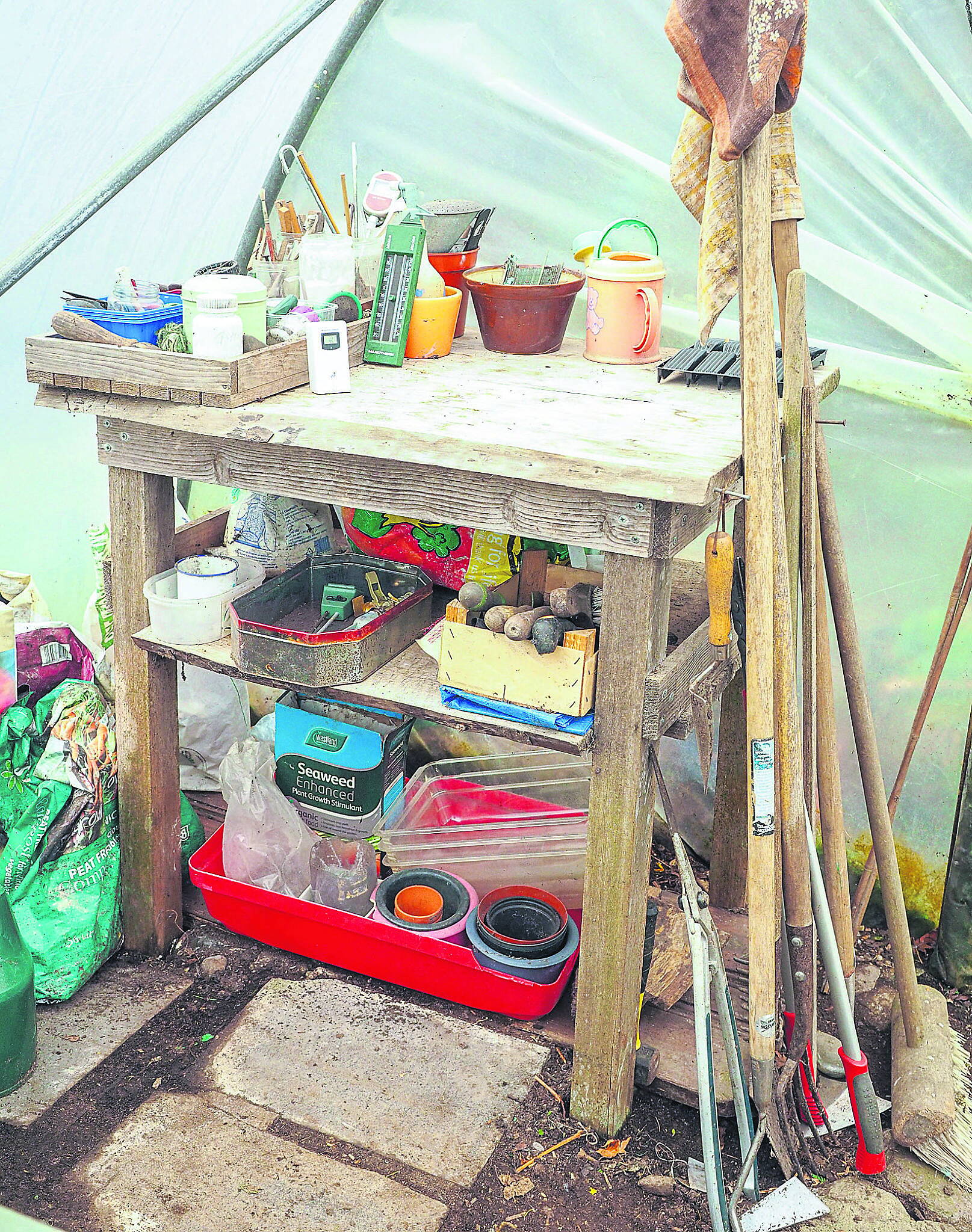 Clean and tidy so all is ready for the growing season
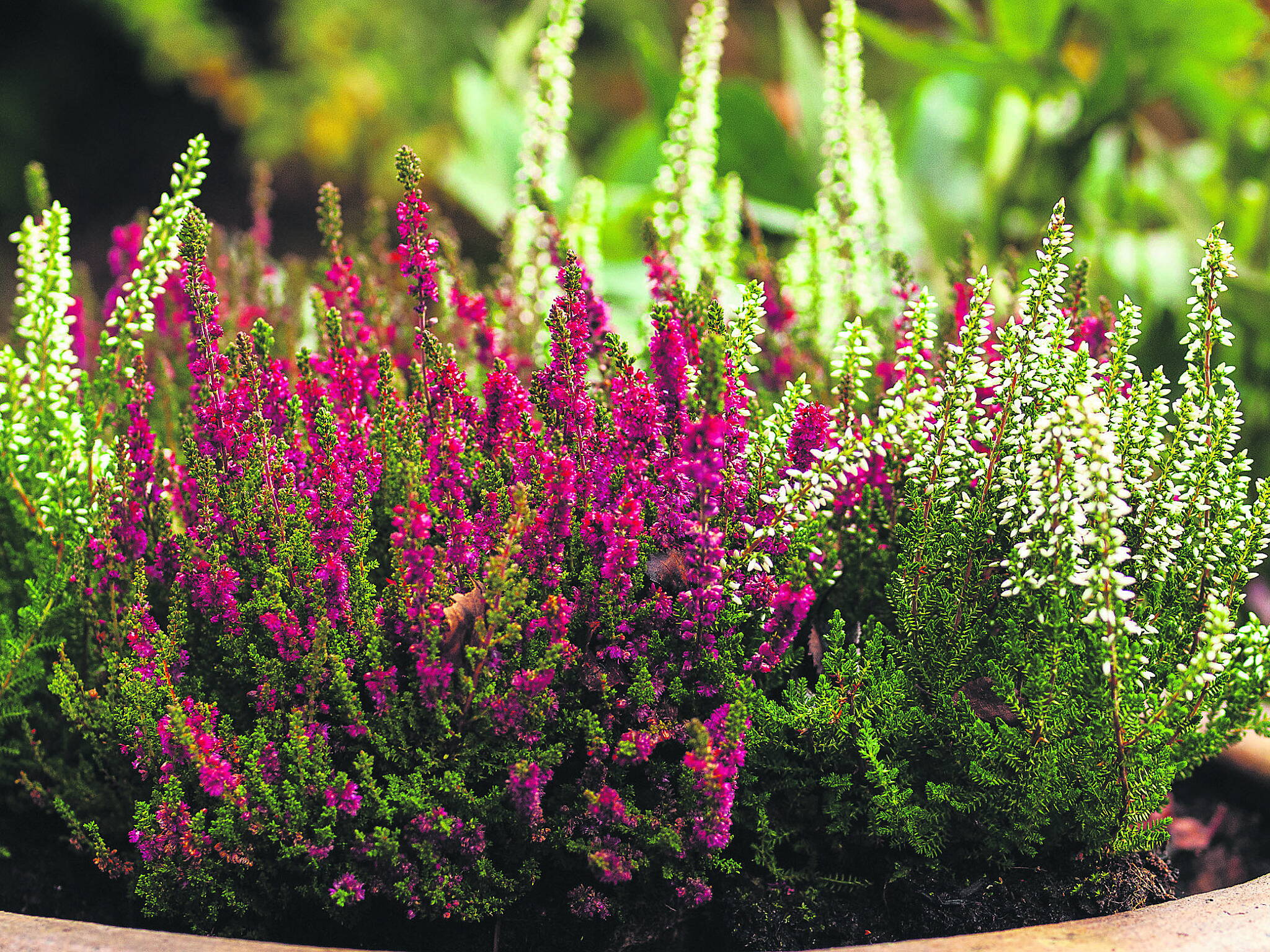 Winter heather provides a splash of colour