
Plants respond to day length and temperature drops at this time of year.
It may still seem bright and warm enough, and we may dodge the showers or enjoy moments of bright sun, but the days are drawing in and nature will play out its own rhythms.
ADVERTISEMENT
Some plants may still be growing well and others are coming towards a turning point.
Leaf fall has already started with deciduous trees, as these wind down into a more dormant state for the winter months.
Some border plants stop growing and stems die back from here on.
Some vegetables are past their best, and these should be lifted and the bed cleared so you can plant some winter crops.
Take a look around and see what needs to be done. Weeding, clearing, tidying and harvesting all help with the autumn tidy up.
Lift and store crops before they suffer from being left outdoors too long.
Carrots
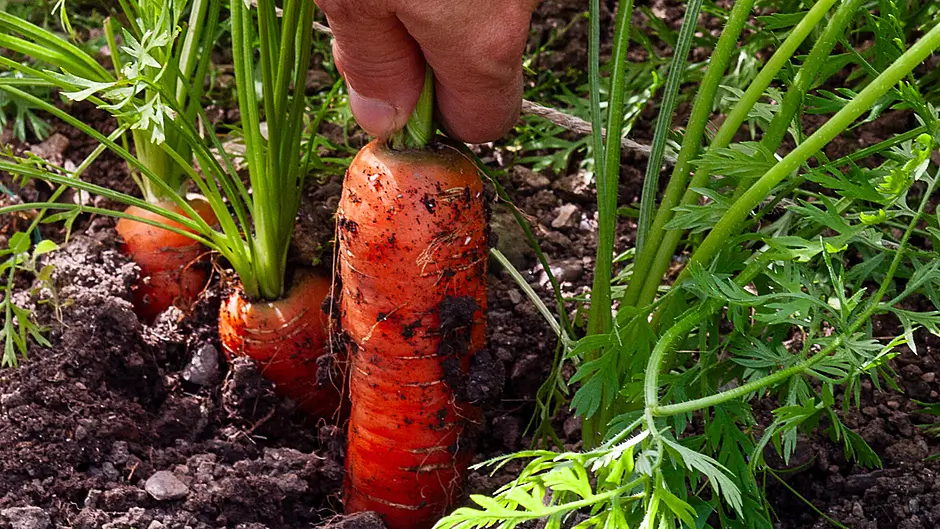
It’s time to lift any roots still in the ground. The longer they are there, the more likely they are to split or be eaten by slugs.
Carrots store well for many months if they are layered in sawdust, sand or potting compost.
Keep in a cool dry shed that is safe from rodents; carrots are loved by rats and can be reduced to a mess in a short space of time.
Winter greens
Winter cabbages, cauliflowers, kale, broccoli and sprouts should all be growing well now.
Tall plants need good supports and ties if they are to keep upright through strong winds.
I had two sprouting broccoli plants blown down two weeks back. The supports were too small and on my list to be replaced with larger ones.
It was the first serious wind we had had in months and I had taken my eye off the forecast.
The plants were soon righted and good strong sticks driven in.
Fortunately roots seem intact and the recovered plants should still grow good broccoli spears in the spring.
A lesson learned to act early! No-one wants to go out after dark when a wind starts roaring.
There is still time to sow spring cabbage seed or you can keep an eye out for plants in the next couple of weeks.
You can also sow rows of spinach and kale to use as cut-and come again leaves.
Seed sown now will produce useable plants in mid to late spring.
You will be eating a couple of months earlier if you have plants from July sowings.
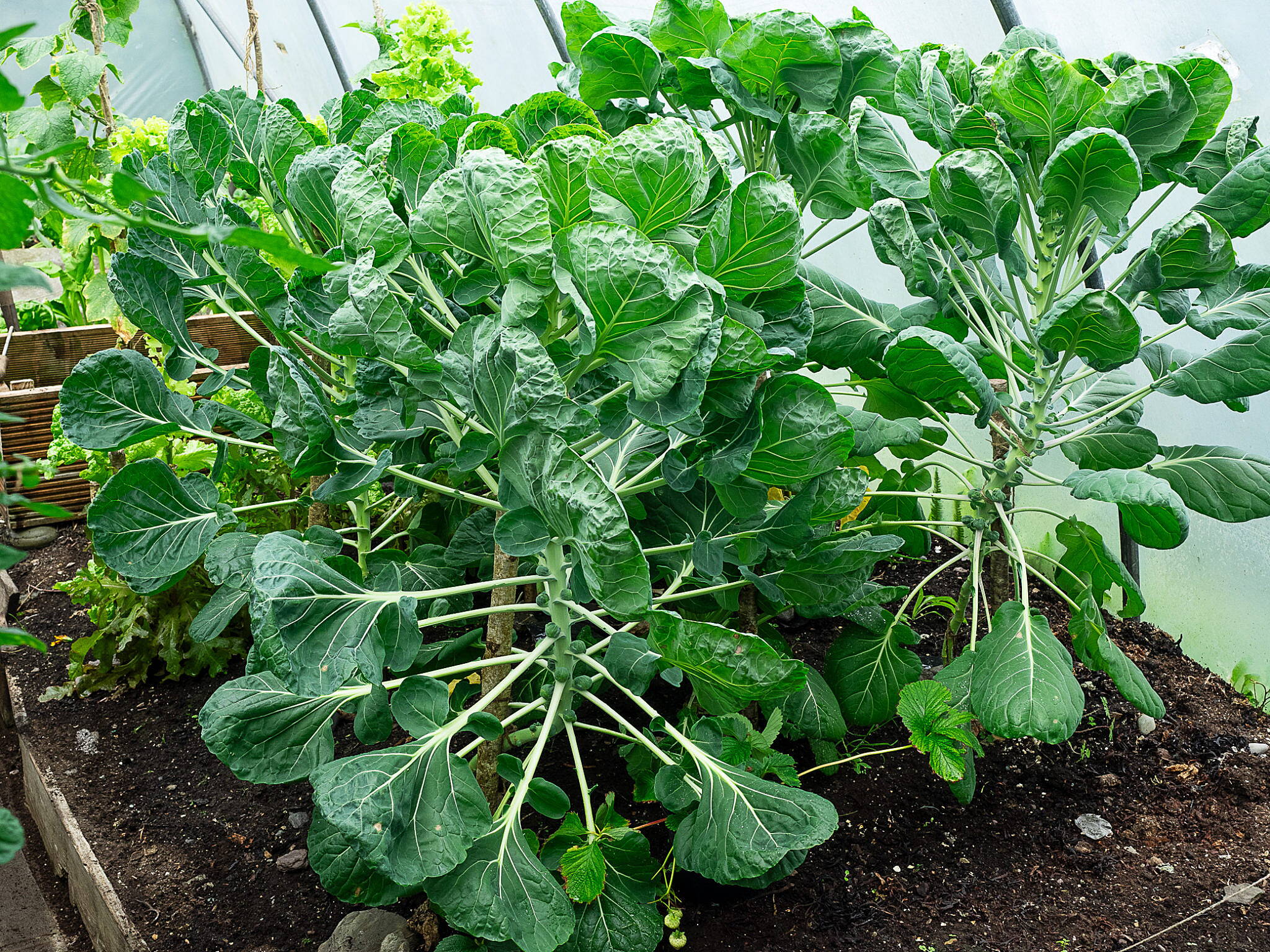 Brussels sprouts, grown in the polytunnel, will be ready from December onwards.
Brussels sprouts
My outdoor plants are tall and the stems are swelling some tasty looking sprouts.
The first of these are autumn varieties and some will be ready to eat soon.
Some of the ones higher up the stem will be ready to eat for Christmas.
For some people that will be quite enough, but if you love this vegetable, it’s worth extending the harvesting period.
You can ensure a long sprout season by growing an autumn variety, plus a hardy winter one that will crop from December to March.
Make a note to buy the two types of seed when you are compiling your seed list for next year.
You can also stagger sowings and plant out later plants when other crops clear from the greenhouse or polytunnel.
These covered plants grow fast and will start making tiny sprouts from now on.
It can be hard to get perfect timing, but these should be at their best through the winter months.
A lot depends on the weather we get.
The main thing is to eat and enjoy your sprouts when they are fresh, firm and at their best.
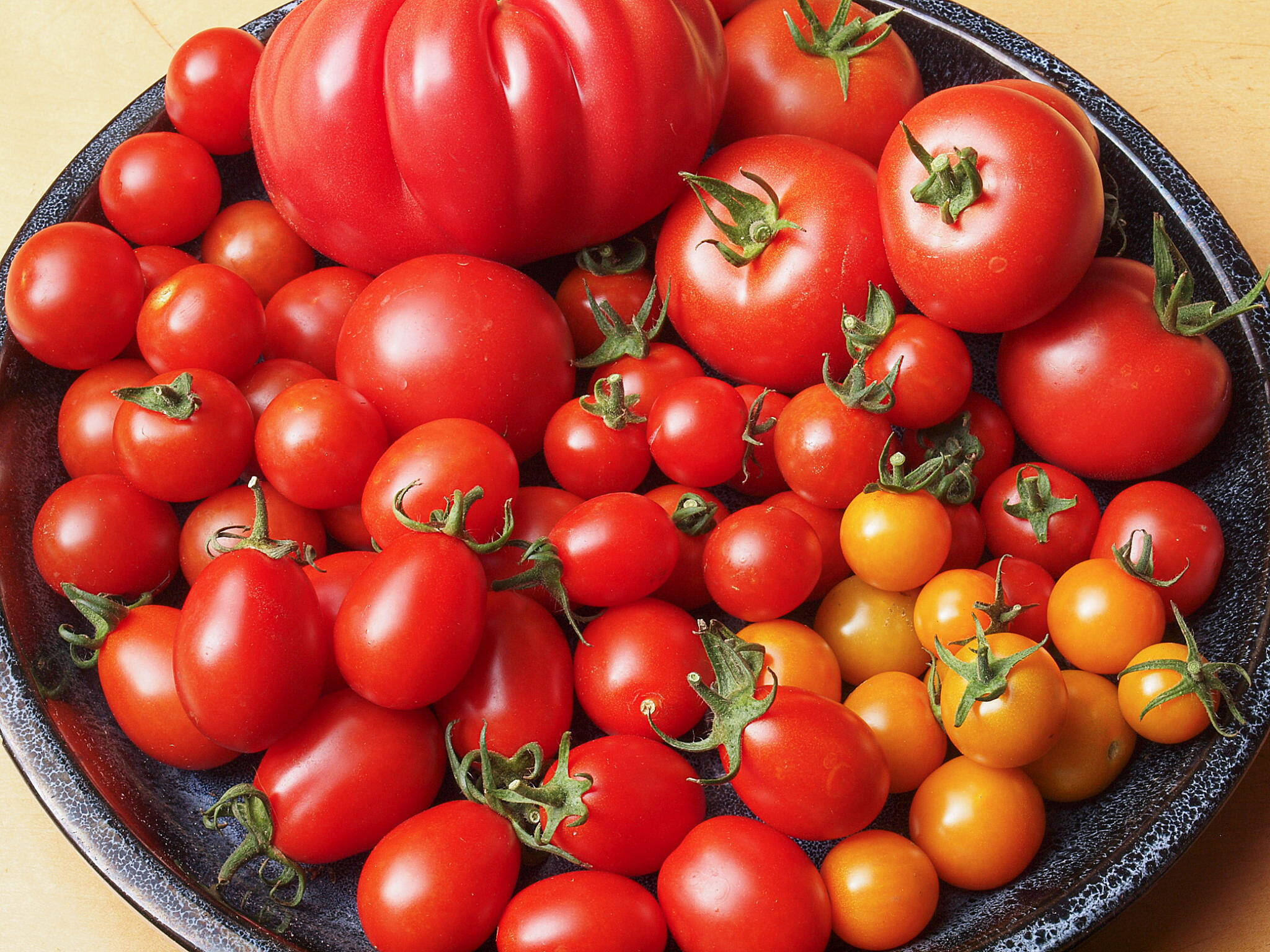 Look after tomato plants to keep them cropping. (All photos: Ben Russell)
Keep tomato plants going
It’s been a good year for tomatoes and many of us still have lots of fruit on under-cover plants.
Keep picking and use the glut! It won’t be long until things start slowing down, but, if the weather is kind, plants can keep ripening tomatoes for a good while yet.
Stop feeding plants, if you haven’t already, and reduce the amount of water they get.
Don’t do this too suddenly or skins tend to split.
Trim back any side shoots that have grown where they shouldn’t and tie in the tops of tall plants to neighbouring supports if they have rambled beyond their own poles.
There will be some unhealthy looking leaves at this stage so trim them off. You can be fairly ruthless in clearing lower leaves provided there are some healthy ones higher up.
If any plant gets stem rot, or root rot and starts to collapse, lift it out carefully so as not to spread spores all around.
Pick up any fallen fruits and leaves and don’t put diseased plant material on the compost heap.
You can make a separate pile for tomato haulms to break down; cover this with polythene.