
The weather has been hard to predict this year and most predictions were overturned by the odd weather patterns that arrived. We enjoyed a good summer, and all fruiting plants provided bumper crops, but climate change doesn’t just bring us benign weather and we all get on with a warmer life. This year brought strange patterns of heat, cold, drought and deluge as well as gales. How gardeners, plants, pests and diseases all adapt to that change has yet to be worked out.
It’s a good idea for any gardener to keep an eye on weather forecasts and also to keep your own weather record. We all have to learn what is changing and how we can adapt to keep our gardens growing as best we can.
ADVERTISEMENT
A first in my garden
A mild November isn’t all that odd, but picking large black and yellow striped caterpillars off my broccoli plants in the middle of the month was a definite first. It isn’t so unusual to get some fat green caterpillars hidden in the leaves of curly kale, but it is unusual for large white butterflies to be laying eggs so late in autumn.
Window boxes
These can provide splashes of colour right through the winter if you grow the right plants. Miniature cyclamen are reliable favourites, which do well when grown in the protection of a sheltered window ledge. Pansies/violas give a bright display and they are very hardy in an average West Cork winter. Winter heathers can provide flowers for months. Dot a few early spring flowering bulbs like snowdrop and miniature iris into the pot for extra variety.
Use good compost and water sparingly. The main reason winter plantings fail is if the compost is waterlogged. Prolonged sub-zero temperatures can be a problem too. If a hard freeze is forecast, you can either cover window boxes with a protective layer or bring them into a frost proof place under cover through the coldest days.
You only need to water if rain isn’t keeping compost damp. A liquid feed can be of benefit in January if plants need an extra nutrient boost.
 Miniature cyclamen look lovely in a winter window box.
In the greenhouse
Mould can be a big problem in the winter polytunnel or greenhouse. Ventilation helps keep the problem to a minimum, but we are inclined to close doors and windows as temperatures drop. Knowing when to open and close structures can be a bit of a juggling act. As a general rule, close everything at night in the winter months. Open doors and windows on bright days, and open them just enough to create small gaps that allow some air flow without exposing plants to frost or gales. Do the best you can and look around to see what effect your ventilation routine has.
Remove any leaves that are covered in grey mould and try not to spread spores around.
For salad rows, seeds sown in August or September will have produced rows of healthy young leaves by now. Cut and come again leaves like rocket, mustard, mizuna etc can be hand-picked or cut and used as soon as they are big enough. Don’t strip plants and more leaves will keep growing back. This growth may be slow through the winter, but plants will put on a spurt in the spring.
Keep rows weeded and use a hoe to loosen any green or compacted soil between rows.
Salad leaves sown in October will have grown little plants now. These may only be a bit bigger than seedlings, but they should be strong enough to produce rows of leaves ready to use next spring.
Get tiny lettuce plants in pots into the ground as soon as you can. Some may fail, but others can still grow healthy roots in the balanced temperature of a large bed of soil.
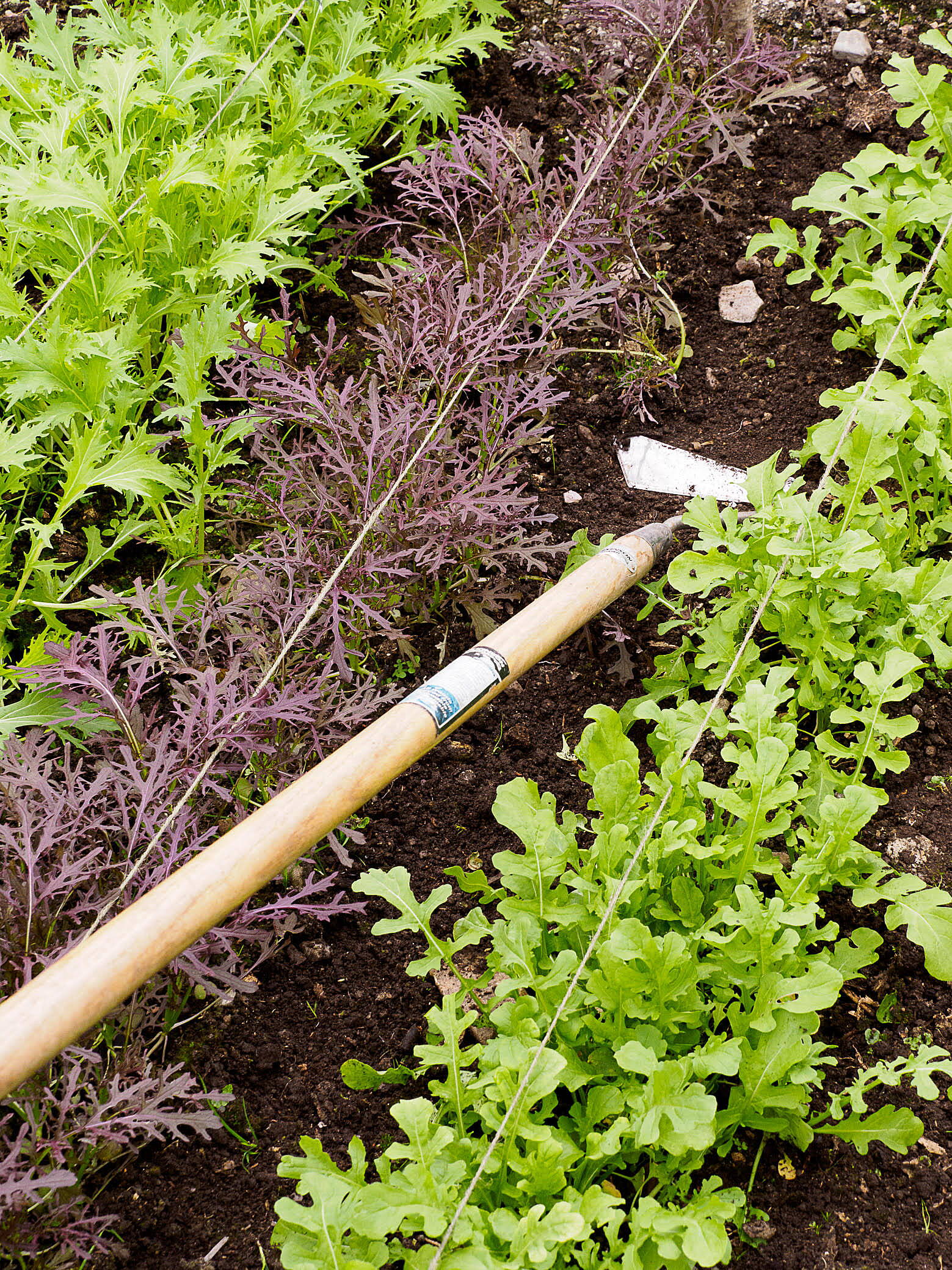 Hoe between rows of salad leaves.
Swiss chard
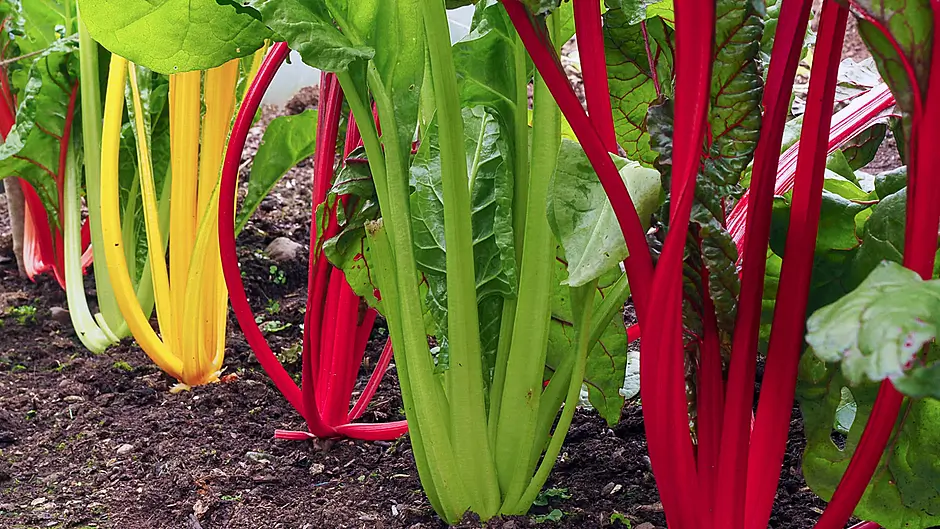
Chard is easy to grow and it provides an interesting food-source through the winter months. Over-wintered plants do best in a polytunnel or greenhouse, but spring sowings do well outdoors. You can get red, yellow, pink, or white stemmed varieties. The latter tend to be the most vigorous and can make very large, thick-stemmed plants. The coloured varieties tend to produce less robust stems, but they are delicious and provide some vibrant colour for winter salads, stir fries etc. You can eat both leaves and stems.
Pick the large outer stems first, taking one or two from each plant. Leave plenty of stems at the centre to keep growing. Plants keep cropping for several months and can be at their most prolific in mid-spring as they put on a spurt before bolting.
Put chard on your seed list if you want to grow this plant. Sowing seed is easy and you are unlikely to find plants to buy. You can sow at any time from April through to August.