THERE was almost something inevitable about Kilbrittain hurlers becoming the first team from West Cork to reach an All-Ireland club hurling final.
Newcestown may well be the strongest club hurling side in Carbery at present and few would be surprised to see them reaching similar heights. But when Kilbrittain’s long and rich hurling heritage is taken into account, there is a certain poetry about the Black and Amber setting another landmark for West Cork hurling.
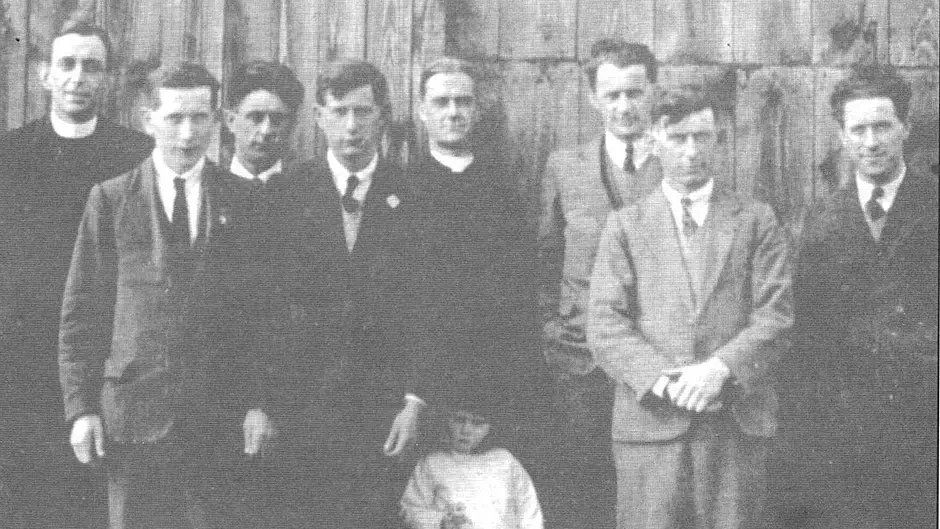
Kilbrittain hurling club was founded in late 1904, specifically to take part in the first West Cork hurling championship in 1905 – a competition they went on to win. From the outset, they held a premier place in the game locally, dominating through the 1900s, the 1910s and into the turbulent 1920s. Their most remarkable achievement in that era came between 1923 and 1928, when Kilbrittain won six successive championships under three different administrative boards, an extraordinary record that still stands.
ADVERTISEMENT
That period of dominance faded in the 1930s as Skibbereen, and later neighbouring rivals Bandon, emerged as forces. Kilbrittain returned strongly in the early 1940s, winning four titles in five years, but when they lifted the championship in 1942 few could have imagined it would be another 36 years before the West Cork title would again return to the village.
A new era dawned in 1978 when Kilbrittain finally reclaimed the South West title. It had been a long tunnel, but the club ensured it would not revisit those darker days. Built on strong underage foundations, Kilbrittain re-established themselves as a hurling force at a time when other rural clubs such as Barryroe and Argideen Rangers were also making headlines.
The club made a significant leap in 1984 and 1985, cementing their reputation not only in West Cork but across the county. Despite their divisional success, Kilbrittain had never won a county title. In the GAA’s centenary year of 1984, they reached just their second-ever county final, losing narrowly to Midleton. Undeterred, they returned the following year and secured their first county crown, defeating Cobh by 5-7 to 1-12.
While Kilbrittain did not contest another Carbery junior A hurling final after 1985, there was good reason. The club moved into higher county grades and competed strongly at intermediate level for many years. A series of narrow county final defeats between 1988 and 1993 tested resolve but never spirit. Perseverance finally paid off in 1995 when all that frustration was released in a commanding intermediate final victory over Ballincollig.
That success came during a golden era for Carbery hurling. Kilbrittain supplied seven players to a famous divisional team that narrowly lost the county senior final in 1993 before capturing the only senior hurling title ever won by West Cork in 1994. With the 1995 intermediate title secured, Kilbrittain entered the senior championship in 1996 for the first time since the early 1900s.
A small population and limited playing numbers made it difficult to sustain senior status and the club returned to intermediate level in 2000. Further success followed in 2010 when Ballygarvan were defeated in a final replay, and after competing at higher grades again, Kilbrittain eventually found themselves in the newly created premier junior grade in 2024.
Kilbrittain have always fielded competitive football teams, but when the club’s name is mentioned, it is hurling that instantly springs to mind. The black and amber striped jerseys are recognisable wherever they appear, symbols of a club steeped in tradition and identity.
Now it is players such as Philip Wall, Mark Hickey, Luke Griffin, Aaron Holland, Bertie Butler, Josh O’Donovan, Conor Hogan, Tomás Sheehan and Seán Sexton – and others – who carry that banner forward. Their achievements this season have earned them a place in Kilbrittain hurling folklore and etched their names alongside the great teams of the past.
We are indeed fortunate to be witnessing hurling history being made in our own corner of West Cork. Long may it continue.