In this week’s article we examine the introduction of the Ford TW series, in particular the TW-20, and its progression through to the 30 series.
ADVERTISEMENT
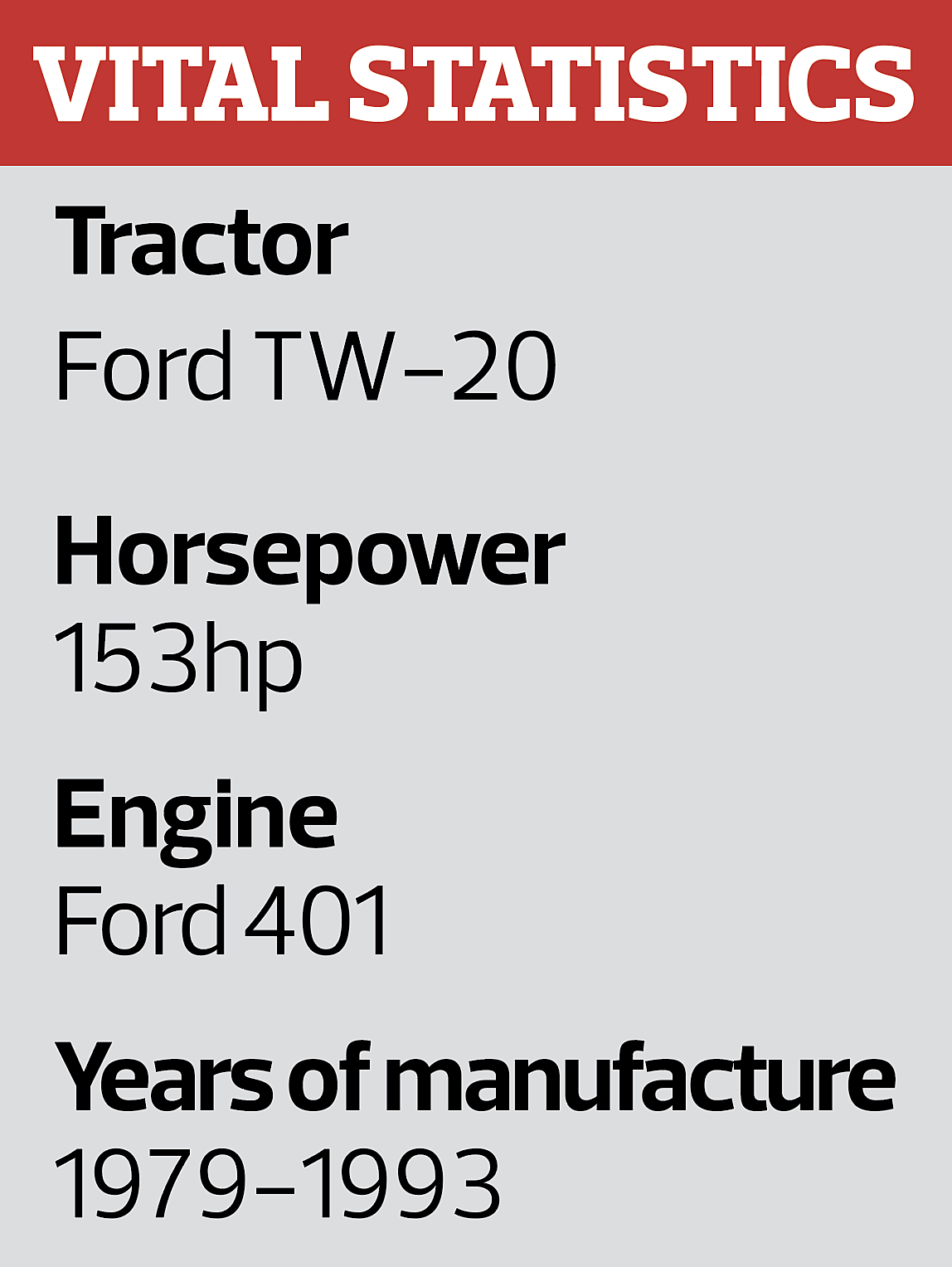
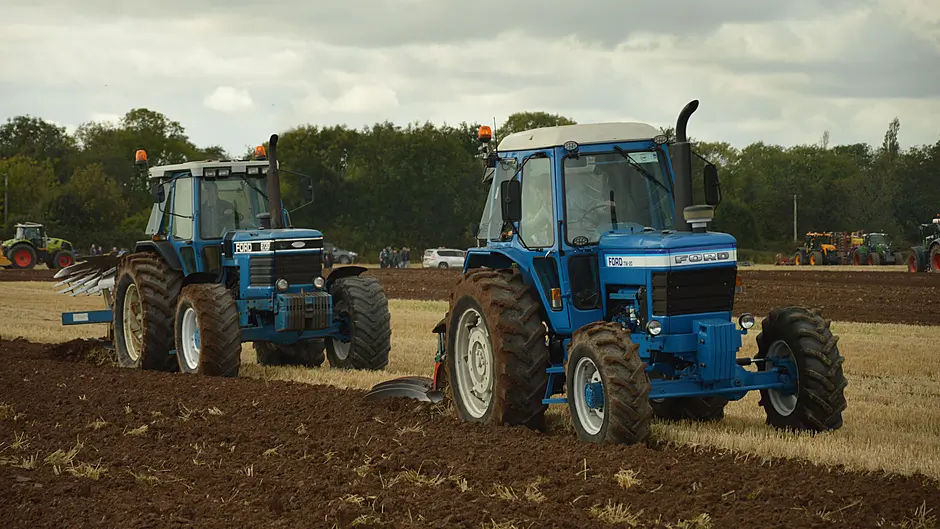
1979 saw the launch of the legendary TW series, replacing the top end 8700 and 9700 models. Built in Ford’s Antwerp factory in Belgium, the first TW range consisted of the TW-10, TW-20, and TW-30, all easily recognised by their high exhaust stacks and dominant stature.
Powered by the s 6.6l 401 engine the turbocharged TW-20 produces a sizable 153hp. A constant mesh transmission provided 8F/2R gears, with dual power doubling the ratios, while the tractor has a lift capacity of almost 4tons, although not fitted with assistor rams.
ZF front axle was fitted to provide four-wheel drive, with its distinctive offset drive shaft and front axle bell housing.
Featuring a large 14” clutch and improved hydraulic output, the TW-20 was usually supplied with PAVT (power adjusted variable track) rear wheel rims as well as rear wheel weights for maximum traction as well as a bank of Ford’s 40kg front weights..
In 1983, the TW-20 was updated to the TW-25, its wheel base growing to that of its TW-35 sibling.
This had a number of benefits.
Firstly, it allowed for greater weight to be slung out on the nose of the tractor with 14 X 45kg belly weights mounted ahead of the front axle.
This paired with the 12 X 40kg nose weights mounted on the nose, gave the TW-25 1,110kg of ballast at the front aiding traction as well as countering heaving mounted implements at the rear.
The extra bonnet room also gave this TW-20 156l more diesel capacity over its predecessor.
In fact, a huge 70% more with 223l vs 379l, again adding to front end ballast. All of this however did come at some cost, the longer bonnet making the tractor a little clumsier.
In 1985, the range was further updated to the Series II, with a revamp in paintwork and decals but the big advance was the addition of Ford’s new Super Q cab, improving operator comfort.
Lift capacity was also increased to 6.6 tons thanks to twin assistor rams.
The final evolution of the TW-25 came in 1989 with the tractor rebadged as the 8730.
The key update with the 30 series was the Funk designed power shift 40kph transmission providing 18F/9R clutchless gears, a transmission system which would set the precedent for Ford and ultimately New Holland still to this day.
If you have Ford TW, please get in touch!
Contact Peter at [email protected] or see Instagram @flashphotoscork