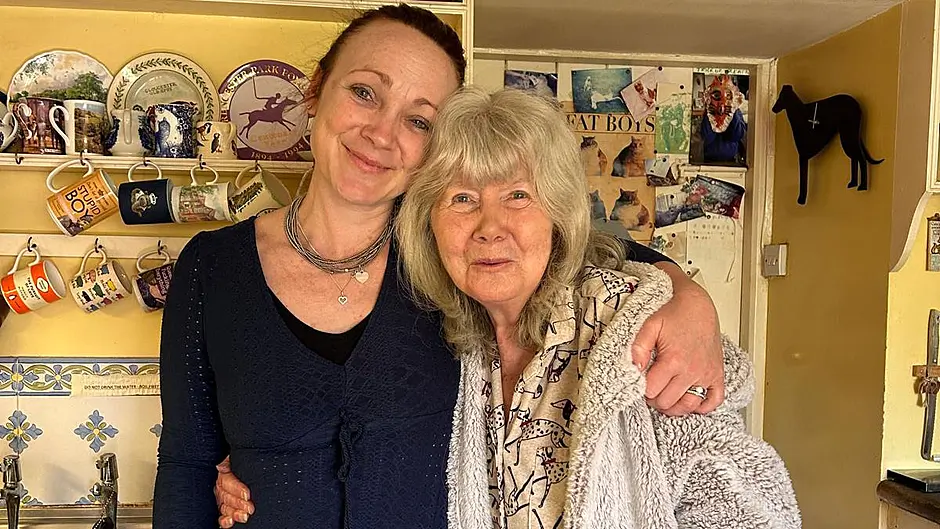
The world said goodbye to famous author Jilly Cooper last Friday with a special memorial service at Southwark Cathedral in London. I was lucky enough to be invited.
BY CARAGH BELL
Dating back to 606, Southwark Cathedral has long been associated with writers - from Chaucer and Shakespeare to Dickens - making it a fitting place to honour her life and work.
ADVERTISEMENT
Nestled between the Shard and Borough Market, it sits at the heart of London.
Paparazzi waited outside the medieval stone building as security checked the guest list and ushered people in. Inside the nave were many of the stars of Rivals: David Tennant, Victoria Smurfit, Danny Dyer, and Aidan Turner.
Caitlin Moran and Helen Fielding were there, as were Rupert Everett, Claire Balding, and Alan Titchmarsh. Jilly’s agent, Felicity Blunt, stood with her husband, Stanley Tucci.
I sat beside a woman from Greyhounds in Need, the charity that was lucky enough to have Jilly as a patron. We all rose as the Queen entered, and Brigadier Andrew Parker Bowles, one of the inspirations for Rupert Campbell Black, spoke movingly of his old friend.
To say it felt surreal is an understatement. Music filled the cathedral as the organ carried us from Bach to Mendelssohn. The Southwark Cathedral Choir sang while the Dean and his entourage processed up the aisle holding a golden processional cross.
Joanna Lumley read from Jilly’s diaries, The Common Years: funny, touching, unmistakably her. Alex Hassell and Bella Maclean read a romantic passage from Rivals. Rupert Everett’s reading of The Parting Glass reduced the congregation to tears.
Afterwards, came gallons of champagne and laughter. Just as she would have wanted.
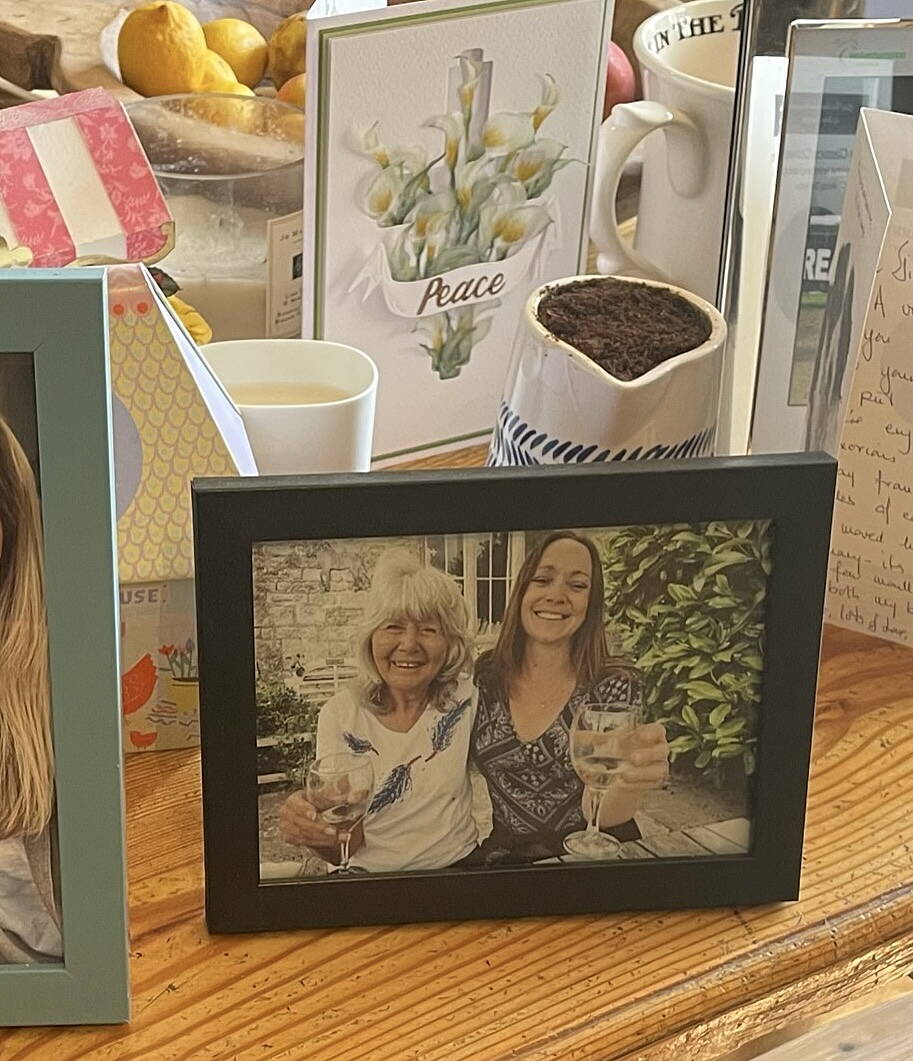 A framed photo of the firm friends toasting with champagne.
Jilly was never a megastar to me. She was simply Jilly: a woman who loved Yeats and dogs, Shakespeare and horses, birds and handsome men. She sent my daughter a card when she got into the Cork School of Music. She supported me through difficult times with stories, humour, and advice. She was one of the most loyal friends I’ve ever known.
We first connected eight years ago, after I published Echoes of Grace. I wrote to her via her agent to tell her how much she had inspired me. Two weeks later, a handwritten letter arrived from Gloucestershire. We began a correspondence that became especially meaningful during lockdown: cards with animals, wooden postcards that cracked in the post, pages of her famously indecipherable handwriting filling every inch of space.
On Valentine’s Day, a card would arrive with her beloved dog, Bluebell, surrounded by red hearts. In 2021, I finally visited her in the Cotswolds. We lunched in the garden on quiche and Eton mess, with plenty of champagne and an unforgettable conversation about books. It felt like meeting an older version of myself.
On later visits, I stayed in her 13th-century chantry (the inspiration for Penscombe) with its golden stone and sweeping valley below. I slept in her daughter Emily’s old room, complete with dog-patterned bedding. She left books of Irish writers on my bedside table so I’d feel at home. My own books were laid out proudly in the living room, and a photo of us sat framed in the kitchen. When I asked if she put the Caragh stuff out only when I visited, she wouldn’t quite meet my eye. ‘Of course not, darling.’
Her house was full of memories: photographs, mementoes, trinkets everywhere. In the mornings she baked croissants in the Aga while Radio 4 played, then fed the birds in her dressing gown.
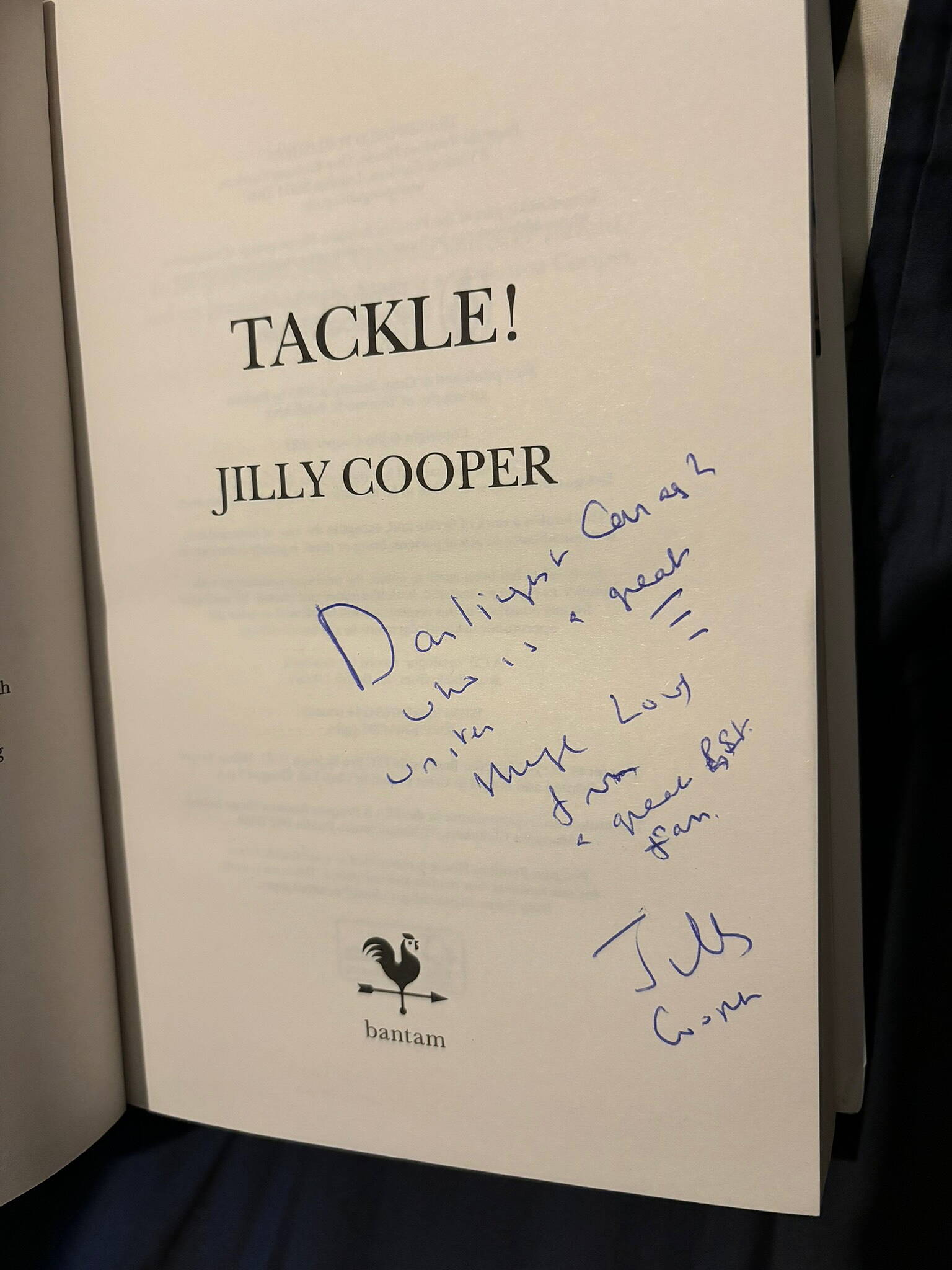 A signed copy of Jilly’s last book Tackle! with a personal note to Caragh.
Beside the house was a small animal graveyard, each headstone with a special inscription. Such a testament to her devotion to them all. She read all of my books, and always re-read them prior to my visits. She knew the characters intimately and could talk at length about them.
You see, Jilly had a gift of making people feel like they were the centre of the universe. She called me ‘angelic’ and ‘ravishing’, and when her final novel, Tackle, was published, she described me in the Guardian as a ‘wonderful writer’. I told her I’d use it for my epitaph. She laughed.
Last March, she came with my daughters and me to Stratford-upon-Avon to see Hamlet. It was her favourite play, and she quoted it aloud throughout. No one minded. People smiled, nodded, touched her arm as she passed. With that unmistakable hair, she was instantly recognisable: a national treasure.
Any message she left on my phone started with ‘Darling, it’s Jilly. Jilly Cooper.’ I always loved that. She noticed everything, like a true journalist, and took great care to remember small details about my life. Her kindness felt natural, instinctive. She was intuitive, clever, witty, and such fun.
As I chatted to lots of people in the church after the service, I realised that she made everyone feel like that. The last phone message I ever received ended with: ‘I love you, darling. I’ll see you in November.’
Jilly died on October 5th.
Borrowing from Shakespeare’s Hamlet, a play that will always remind me of her, I shall not look upon her like again. I hope she’s up in heaven with lots of gorgeous men, all of her old pets, and magnums of champagne.