By Brian Byrne
It seems there’s a new electric car launched in Ireland almost every week just now. Many of them are affordable because there’s an increasing choice of small EVs whirring into the showrooms.
That’s a change from last year. Up to then, almost all electric models were larger cars, with larger price tags. So you wouldn’t get into most of them without shedding close to or more than €50,000 from your bank balance. Now, for those in the small car space, which is a significant market segment, there are powertrain choices that almost always include electric, with pricing at or below €25,000. The latest of these to hum along my road was the Citroen ë-C3.
ADVERTISEMENT
It’s the fourth generation of the C3 nameplate, which has motored along for the French brand since 2002. This iteration is on a specially revised platform that is particularly efficient for electric drives and will underpin no fewer than seven upcoming Stellantis models in this size segment.
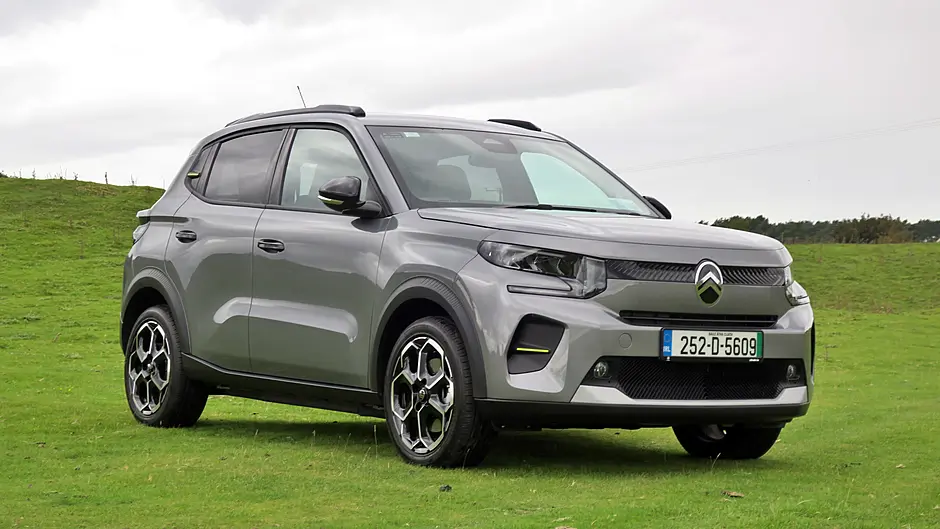
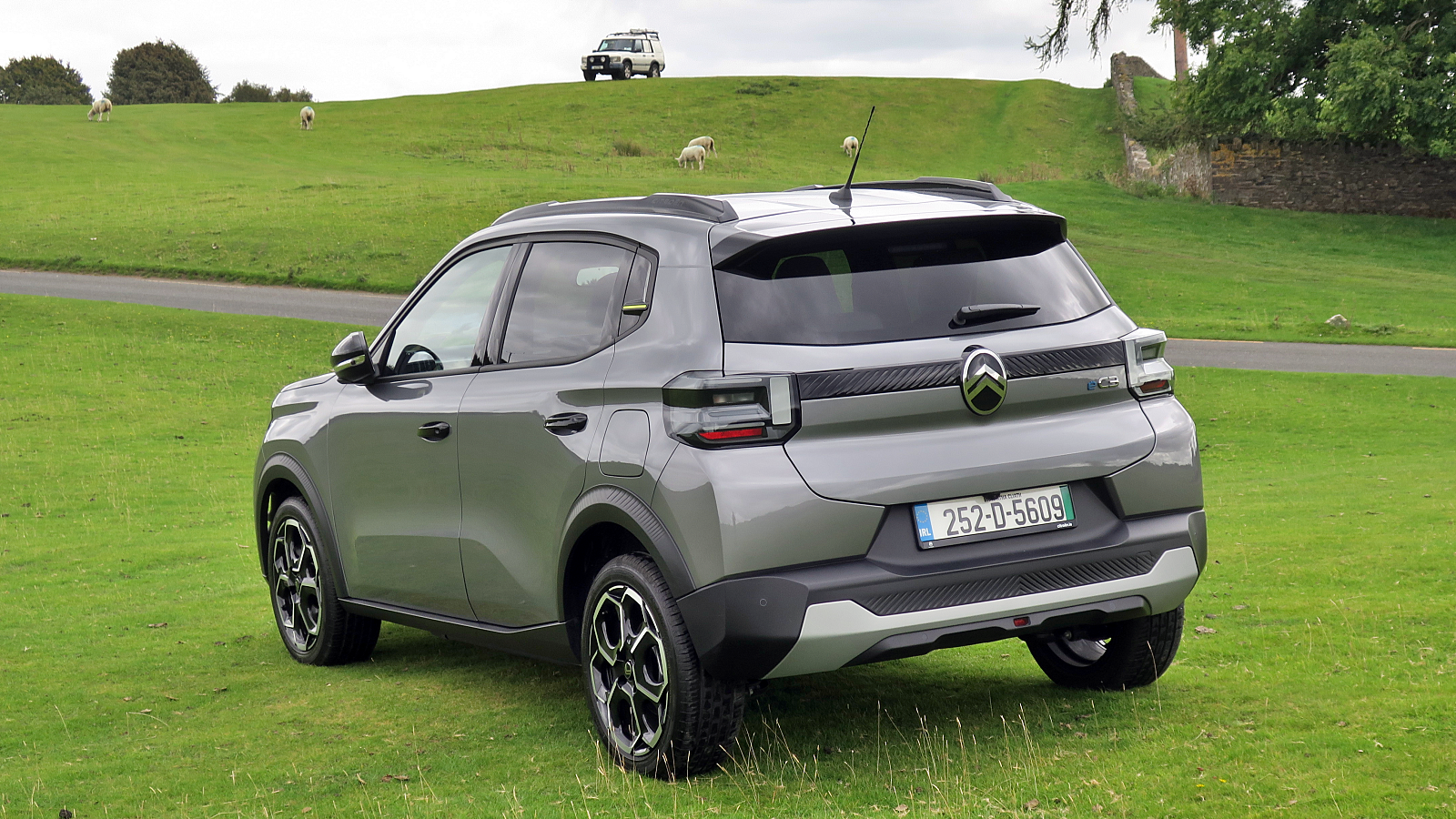
Over these last two generational changes, the C3 styling has evolved from curvy to chunky. While the car remains technically a supermini hatchback, the sheetmetal reality is closer to SUV proportions. The height is especially significant, as this is one of the few cars in the segment where people of my height can get in and out without having to worry about their heads scraping through the door opening. Unusually for Citroen, there’s nothing quirky about the design, but it does look very stylish in the details, particularly from the rear three-quarter, where all the panel and lighting elements cohere exceptionally well.
There are clever bits inside. Immediately visible in the placement of the driving information panel, for instance. It’s a narrow strip forward on top of the dashboard, just on the scuttle line. It is far enough from the eyes to avoid changing focus from the road when checking the vitals. It is better than a head-up display because it’s not subject to bright sunshine glare. Monitoring it is made easier by the squished shape of the steering wheel. Some might mutter that it’s copying the sibling brand Peugeot’s i-Cockpit setup, but let’s call it evolution.
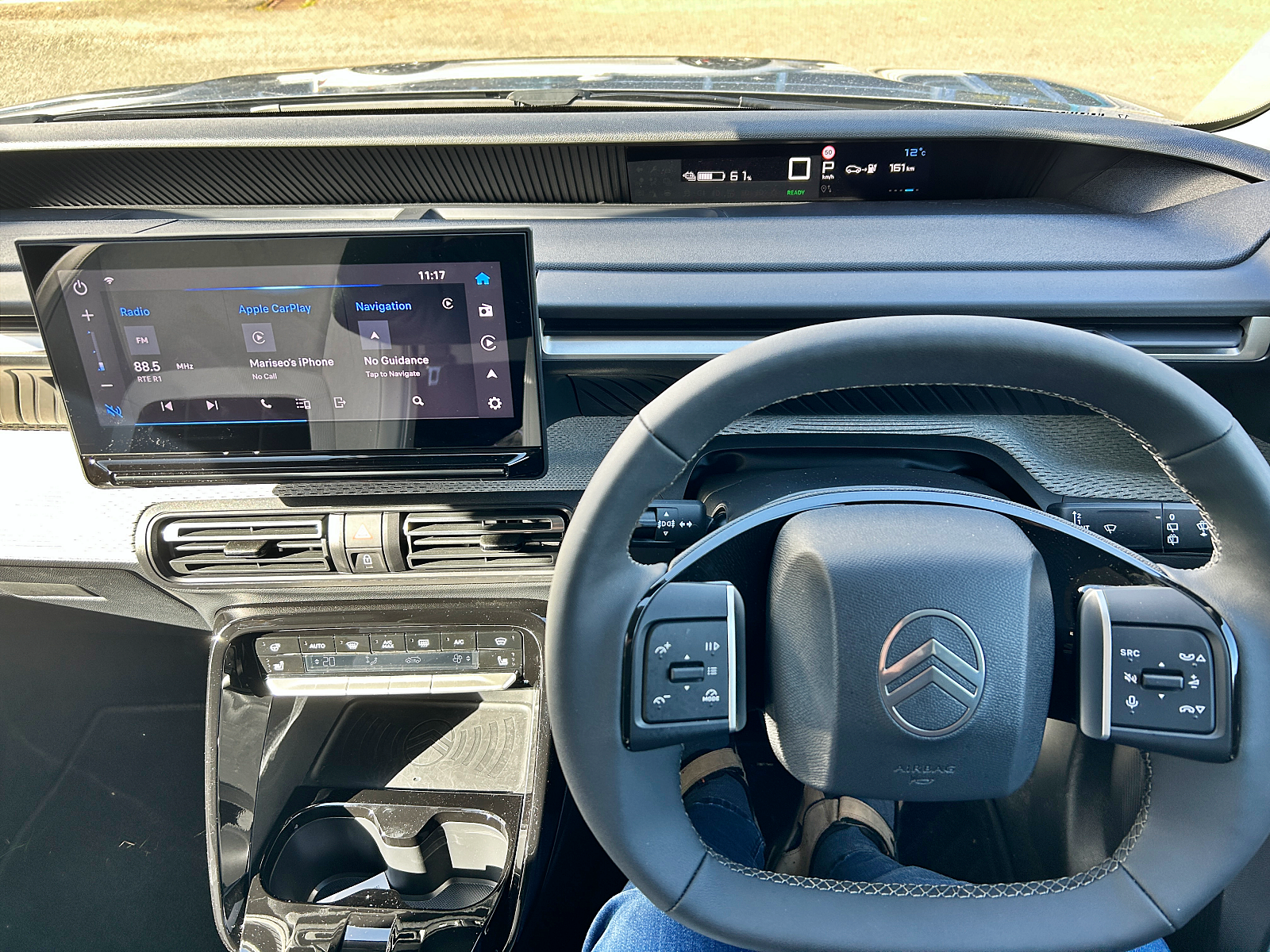
Citroen shifted key systems management to a touch-screen many years ago, and I called them out on it at the time for its distraction potential. They pooh-poohed my concerns then, and I vividly recall the moment at a European launch event. But they’re making amends, as are many others guilty of the same sin. So we have clear manual buttons and flip switches for all climate controls. The infotainment screen itself is nicely sized and has clear and simple graphics. As for dealing with the annoyances of some of the driver assist features, two buttons to the right of the steering wheel make that simple (Chinese makers, please copy). Citroen’s key selling point is comfort, and the seats, even in a small car, are right on the money there. For the first time, the C3 has what the company calls its Advanced Comfort system, in seats and suspension, which works very well in the larger models, and is just as effective here. If you think a small car, by its nature, has to be choppier to ride in compared to a larger car with a longer wheelbase, think again.
Like many Stellantis brand models, the new C3 has petrol, petrol-hybrid and electric drivetrain options. Obviously, with the ë prefix, mine was the electric. It doesn’t have crazy awesome power and acceleration, which is good. So the 113hp gets one to 100km/h in a comfortable 11.5 seconds, and the 44kWh battery is good for a rated range of 320km, or closer to 270km in the motorway-urban mix.
They’re keeping it simple, with just two equipment levels in the electric version. The upper Max grade adds, among a few other things, what I now consider essentials like heated seats and a rear camera.