A WEST Cork documentary maker is hoping his soon-to-be released documentary on the story of the oil business coming to Bantry Bay, that eventually led to the Whiddy Oil Terminal disaster, will help keep alive the memories of the 50 people who perished in the 1979 tragedy.
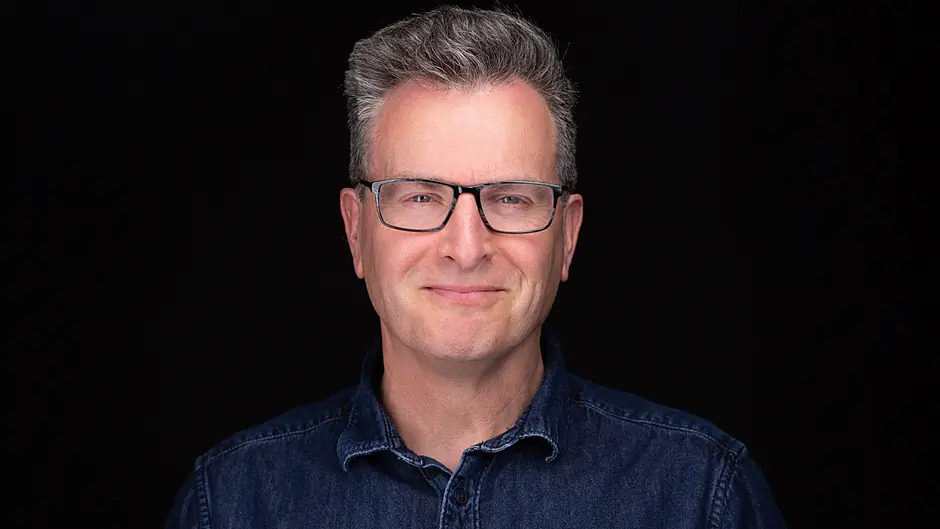
Adrian McCarthy, who grew up in Skibbereen, is in the final stages of editing Big Oil, Small Town which will have a cinema release later this year.
Over the last 25 years, Adrian has made award-winning documentaries about the arts, sport, politics, music, comedy, social issues, mental health, ‘the ups and downs of life,’ as he says himself.
ADVERTISEMENT
They include Rough Rider, on controversial Irish journalist and former pro-cyclist, Paul Kimmage as he returned to the Tour de France; Crash on the impact of car crashes; Blowing the Whistle on GAA referees; Dead Silence on the impact of BSE on two Irish farms, and Pull Like a Dog on local rowing heroes Gary and Paul O’Donovan.
Through his company, Curious Dog Films, he also recently produced the award-winning Born That Way.
Adrian’s latest work puts the spotlight on the international oil business coming to West Cork in the late 1960’s and the impact it had on Bantry Bay and Whiddy Island.
It also deals with the Whiddy disaster, which saw the French-owned oil tanker Betelgeuse catch fire and explode at the Gulf Oil-operated terminal jetty at Whiddy Island on January 8th, 1979. The explosion and resulting fireball killed 50 people, both on the ship and on the jetty.
Of the 50 victims, there were 42 French nationals, seven Irish citizens, and one British man. Twenty-three of the bodies were never recovered. A Dutch diver also died during the rescue efforts.
The seeds of Big Oil, Small Town were sown six years ago, when Adrian heard a radio report about an event taking place in Bantry to mark the 40th anniversary of the Whiddy oil disaster.
‘I remember I phoned my dad Donal to ask if he was there. My father was one of the part-time firemen called out to the disaster on that unforgettable night in 1979, and during our call I realised that we had never spoken about what happened, or about the impact it had on him and his colleagues.’
‘Soon after I decided to drive to Skibb and spoke in detail to my dad and some of the other firemen, and so began the idea for a documentary film around that story,’ said Adrian.
‘Over the next couple of years I met with a number of different people connected to those events in West Cork and in France, doing some initial filming while trying to figure things out.It started to become clear that the story I wanted to tell was not about the disaster but the impact of what happens when the international oil business comes to a small rural community in a place like West Cork,’ he explained.
‘The documentary spans from 1966 when Gulf Oil choose Bantry Bay as the location to build their new European Oil Terminal, bringing a huge boom to the area, right through to the aftermath of the disaster in 1980.’
‘That timeline became our focus and with producer Maria Horgan and a small team on board we filmed throughout 2025, and then our editor Brenda Morrissey began the mammoth task of helping to figure out how we could tell this complex story. We hope this documentary film will resonate with viewers today in a way that they might not expect,’ said Adrian.
A very important discovery for the team was finding a rich bed of local film archive captured in the 1970s and 80’s by the talented Bantry film-maker Denis Connolly.
‘This material (dozens of reels of film, thanks to his family) was a wonderful discovery in allowing us to show normal life in the community captured by Denis with his Super 8 film cameras.’
‘We also got hold of great photographs, thanks also to their families, taken by the very talented local photographers Ian Vickery and Michael Minihane. Another important discovery was tracking down Australian anthropologist Dr Chris Eipper who had moved to Bantry Bay in the 1970’s to study the relationship between the oil company and the local
community. ‘
‘All of these have contributed hugely to the way we ended up telling this story,’ said Adrian.
The hope is that Big Oil, Small Town will screen at a few International film festivals and have a cinema release in Ireland later this year, followed by a broadcast on RTÉ and Arte in France in 2027 and Adrian thanked their funders Screen Ireland, RTÉ, Coimisún na Meán, Arte, and the S481 Irish Tax Credit.
‘Films like this could not get made without their support,’ he said.
‘I think this documentary will be of interest to not only the people of West Cork and the rest of Ireland and France but to a broad international audience where stories like this continue to happen to this day.’
‘Fifty people lost their lives in the early hours of 8th January 1979 and those men and one woman, and their families should never be forgotten. We hope this documentary will in some way help keep their memories alive,’ said Adrian.
The oil terminal came into operation in 1969 and exploded 10 years later. A tribunal was appointed to investigate the incident, presided over by Mr Justice Declan Costello, and a report into the disaster published in May 1980.