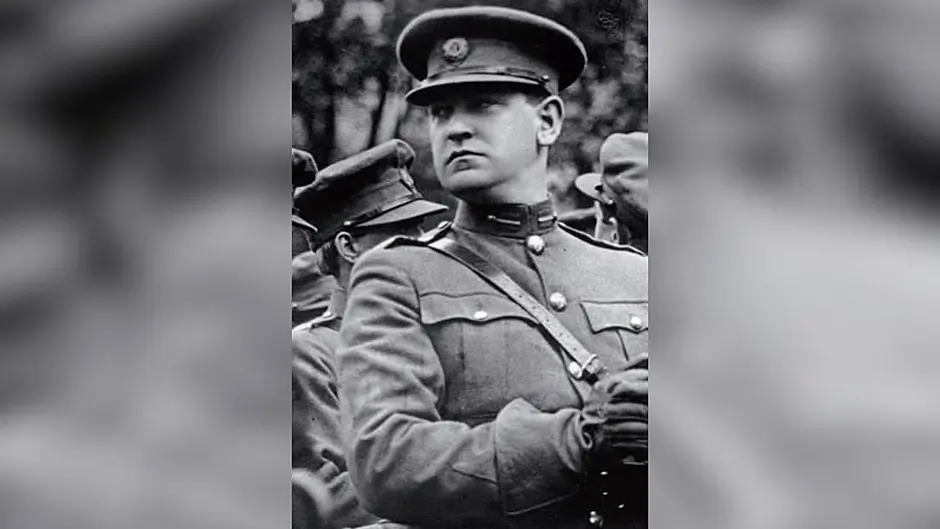
AI Michael Collins bears a likeness... but there’s no Cork accent.
AN AI version of Michael Collins is helping people engage directly with history.
The avatar of the commander-in-chief of the National Army is in its early stages. But its developer, Dublin-based AI Advisers, said the virtual character has the potential to be used widely in museums and school history lessons.
Michael Collins’ digital likeness draws on historical photos, writings and descriptions. And his voice was reconstructed since no recordings exist. But he has yet to pick up a Cork accent.
ADVERTISEMENT
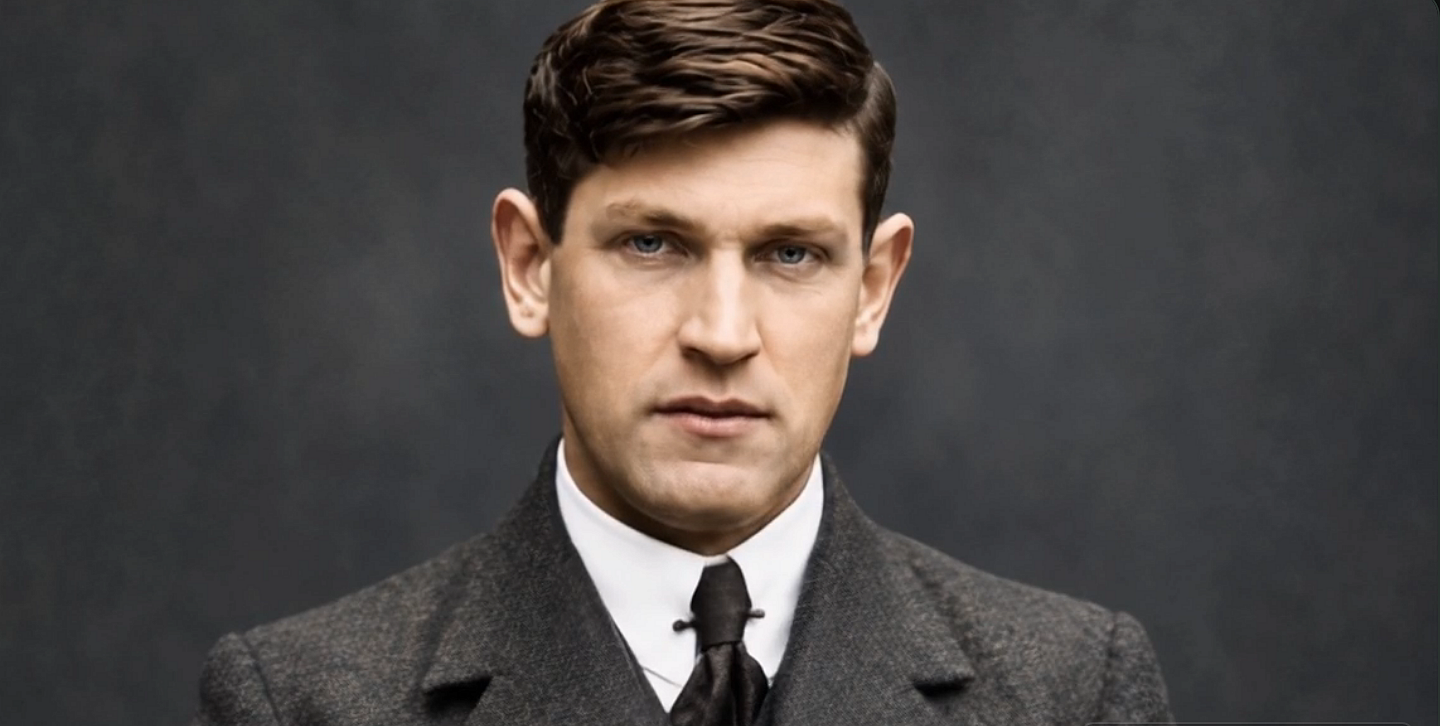
Start-up founder Kenn Joyce said Collins was chosen for being a famed figure, and he topped a public poll AI Advisers ran to find figures people wanted digitally resurrected.
“As part of the process we modelled the face of Michael Collins from various photographs and we processed them over and over again until we had a photographical likeness,” he said. “Then we used AI to apply the colouration and clothing of the day.” He added: “This is an early version.” Kenn said the company is also working on other AI figures from world history, including Albert Einstein.
Pursuing the truth
Tim Crowley, who co-founded the Michael Collins Centre Museum at Castleview, said he would be interested to see the final version.
“It’s essential that the digital version of Michael Collins is historically accurate. I would be concerned if it wasn’t,” he said. “It would be a problem if it relied only on material available online because there’s a lot of inaccurate material out there.
“You can find photographs generated in the past ten years, where people have added other figures next to Michael Collins. They are not original. History is always the pursuit of the truth, the true story of what happened in the past.”
He added the museum is going the opposite way: “People are telling us they are getting quite fed up with technology and AI. We do live presentations and stand-up history talks.”
The Southern Star checked the credentials of the digital General Collins in an interview, asking about key moments and people in his life.
The AI model recalled his childhood days on the family farm in Woodfield, where he was born the youngest of eight children.
“My boyhood was spent in the fields and in the house, learning the rhythms of the land and the stories of my elders,” the avatar said. “Early on I felt the pull of Irish nationalism. As for a chronic illness, there’s none that I suffered from. My health was that of a typical country lad, although the years of war and imprisonment took their toll in fatigue and occasional sickness. Nothing lasting.”
About his memories of the 1916 Easter Rising and the occupation of the Dublin GPO, he said there was “chaos and fire, but also a fierce sense of purpose”.
Ireland’s freedom
“The building shook with gunfire, smoke curled through the rooms and we moved from office to office, shouting orders and keeping the flag aloft. Amid the shouts of the volunteers and the ringing of the bells, I felt the weight of history pressing on us. We knew we might not live to see the result, yet we pressed on for Ireland’s freedom.”
The digital Michael Collins also recalled his imprisonment after the Easter Rebellion in Wales at Frongoch internment camp.
“The camp was a cold, damp place where we lived in wooden huts, shared thin rations and tried to keep our spirits up with songs and stories of Ireland. It was a hard lesson in endurance but the comradery there forged bonds that later helped us run the intelligence network during the War of Independence.”
Another talking point was his fiancée Kitty Kiernan. The pair got engaged during the War of Independence in 1919.
“She’s bright, warm and steady, a constant comfort amid the turmoil,” said AI Collins. “We met through mutual friends in Dublin and despite the war, she’s kept her spirit, writing letters that lift me when the days grow dark. I intend to marry her as soon as this storm of civil war passes, though I know the road ahead is far from certain.”
Asked about other important people in his life, the digital version said Harry Boland was his close comrade from the old IRA, a fellow member of The Squad and a staunch Republican. “He fought beside me through the War of Independence and his death in August 1922 hit me hard. We shared a lifetime of struggle and his loss still weighs on my mind.”
In two minds over Treaty
On the question if he was in two minds on the night before signing the Anglo-Irish Treaty in London in December 1921, he said he had been.
“Part of me saw the Treaty as the only practical step to give Ireland a foothold on freedom, while another part thought it would split the movement and lead to bloodshed. I kept thinking of the men still out there, of Harry and of the promise we’d made and wonder if the compromise would finally let us achieve the freedom we fought for.”
Also part of the digital reconstruction were his final memories of the day of the ambush at Béal na Bláth, which cost Michael Collins his life aged 31.
“I rode out to the South West with the army staff, inspecting positions and trying to keep morale up as the civil war raged. I met with officers, discussed movements and spent a brief moment with Kitty, feeling the weight of what lay ahead.”