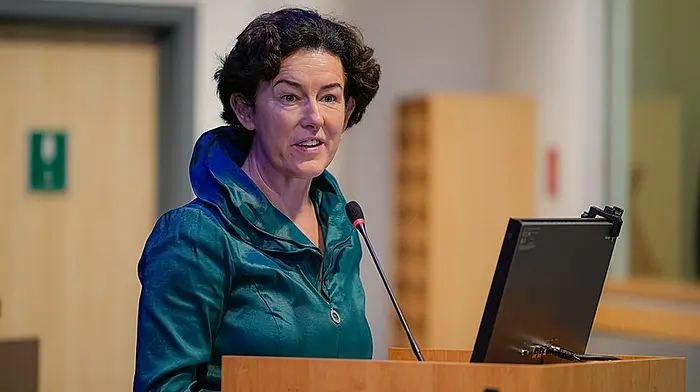
AWARD winning West Cork tillage farmer Martin O’Regan has hit out at the lack of a level playing field for the sector, and said Irish growers are not being paid a fair price for their premium products.
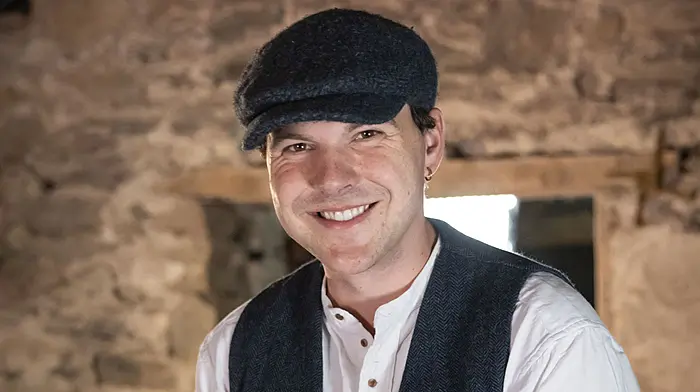
Martin, who farms at Coolyrahilly, Ballinspittle is the Flahavan’s 2025 Conventional Oat Grower of the year.
Upon receiving the award, he was commended for delivering outstanding performance across his Isabel Oat supply, consistently producing exceptionally clean grain underpinned by strong agronomy and a keen focus on environmental care.
ADVERTISEMENT
He was also commended for the reliability and passion which set a benchmark across the grower group.
However while Martin said winning the award was fantastic and something he puts great value on, he said that ‘right now there’s more negativity than anything else in the sector, because we need greater support from policy makers and to be paid a premium price for our produce.’
Martin, a second generation farmer, has been working with his father Jim for the past 25 years.
Together they grow crops on over 1,500 acre on a mix of land they own, rent, and are in farm share arrangements with.
They grow winter and spring barley, spring wheat which they supply to Barryroe Co-op and sugar beet delivered straight to livestock farmers; winter and spring oats (for Flahavans) and malting barley for the distilling industry.
Martin has been in the top three Flahavans growers for three of the last four years and was thrilled to take the title this year.
The key to their success is to maximise output from every acre farmed, growing high-yielding premium crops.
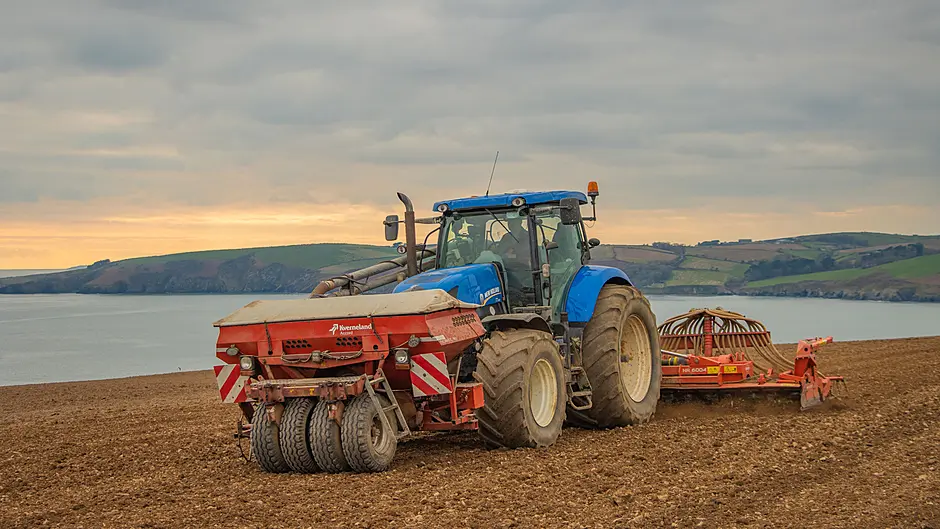
They operate a wide range of machinery going from ploughing, harvesting and baling as well as delivering large quantities of big square bales and beet across a number of counties in Munster.
This would not be possible without an excellent dedicated staff, said Martin.
‘It’s a demanding business, with little or no downtime, and one where you’re constantly at the mercy of the elements, and it’s becoming less financially viable all the time,’ he said.
‘Over the last number of years, there’s been the pressure of rising costs for inputs such as fertiliser, seed, plant protection products, labour and the cost of renting or purchasing land due to increased competition. However, at the same time the price for grain has been decreasing so tillage farmers are being squeezed at both sides,’ he said.
‘We are part of the EU and must abide by its rules, which means we are restricted by what products we can apply on our crops, and also by what we can grow, yet genetically modified crops are being imported into the EU from the likes of Canada, Argentina and Brazil. These countries are also more lenient when it comes to plant protection products. Some of the products that are being used outside the EU have being banned within the EU for 20 years. It’s far from being a level playing field but we are all being paid the same for our product,’ he said.
‘An average of 1.7 to 2 million tonne of grain is produced here annually, but we’re importing an average of 5m tonne, 70% of which is coming from outside the EU’, he said. The difference is that everything Martin grows is tracked and traced by the Irish Grain Assurance Scheme, which is the first and only grain accreditation body in the world to achieve gold standard. ‘That speaks volumes,’ said Martin who said that Irish tillage farmers deserve to be paid a premium price for their feed, and other crops, because it’s produced to a higher standard.
He also pointed out a reluctance by Irish millers to use carbon-neutral Irish oats in their ration in favour of cheaper options such as imported soya hulls and palm kernel.
‘We are required by EU law to grow three crops for the purpose of biodiversity, but no one is making the livestock sector use home-grown grain. It all comes down to economics, and our needs are going largely unheard by the likes of Bord Bia and the Department of Agriculture,’ he claimed.
Martin also highlighted how the Irish brewing and distilling sectors use 330,000 tonnes of malt grain per annum, but only 220,000 of this is Irish.
‘Irish whiskey is required by law to use Irish water but there’s no legal requirement to use Irish grain. We have been calling time and time again to have this technical file reopened to include Irish barley, in the same way that Irish Cream Liqueur is required by law to use Irish milk. Tillage farmers should rightly be given the same recognition and respect for the quality product we produce but to date there’s been no positive outcome.’
The award-winning farmer said the tillage sector was becoming financially unviable.
‘Lots of tillage farmers are at breaking point, and even at the scale we’re operating at, it’s very difficult when you take into account costs such as insurance and labour. That’s why premium contracts like Flahavans are so essential,’ said Martin, a member of the IFA and the Irish Grain Growers’ Association.
‘I love tillage farming, but it has to be financially rewarding. I’ve three children and I’m concerned there just won’t be a livelihood to be made from this if one of them wants to take over in years to come.’