
I don’t know about you, but we’ve been glued to The Traitors UK these past few weeks.
We’ve even let the kids watch it even though I have mixed feelings about teaching them the finer points of lying and deception.
ADVERTISEMENT
At the same time, having the skills to identify bullshitters may be on the school curriculum soon, the way the world is going. ‘Critical thinking’, I think they call it.
Spoilers ahead, so stop reading now if you want to watch it: you’ve been warned!
Nine million people tuned in for Friday night’s finale on BBC, which is genuinely extraordinary when most of us watch telly on our phones while scrolling through other phones. Rachel from Newry and Stephen from the Isle of Lewis made it to the end as traitors, having formed a pact early in the game to stick together no matter what. At the crucial moment when Stephen could have betrayed Rachel and taken all ninety-five grand for himself, he kept his word. They split the pot.
Aren’t we strange creatures, us humans? To watch a show entirely focused on lying and subterfuge, and then celebrate when the liars win, but only because they did it in a loyal way?
‘Two traitors,’ host Claudia Winkleman said, visibly emotional, ‘but totally faithful to each other.’ Stephen’s decision to honour his promise felt like a tiny act of resistance against everything else happening in the world. Sometimes keeping your word matters more than pure self-interest, even if it is just telly.
Stuck in the fast lane
Dublin has officially been crowned the third most congested city in the world. Not in Europe, in the world! Olé olé olé olé! The average speed during rush hour is 13.5 kilometres per hour, which is essentially a spot of power-walking with the engine running.
Last week, Labour TD Mark Wall left his home in Athy at 6.30am to get to the Dáil, a 75 kilometre journey that took him three and a half hours. He arrived at 10.05am, having missed the start of his own motion about flexible working and remote work to reduce traffic congestion. His colleague had to introduce it while Wall sat on the M50, presumably banging his head off the steering wheel while listening to Toto’s Africa.
What really took the biscuit, however, was the following little fig or detail buried in the bloated roll of Irish infrastructure planning, if you’ll excuse the overcooked metaphor: the M4 bus corridor is already built, construction finished months ago, but it can’t open because the government only realised after seven years of planning that they needed legislation to allow buses to use the hard shoulder. Seven years. Imagine how many piss-ups in breweries could have been organised in that time?
Resisting the wind
Canadian Prime Minister Mark Carney gave a speech at Davos last week that everyone should read. He talked about middle-tier countries like Canada, the UK, France and Germany needing to adapt to an era of 19th century geopolitics where the rules-based order has collapsed and great powers are acting like schoolyard thugs at small break. Middle powers can’t just align quietly behind larger actors anymore, according to Carney.
It’s a tricky one for us. We’re not a superpower, we’re more like SuperValu-On-Sea for the American multinationals, but we do have options. Although Pax Americana has been rather beneficial for small nations like Ireland, who weren’t exactly welcomed to the dinner table by all those kind and friendly middle-tier countries in centuries gone by, so we do need to box clever here. So while America descended into chaos after the appalling shooting in Minneapolis last week, it was good to see Darragh O’Brien in Germany at the North Sea Summit talking about wind energy.
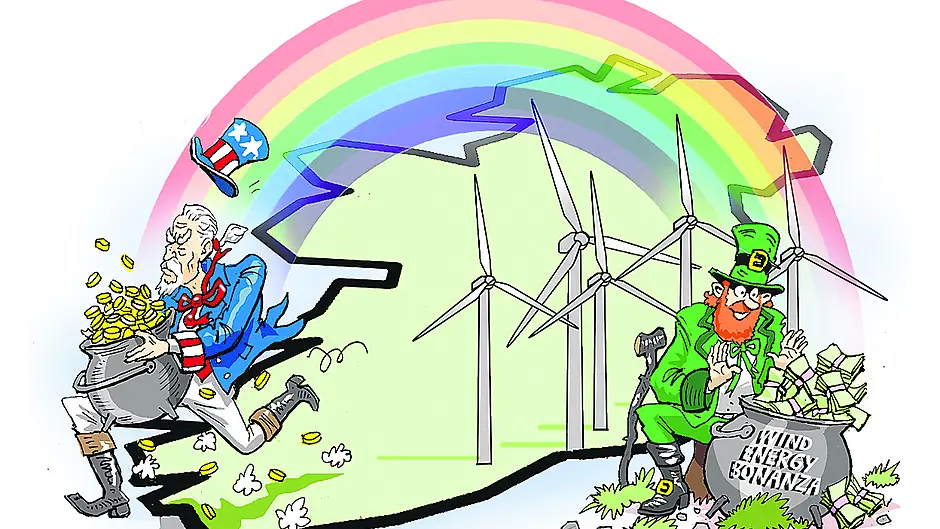
There’s a serious opportunity in front of us here. Europe wants 300 gigawatts of offshore wind capacity by 2050. Ireland could grab a massive slice of that €250 billion investment. We’ve got some of the best wind resources in the world; we’re a small windswept island at the edge of Europe with massive offshore potential. Read Peig if you don’t believe me. But we’re lagging behind spectacularly (again, please see Peig). Why have we built no new offshore wind farms in twenty years? Denmark, with similar conditions, has 2.7 gigawatts installed and another gigawatt under construction. They’ve figured out how to tender properly, how to guarantee fixed electricity prices to developers, and how to make the economics work. They became the first country to install offshore wind back in 1991 and they’ve been at it ever since. I have no evidence to back this up, but I’m pretty sure most of our disposable income from that year was spent at Cheltenham.
We should be treating wind energy as the massive economic opportunity it is, something that could make us energy independent and genuinely wealthy, as opposed to the nod and the wink ‘we’ll stick an ‘aul brass plate up in the Docklands there for you, Tod, and you can leave a bag of cash by the pond in Stephen’s Green’ sort of wealthy.
Ireland needs to decide what kind of country we want to be. Stephen in Traitors chose to keep his word even when breaking it would have netted him everything. We could choose to go big on offshore wind while America retreats, without throwing the American baby out with the bathwater. Dublin could choose to open the bus corridors it’s already built. Or we could all just keep sitting in traffic, watching opportunities sail past, and wondering why nothing ever changes.