A West Cork family share their experience of the stark beauty and challenges of life in the Arctic tundra, writes Martin Steinmetz.
More than 1,000 kilometres above the Arctic circle in Canada lies the small settlement of Grise Fiord.
It is nestled at the southern tip of Ellesmere Island and surrounded by endless ice.
ADVERTISEMENT
Because of its harsh climate and temperatures that can dip as low as -40°C, it is known as ‘the place that never thaws’ in Inuit culture.
Thanks to its people and history, this area is home to customs and legends as old as the ice.
The hamlet’s origin story starts in the shadow of the Cold War: in 1953, eight Inuit families were relocated here from Quebec, forced to adapt rapidly to a land promising game and shelter only in government assurances.
And just three decades after its formation, having grown to a population of 86, the locals were joined by an Irish family all the way from the shores of West Cork.
In autumn 1989, young GP Geraldine Osborne had not long finished her medical degree in Dublin where she met her husband Danny, an artist who had taken part in the Irish Arctic expedition in 1981.
Bringing their three young children, Tempy, Orla and Oisín, the couple decided to set off on an adventure to make a life for themselves in Canada’s northernmost settlement.
Geraldine remembers: ‘I always knew I would be going to the Arctic. Danny and I were always particularly interested in travelling to places that are beyond human habitation. We arrived in a small propeller plane with nine dogs, our three children and a lot of gear. We took the dogs out of the plane and it started to snow.’
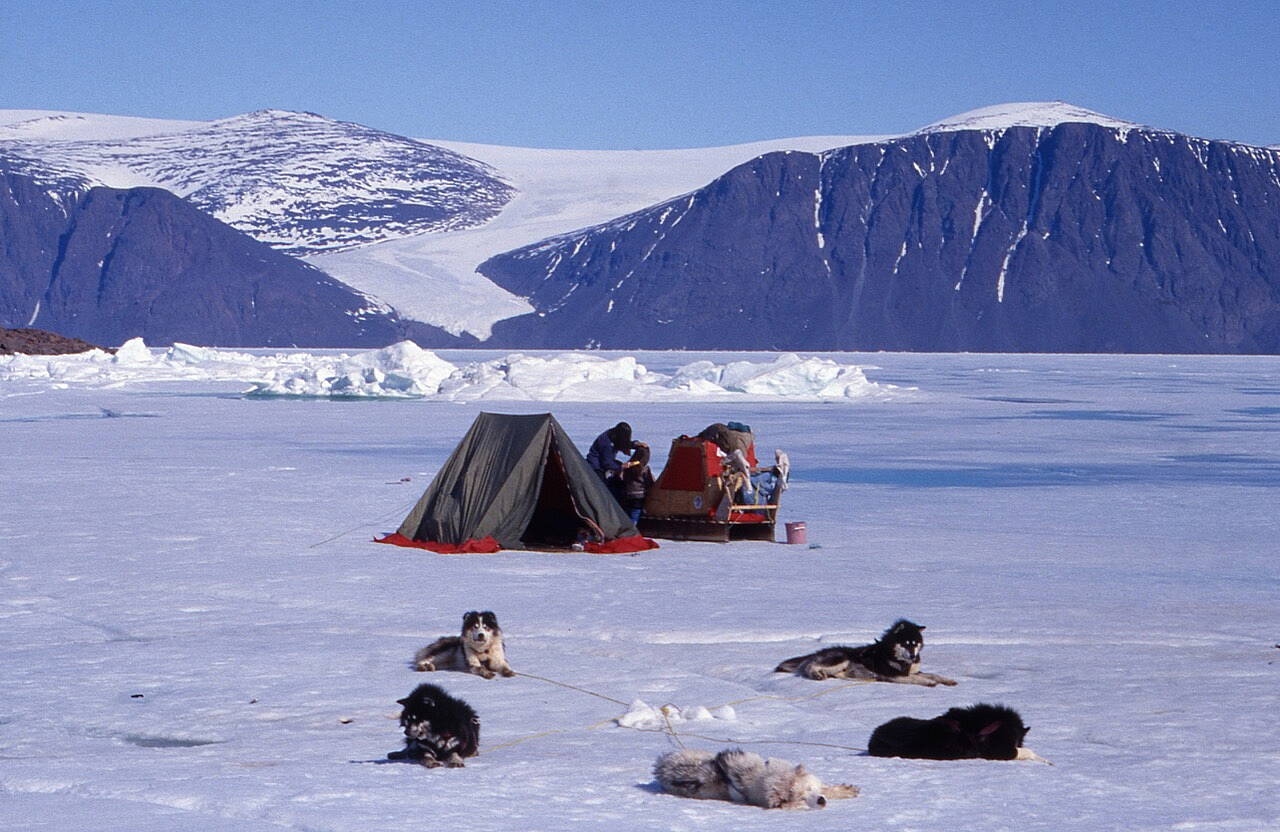 Setting up the tent on the ice,
Above the permafrost
Geraldine described Grise Fiord as quite a barren place. The family lived in a cosy wooden house with running water and oil-fired heating.
The house sat on stilts above the permafrost and in the midst of the Inuit community, surrounded by the rugged Cordillera mountain range and wildlife such as polar bears, narwhals and walrus.
Shortly after the family’s arrival, the locals dropped by with donations of furniture, including a bed and other items to make the house a home.
This was not just a heart-warming sign of welcome, but also the notion of a community who knew all too well about the importance of sticking together in order to survive the harsh climate.
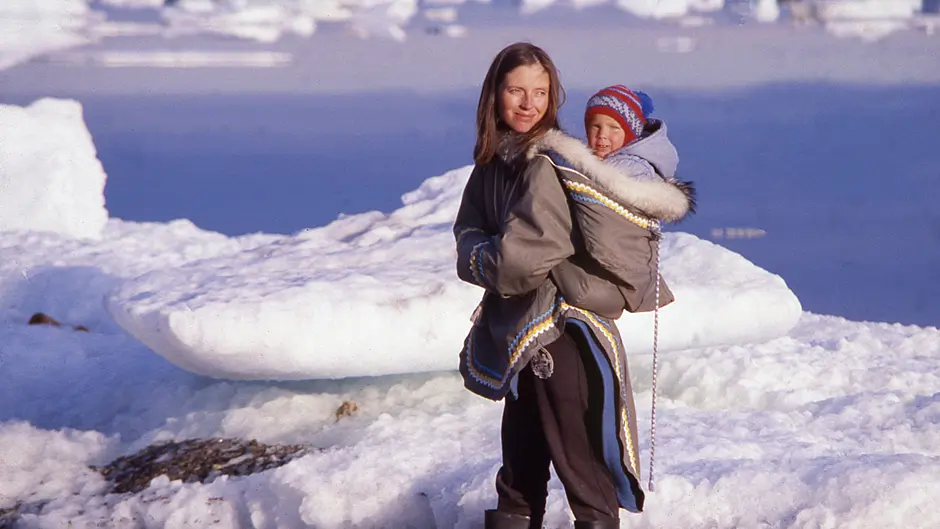
‘Looking after the children was a full-time job. I spent a lot of time in winter making our own clothes because we needed a lot of layers,’ says Geraldine.
Water was one of the most precious elements and stored in tanks. The Osbornes spent nearly a year beneath the Arctic skies that shifted from endless night in winter to nearly 24-hour daylight in summer.
Besides the often shockingly cold climate, the family also encountered culture shock on various occasions, in the process learning more about Inuit traditions and beliefs.
‘I found Inuit culture quite fascinating and interesting. I had a few incidents of misunderstanding it. On one occasion, I had managed to sign up to a night class in the school, which had just been set up,’ recalls Geraldine, who worked in public health in the Arctic, in North Cork and in Skibbereen.
‘I had arranged for a babysitter, she was about 12 or 13 and looked after our children. When the time came, there was no sign of her. I phoned her mother. She said her daughter was asleep.
‘I asked, ‘Why don’t you wake her up?’, and not long after had to put the phone down because we had trouble communicating. I realised later that Inuit don’t wake people because it has to be done gradually and naturally.’
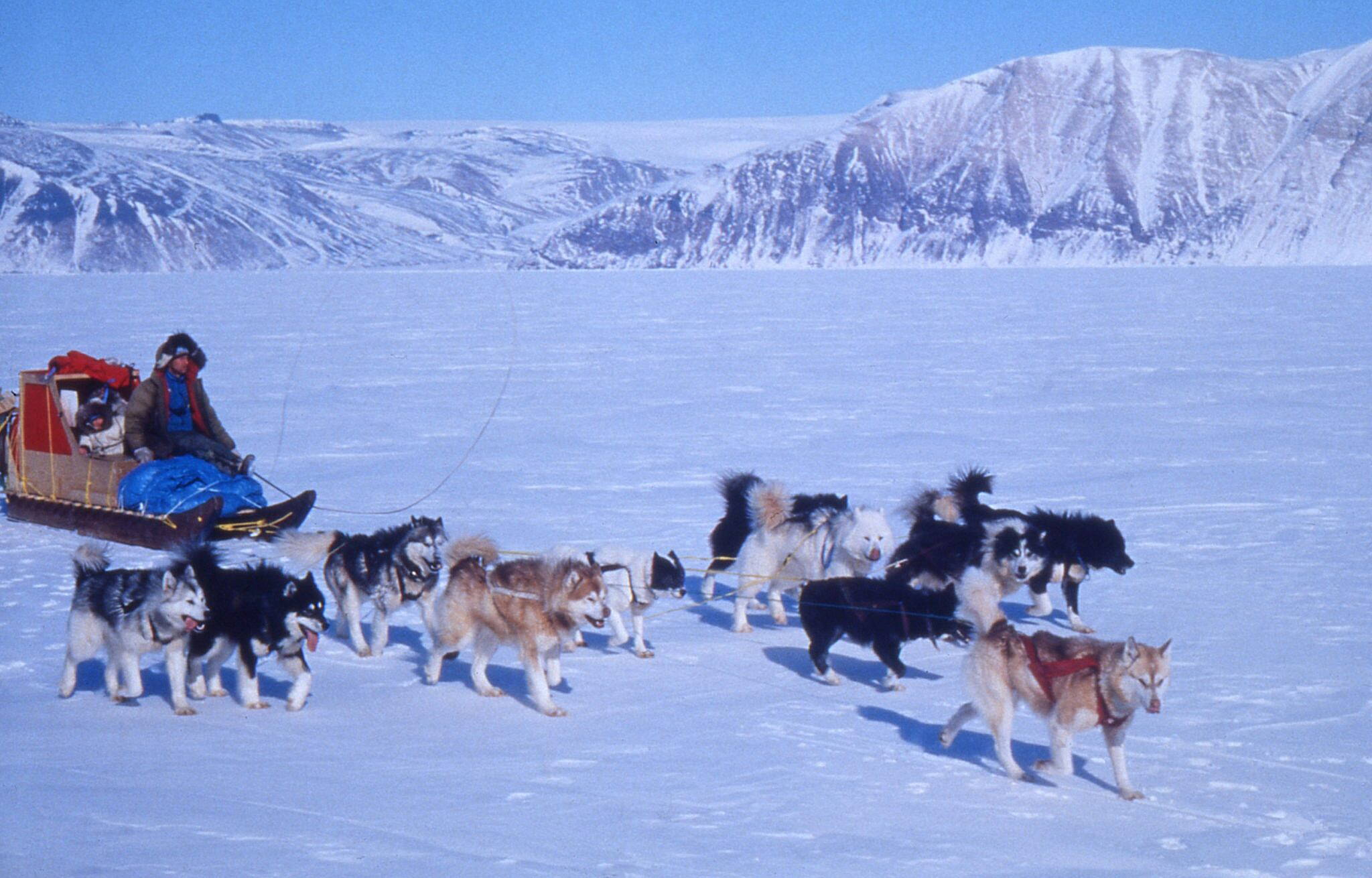 Travelling on the sea ice.
‘Place draws you to it’
In an attempt to retrace Inuit roots to Greenland in the spring, Danny Osborne prepared for a trip across the ice using a pack of trusted sled dogs that he trained himself to work as a team.
The family trek did not manage to reach its planned destination and had to turn back as the sea ice had melted from the early effects of climate change.
The vivid experience of living in the ice landscape has left a lasting impression on the lives and memories of the Osborne family, who most recently revisited the Arctic in spring 2024.
Geraldine and Danny keep a ski-doo snow mobile, a tent and camping gear, plus a gun for hunting in their former Arctic home where they still have friends.
‘It’s a place that keeps drawing you to it,’ said Geraldine.
During last year’s visit, the couple took their dogs for a spin, just as they did when they first came to the region.
During a break from the dog sled ride, Geraldine took photos of the Arctic landscape while Danny was perched on a stool painting.
Fifteen years ago, Inuit artist Looty Pijamini created a monument in Grise Fiord depicting a mother and child looking toward Resolute Bay, symbolising the families separated by forced relocation.
This monument honours the resilience of those who endured hardship and the continued strength of Inuit culture in this remote community, which the Osbornes still very much feel connected to.
Geraldine Osborne, who is now 68 and lives near Allihies, has written a memoir, with illustrations by her travel companion, artist and husband Danny, who also created the Oscar Wilde memorial in Dublin.
Somewhere Cold is published by Mercier Press and will have its West Cork book launch at Polly’s Bookshop in Castleltownbere on November 21st at 5pm.