CIARÁN Roberts describes his first season with Agronomia in Portugal as ‘a season of two halves.’
There was the frustration of battling for a starting spot in the first half of the campaign, but a switch to the back three transformed the Bandon man’s fortunes in the second half – and opened up even more possibilities.
‘It was always going to be a challenge and I knew I’d be up against it when I went there because, as a foreign player, you kind of have a label on your back,’ Roberts explains.
ADVERTISEMENT
Having left West Cork in 2020 to join Ealing Trailfinders in England, before spending two seasons with RC Lousã in Portugal, Roberts knows it takes time to settle into a new club. It was the same in Agronomia.
‘I started at the end of August last year with pre-season and obviously I was signed as a nine, but also to play in the back three. The season before I played more in the back three, so it was kind of like I played nine in my first year in Portugal, then back three, and then went back to nine.
‘Agronomia is a big club, so there’s a lot of pressure, especially for the foreign guys. You have that expectation because you’re a professional player and stuff. But it didn’t go great at the start.’
Roberts (25) admits it took the team time to gel, and early-season defeats, first in the cup, didn’t lift the mood, including an opening loss away to champions Belenenses by two points.
‘I started at nine that game, and then I had a bit of a period where I wouldn’t say I was struggling, but the other nine we had in the team is a really good friend of mine, and he’s also the Portugal number nine. It became a bit of a back-and-forth between us,’ Roberts admits.
‘It was frustrating because one of us had to start and one of us had to be on the bench.
‘We then got to a stage where we just missed out on the top six by one or two points. Our group had the former champions and the current champions in it, so it was really unfortunate because it was basically one of the three big teams that was going to miss out.’
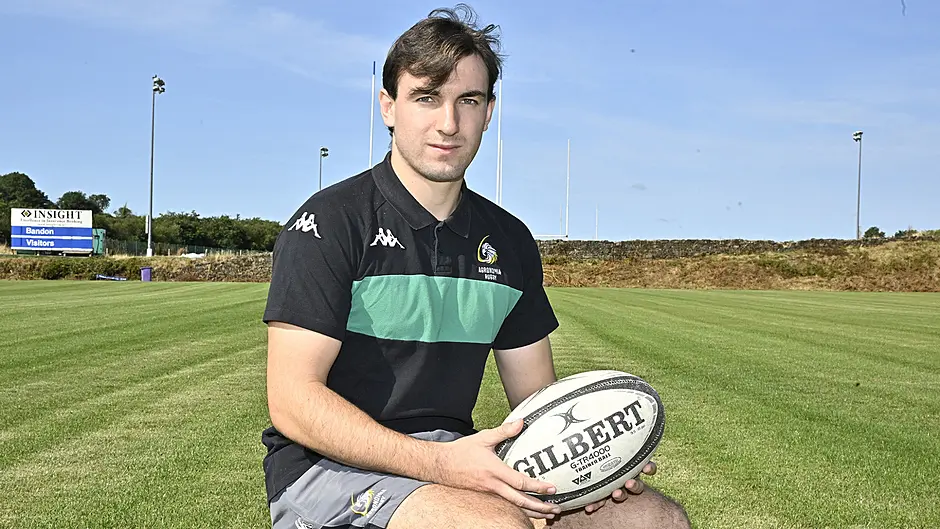
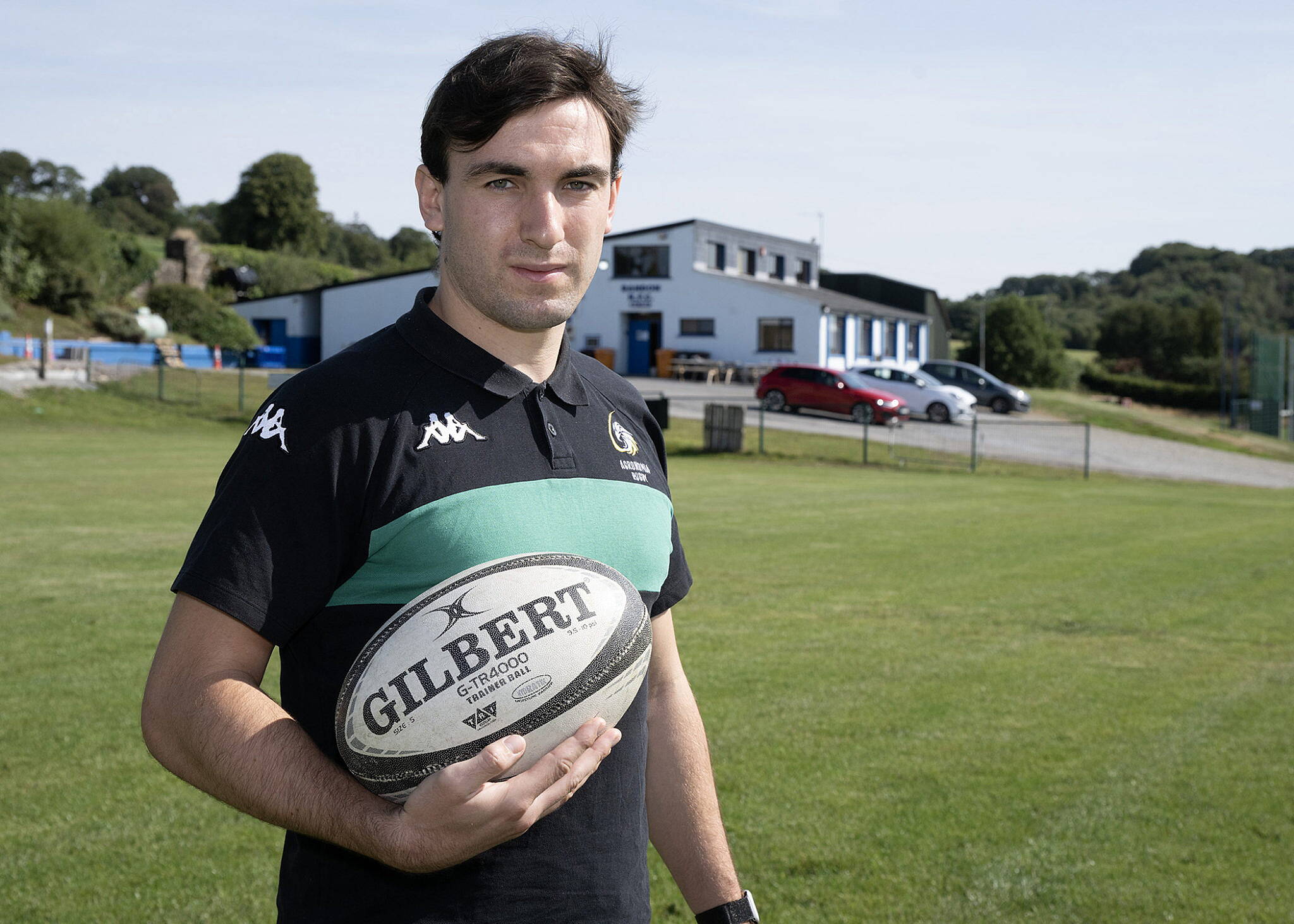 Bandon's Ciarán Roberts plays professional rugby with Portuguese outfit Agronomia RFC, based in Lisbon. (Photo: Martin Walsh)
But then the former Bandon Grammar School student was moved into the back three. It proved to be the turning point.
‘They moved me into the back three and I started playing wing, and I really enjoyed it a lot more. I was getting a lot more freedom and the club really liked me there,’ he says.
‘It was nice having two number nines on the pitch, but also having two guys who could play in the back three. You can build that relationship then.
‘I ended up having a really good run. I scored nine tries in the second half of the season and got onto the try-scoring list and stuff.
‘It was a season of two halves.’
Roberts’ adaptability is one of his strengths, and grabbing his opportunity in the back three is proof.
He has travelled a long way from The Green in Bandon town to his current club in Lisbon, and his work ethic has helped unlock these opportunities. His versatility to cover both number nine and the back three positions only increases his value to the team.
He doesn’t want to fall into the jack-of-all-trades, master-of-none category, but does now feel the back three is his best option heading into the new season.
‘I played sevens in the summer of 2024, going into my second season in Portugal, and my coach at my previous club moved me into the back three. I had a really strong season there and it kind of transformed me because of the way we played,’ Roberts explains.
‘When I went to Agronomia, I was a little bit hesitant about playing there again because I still thought number nine was my position. But once I went back there, I realised how much I enjoyed it. You get a lot more freedom and a lot more time on the ball, and it just suits me really well.
‘I still enjoy playing number nine, but I think in Portugal, because the style of rugby is so open and frantic, it suits me better in the back three.
‘Coming from the English leagues, where everything is very structured and regimented, the Portuguese game can feel a bit chaotic. But when you’re in the back three, you can embrace that. You can back yourself, make decisions, attack gaps and play what's in front of you. I think that’s where I’ve played my best rugby.
‘The club has re-signed me for next season mainly to play there, while still covering number nine when needed. I think that’s probably the best option for me going forward because I really enjoy it and it feels natural.’
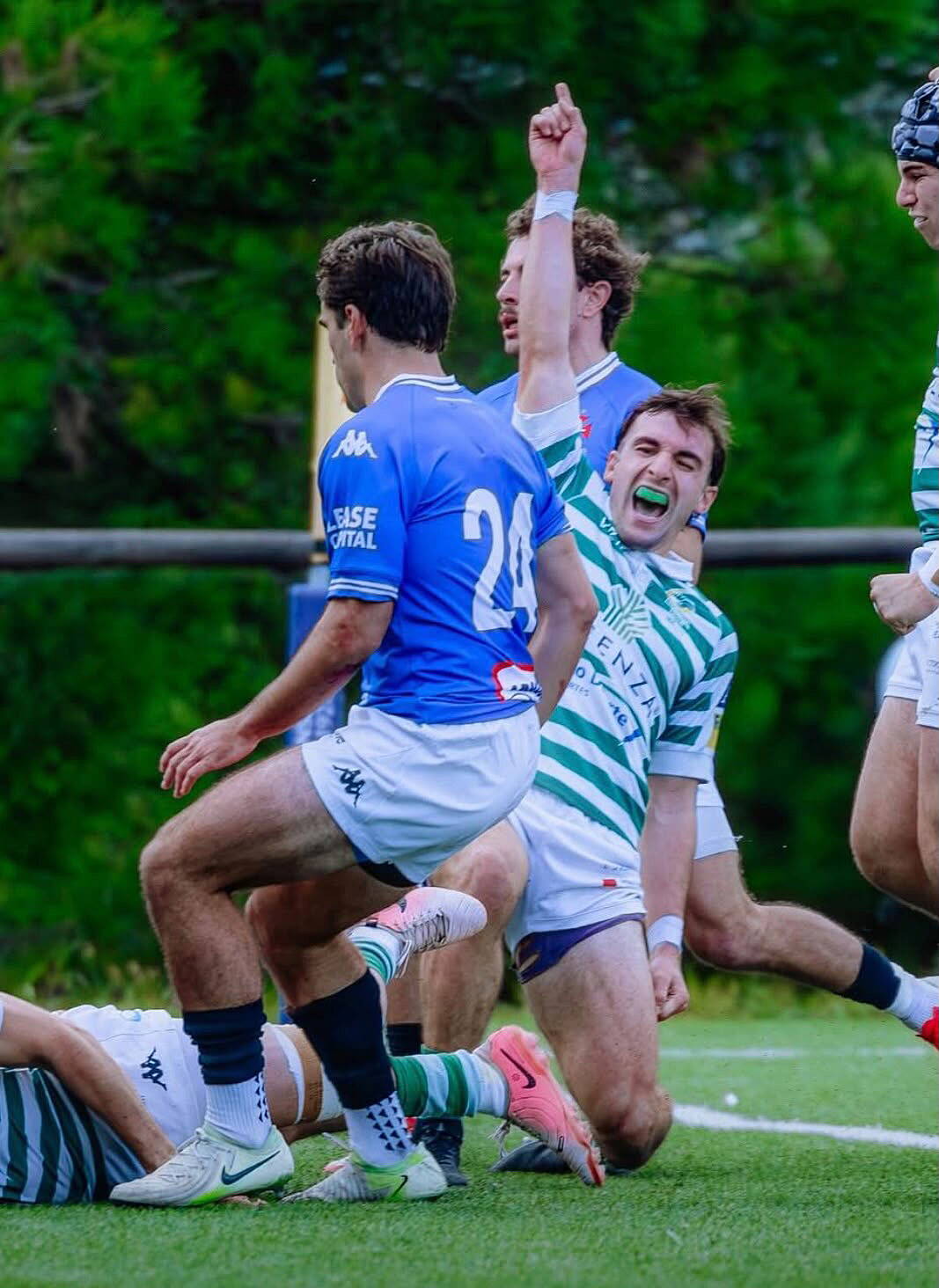 Ciarán Roberts celebrates scroring a try.
Heading into his fourth season in Portugal takes Roberts a step closer to qualifying to play for the national team – he will be eligible in May 2028, if his Portuguese adventure keeps on its current path.
‘It’s definitely a bit more of a reality now. When I first went over, I was thinking, “Ah sure, it’s five years away.” Now I’m going into my fourth season, so the plan is just to keep going,’ he explains.
‘I take every season as it comes because the end of last season was a little bit up in the air. Then I got everything sorted, signed the new contract and thought, “Right, I’m into the next chapter now.” By the end of this season, it will only be one more year.
‘We’ll see how it goes.’
A change to the Portuguese league format adds a new layer of interest for the 2026/27 campaign, with a more competitive structure leading to better quality games and creating more excitement.
‘Next season will be a big transformation for Portuguese rugby,’ he says.
‘In the league, we’ll all play each other home and away before going into the top eight, which will be the big competition with the biggest crowds and the biggest commercial backing. I think it’s a really positive step.
‘It’s the way the league will grow and the way Portuguese rugby will continue to develop and produce more players.’
Roberts is determined to make sure he’s part of the exciting new phase of Portuguese rugby in a country he now calls home.
‘I actually think Ireland and Portugal are quite similar in a lot of ways. Obviously, the climate is different, but the people are very welcoming and warm, just like they are at home,’ he says.
‘Having a Portuguese girlfriend definitely makes day-to-day life a bit easier as well. I’ve made a big effort with the language, but that's taken a long time. It’s a really difficult language to learn. I’m getting conversational now, though, and I can have a chat, which is nice.
‘Being in Lisbon is great because there are a lot of expats, so you have that international community as well as the Portuguese community. You can mix with both.
‘It's a really nice lifestyle. People are laid-back and just take things day by day. But with rugby, there’s always that bit of pressure because you’re trying to protect the life you've built over there. That comes from performing well, staying fit and keeping your place in the team.’
With pre-season starting last week, it’s back to work, as Roberts returned to Lisbon knowing he has found a role where he can thrive.