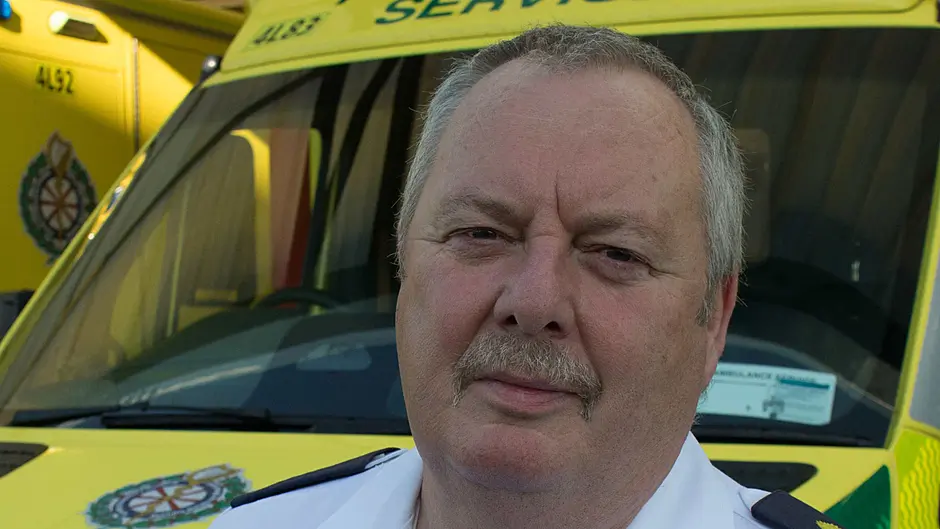
COLLEAGUES of Bantry man, Martin Murray, have paid tribute to him for his outstanding contribution to emergency care in West Cork and the National Ambulance Service.
Martin was just shy of his 17th birthday when he began working for the Health Service Executive.
He started out doing maintenance at Bantry General Hospital, but subsequently gave 35 years of exemplary service as a paramedic supervisor at Bantry’s ambulance base.
ADVERTISEMENT
As an active member of Bantry’s brilliant Red Cross service, and through his years as a retained firefighter in his hometown, Martin completed all relevant Red Cross and first-aid courses, which allowed him to provide relief work for ambulance crews who were on annual leave or had to take time off due to illness.
He did that intermittently for about a decade before becoming a full-time member of the life-saving ambulance service in 1990.
According to Martin, the tragic and untimely death of children is the hardest to process.
Today, he is deeply concerned about the massive rise in suicides. “It is worrying for any person, but particularly if you are a parent,” said the retired paramedic supervisor.
He is of the opinion young people’s lack of access to psychiatric services is shocking. “When I went into the ambulance service all those years ago, there was no such thing as a 15 or 16-year-old committing suicide, but it is all too prevalent now,” he said.
Martin blames societal pressures, and said COVID didn’t help either. “I believe social media has wrecked a lot of young people. I am a grandfather now and I’d rather see a child playing with marbles than thrown on the sofa with a computer.
His friend and colleague, Kevin O’Sullivan, an operations resource manager is also worried about warnings that psychiatric calls are going to rise by 27% in the coming years.
He said the National Ambulance Service is on the front line and they see the devastation that a suicide can cause to an entire household. “These things leave a mark on you,” he stated.
There is something very solid and in-command about Martin. Regional operations manager, Amy Enright, described him as “a safe pair of hands” while Martin is of the opinion: “You have to be tough enough for the job.”
Both Kevin and Amy said trainees sought to work in Bantry, under Martin. “Whether he was driving, or in the back of the ambulance with the patient, or managing the base, he did everything with 100% dedication,” said Amy.
“He was passionate about the job. And if a staff member went off due to illness, Martin could make up to 100 phone calls to fill that seat so he never dropped cover in his region.”
Given his 46-years of service to people, Martin said his approach was simple: “Treat everyone in a respectful, professional manner because you are meeting people at their lowest ebb.
“A quiet word, or a word of support, could be as good as any kind of medication, particularly for the elderly, who were out of their environment.”
Martin recalls the various stages of changes and developments over the years, but said the COVID years were especially tough for ambulance personnel.
“During COVID, we were doing 16- and 17-hour days. There were a lot of call-outs, but massive delays too because each patient had to be dealt with under strict conditions in a cubicle.
“Some patients could be waiting in the ambulance for two or three hours before the medical team could admit them. And around that time, upwards of a dozen staff left the ambulance service. Some were half my age. They went into the private sector because the ambulance service was not for them.”
Clearly, the job is not for the faint-hearted. “The one thing about the ambulance service is that you will know very early on if the job suits you or not. By nature, I would be suited to the job because it would take a lot to frighten me. I have a cool head,” said Martin.
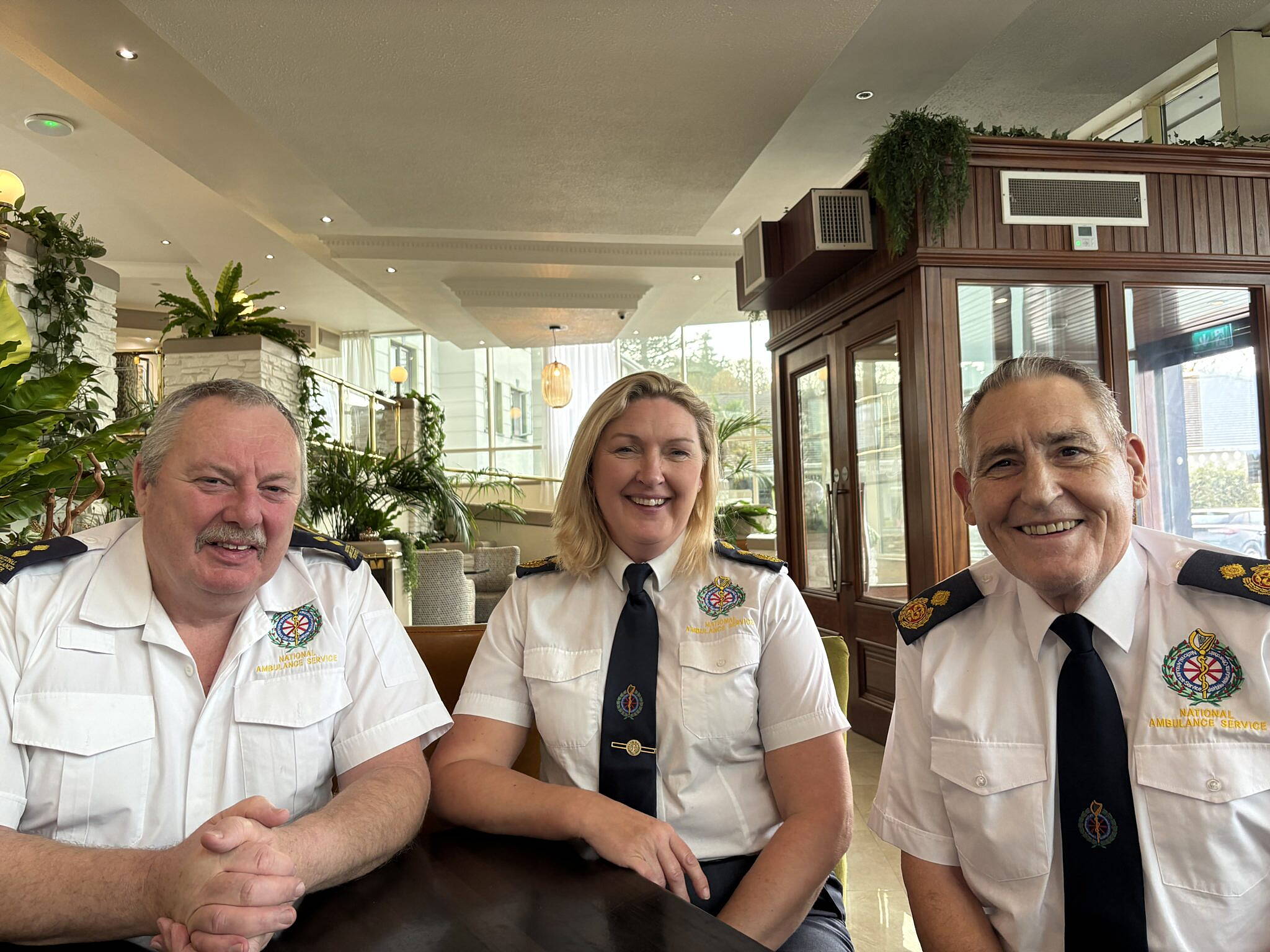 Retired paramedic supervisor, Martin Murray from Bantry, with Regional Operations Manager with the National Ambulance Service, Amy Enright, and Kevin O'Sullivan, operations resource manager.
When he became the paramedic supervisor in Bantry in the year 2000, things were very different. There was a crew of 11 providing 24-hour cover. What that meant is that teams of two would work from 8.30am to 7.30pm and then be on call from 7.30pm onwards.
But that system was ended in 2013, when the on-call system was abolished nationally in response to a working time directive that was designed to improve response times.
Currently, there is a team of 23 based in Bantry who work 12-hour shifts, but the good news is that there is agreement, yet still no appointments, for a further six paramedics.
Bantry is also fortunate to have gained a rapid response vehicle and an extra day vehicle, but Martin is of the opinion that it would be prudent to have at least one more 24-hour ambulance based in the region.
Previously, everything in West Cork was coordinated from Cork city, but the formation of the National Ambulance Service in 2013 saw the number of control centres drop from 18 to two. Tallaght is the main one, but in the event of a system failure, a control centre in Donegal takes over.
Being in charge of all of the logistics at the Bantry base, as well as being a full-time member of the crew, and providing cover for his line-manager Kevin O’Sullivan from 2016 to 2018, meant that Martin has devoted a lot of his life to serving others.
He said he and his wife Mary have been married for 42 years, and they have five children: DJ, Danny, Jackie, Cora and Michaelaand confesses: “The eldest three were raised by Mary.
“The only down side of working with the ambulance service is that you never get home early. at 6pm you could get a call that could take five hours, and it is your job, and you duty, to respond.”
Martin said he has no plans, or projects, this side of New Year.
He said both he and Mary will be content to spend time at their cottage, which is located on an acre, and keep one eye out for the sheep as they keep the grass down.