
‘When you’re a child, to stop you from following the crowd you’re assaulted with the line, “If everyone jumped off a bridge, would you?” but when you’re an adult and to be different is suddenly a crime, people seem to be saying, “hey. Everyone else is jumping off a bridge. Why aren’t you?”
This observation comes from Australian author Steve Toltz in A Fraction of the Whole, a novel that’s full of witty, sometimes sharp reflections on people and society. While Toltz frames it in his own inimitable way, psychologists have long studied the extent to which people follow the crowd.
ADVERTISEMENT
And we do, as evidenced by the classic conformity experiments conducted by social psychologist Solomon Asch in the 1950s. In Asch’s experiments, participants were asked simple questions with obvious answers, like whether two lines were the same length. However, Asch had rigged the experiments so that several actors in the room intentionally gave the wrong answers. Even though the correct choice was easy to see, about one-third of participants went along with the majority and gave the wrong answer.
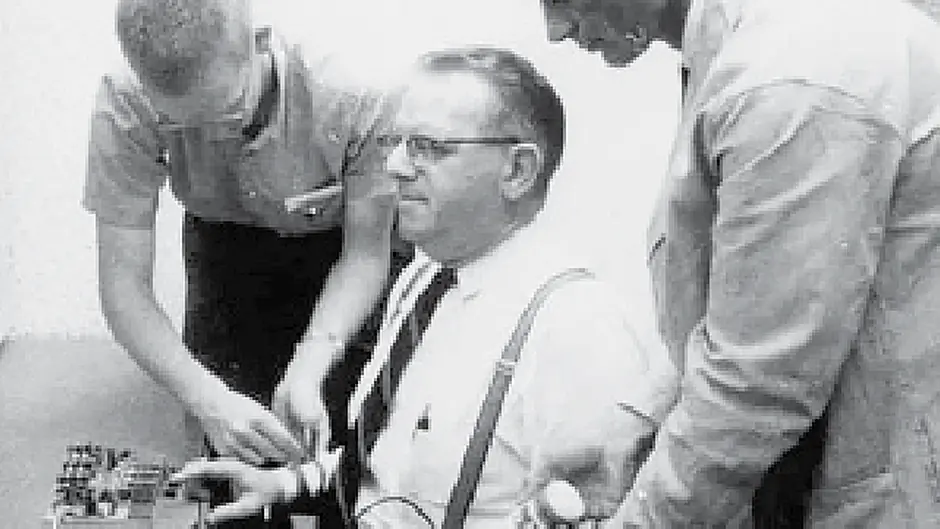
In fact, three-quarters of people gave at least one wrong answer to match the group. Only about one in four consistently stuck to what they knew was right. Stanley Milgram’s famous obedience studies in the early 1960s took this a step further. In Milgram’s experiments, participants were told they were taking part in a study on learning and were instructed to administer electric shocks to another person for wrong answers. Although the shocks were fake, the participants didn’t know this.
When some hesitated or said they wanted to stop, the experimenter followed a script, using prompts like ‘Please continue’; or ‘The experiment requires that you continue.’ Most subjects fully obeyed the instructions, with every participant going up to 300 volts, and 65 per cent going up to the maximum 450 volts. More recent research shows that conformity extends well beyond face-to-face pressure. People are more likely to recycle or reuse towels in hotels when they’re told that most others already do, rather than when they’re given moral or environmental appeals. On social media, posts with lots of likes or shares are more likely to attract further engagement, not because they’re better, but because popularity itself acts as a signal of value. In workplace or civic settings, groups can drift into ‘groupthink’, where doubts go unspoken and poor decisions are made simply to preserve harmony or avoid standing out.
Work
We all see this pull toward conformity in everyday life. At work, we might agree with a decision even if we privately disagree, dress to fit office culture, or pursue conventional career paths because they are expected. In our personal lives, we may adopt certain opinions or attend events to fit in. For many people, lifestyle choices, like buying certain clothes, driving a particular car, or following life milestones like marriage and home ownership, often reflect what others expect rather than they truly want.
Of course, it’s worth remembering that the popularity of a position doesn’t automatically make it wrong. Very often, perhaps most of the time, the crowd is right. Conformity itself is a neutral force; it can steer us toward foolish decisions, but it can also help us learn quickly, align with helpful norms, or make reasonable choices when we lack information. Believing you’re right while the world’s experts are wrong may feel rebellious, but it’s more often a triumph of confidence than insight.
Still, none of this changes the basic fact that, all too often, people follow the crowd even when it goes against what they actually want. Yes, going against the crowd can be hard, and the research bears that out, but so is conforming and doing things you don’t really want to do. It’s important, then, to be aware: noticing when you’re simply following others, and pausing to choose in line with your own values, even in small ways. After all, life is short, and it’s a shame to spend it following paths laid out by others instead of choosing your own.
Linda Hamilton is a Kinsale-based cognitive behavioural therapist. If you would like to get in touch with her, call 086-3300807 For more information, go to www.kinsalecbt.com