As one cartoonishly villainous man attempts to dismantle the free world, what better time than to take a look at some delicious, dystopian literature?
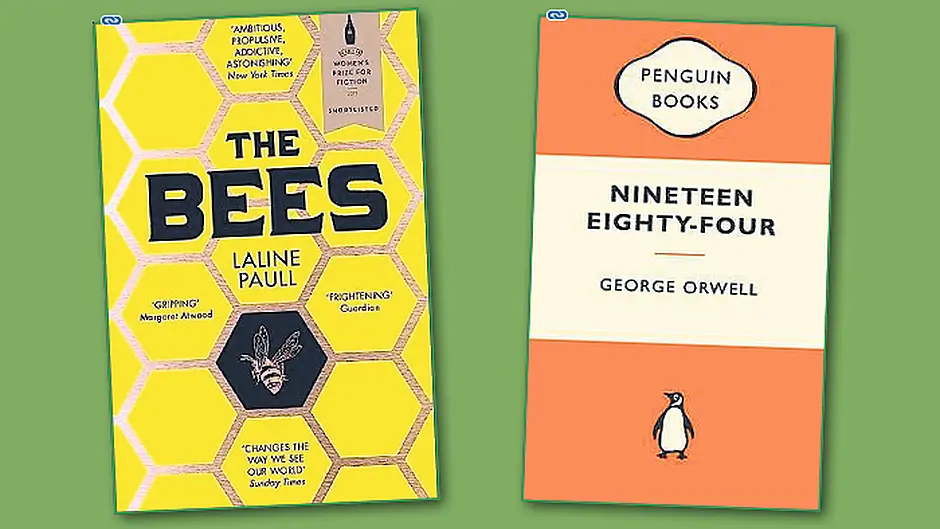
Sticking firmly to the world of fiction and away from current affairs, the big hitters 1984 and The Handmaid’s Tale sit among the classics of dystopian literature for a reason.
ADVERTISEMENT
As a concept, Orwell’s Big Brother has yet to be beaten and the novel is beautiful; there are no heroes under bureaucratic fascism, only survivors and martyrs, and no one can blame them.
Margaret Atwood’s The Handmaid’s Tale is perhaps better known for the cruel, evocative TV show but the book has much to offer, and is a quiet reminder of how easily we can be reduced to roles, devoid of freedom of thought or movement, with a minority in power.
Rebellion always lingers though, and Atwood’s novel leaves us with a glimmer, just a touch, of hope.
For readers who are tired of hearing of people and human politics, turn towards The Bees by Laline Paull.
Flora 717 is a worker bee in the obedient, rule-driven hive, where dissent is fatal in a religious State, and the story is a marvellous immersion into the literal hive leaving the reader with a new respect for the apian world order.
Sticking with the beasts, Watership Down is perhaps not the first book to be thought of when we talk of systemic political upheaval, but that’s what it is.
The rabbits, our determined and brave emigrants, encounter a breadth of different societies, considering different way of living.
The cartoon is well-regarded but the book offers something more earthy, in every way, and is just the kind of escapist fiction January demands.
For readers who realise, clear-eyed, just how quickly things can fall apart, Jose Saramago’s Blindness is a snappy, reality-driven episode in which citizens are struck blind for no reason and with no cure.
Quickly we see who will rise and who will not, and we are left with the question: what kind of moral system are we left with when things return to ‘normal’?