
Success stories abound about stopping cutting lawns and other grassy areas, with delights such as rare orchids emerging. Inspired by this, and with a desire to support the recovery of nature, our lawn goes unmown throughout spring and summer, creating a long flowering meadow. While no orchids have appeared, there have been a multitude of delights and surprises that have made it well worth doing. Two of our most recent findings equate to striking biodiversity gold.
New discoveries
ADVERTISEMENT
While we let the flowers and grasses grow throughout spring and summer, our meadow still needs to be cut at least once a year. This is best done in September, once everything has gone to seed. The cuttings have to be lifted and removed to keep the fertility of the land low, which best suits wildflowers. It was during this most recent annual cut that I noticed a moving mound of earth. Upon closer inspection, I found that the busy mass was made up of pale yellow ants, which I was able to identify as yellow meadow ants, Lasius flavus.
Yellow meadow ants
Yellow meadow ants are a native species that form anthills, or mounds, in undisturbed grasslands and meadows. Most notably, they usually only develop where there has been no cultivation or ploughing for at least 20 years. These industrious animals spend the majority of their time underground. As a result, they have adapted with smaller eyes and reduced pigmentation compared with other ants. Despite the tiny size of the worker ants, at three to four millimetres, the anthill mounds they engineer can be quite sizable. They have extensive underground tunnel networks and, if left undisturbed, their nests can persist for decades, if not hundreds of years, occupied by successive generations. The visible surface mound is just the tip of the iceberg, as the nest can extend a metre below ground. A single yellow meadow ant nest can contain between 2,000 and 10,000 worker ants. It is astounding how the mound is engineered to regulate both temperature and humidity, keeping conditions optimal for the development of their larvae. Workers will even move the larvae between different chambers inside their deep soil dome nests to keep them in the right conditions.
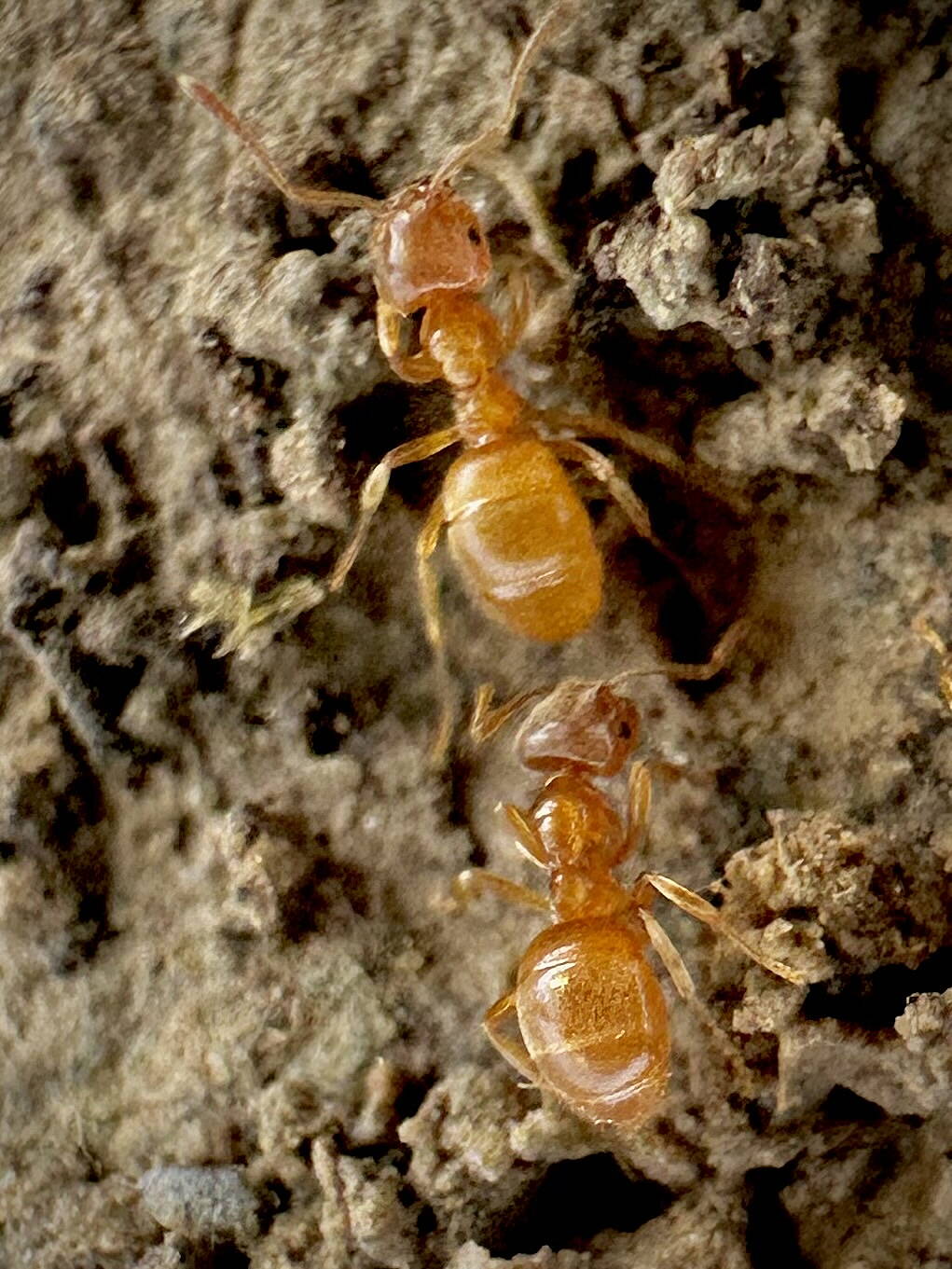 Yellow meadow ants have smaller eyes and less pigmentation than other ants.
Formidable farmers
As the mounds are covered in grass and vegetation, at first glance you wouldn’t necessarily realise they were caused by ants. However, looking closer, you may notice small mounds of loose soil between the grass stalks and, in the warmer months, even find a few ants above ground moving over their anthill. The ants are farmers in that they manage a ‘herd’ of subterranean root-feeding aphids and harvest their secretions, known as honeydew, as food. The aphids feed on plant sugars in the roots of vegetation, and the ants stimulate their rear ends to release this sugary by-product. The ants even gather the aphids in winter and bring them into their mounds, before putting them back on the plant roots in spring.
Ecosystem engineers
As remarkable as these ant farmers are, this is not where the marvel of this species ends. They are constantly moving soil around and bringing it to the surface as they tunnel. It is estimated that, across a hectare of ground where they are established, their nest building can bring up between three and 13 tonnes of soil every year. In doing so, they influence soil structure and composition, contribute to nutrient cycling, aerate the soil, and enhance drainage, ultimately helping to keep grasslands healthy. They are even said to surpass earthworms in their contribution to soil aeration. Ants, in general, are keystone species in ecosystems, meaning their removal can cause dramatic changes or even collapse. They belong to the same order of insects as bees, sawflies, and wasps, the Hymenoptera, and they evolved from early wasps. It is thought that we have approximately 20 native ant species, but they are not a well-studied group. Ants have colonised every continent except Antarctica, and their total weight is believed to surpass that of all the world’s birds and mammals combined. They may be easily overlooked, but they should never be underestimated, as they are crucial to our environment. Overall, it is very exciting to have yellow meadow ants in our garden, they are known to enhance both plant and animal diversity where they occur. Even grasshoppers are significantly more likely to lay eggs on anthills than elsewhere.
Gold in the grass
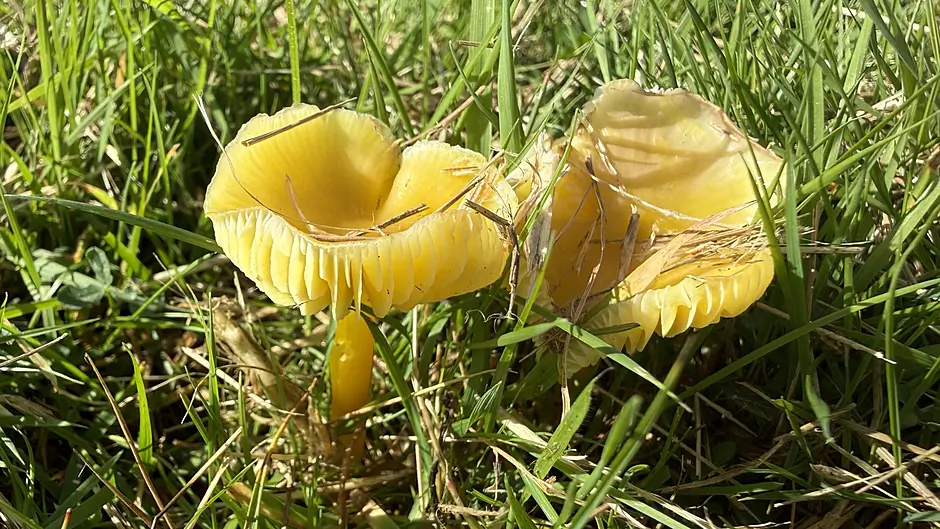
If the discovery of golden coloured ants wasn’t exciting enough, shortly afterwards we also noticed that some colourful mushrooms had erupted on the lawn: golden waxcaps (Hygrocybe chlorophana). While this is a relatively common species, they still illustrate that the work of returning our garden to nature is paying off. Golden waxcaps are often among the first species to appear as grassland sites begin to develop a richer fungal network, and they are themselves an indicator of unimproved grassland that is of biodiversity value. Every year seems to bring new surprises and findings on our ‘lawn’. I certainly couldn’t go back to having a mown, ‘golf course’ style lawn again, as it would be very boring in comparison. If you don’t already, why not try leaving a section of your garden as a long flowering meadow and keep an eye out for your own biodiversity ‘gold’?
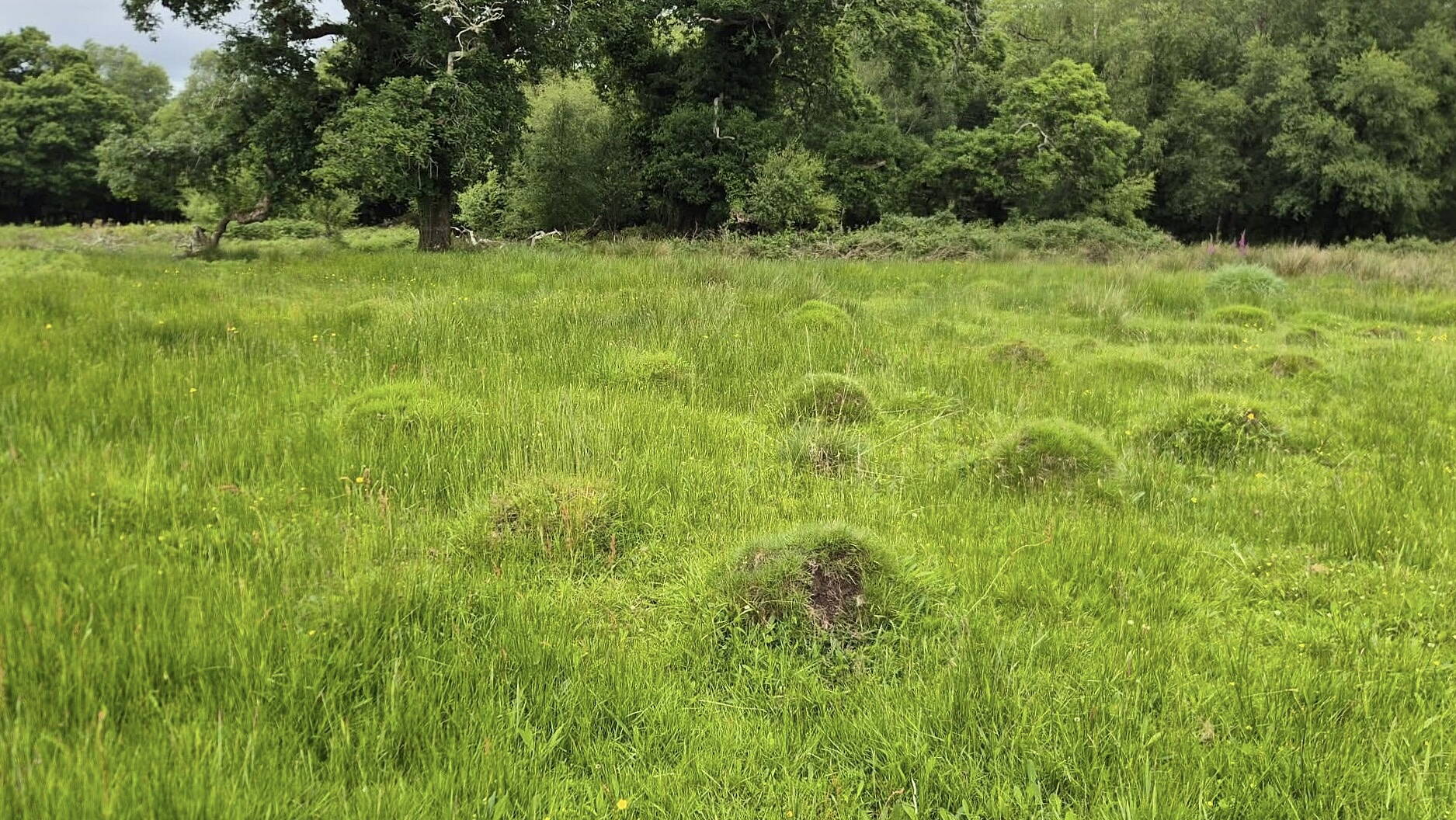 Yellow meadow ants form mounds in grassland, as seen here in the big meadow in Glengarriff Nature Reserve. (Photos: Ann Haigh, Ryan Mitchell)