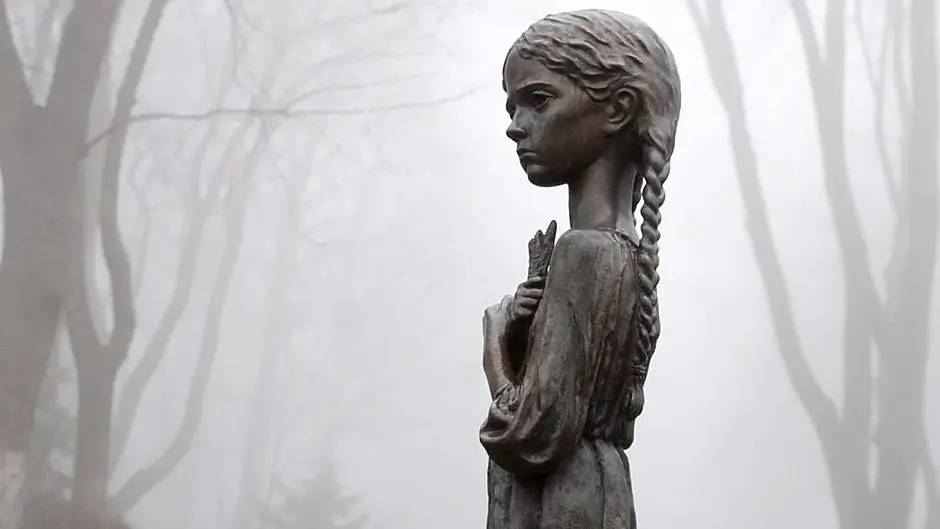
DID you know that there was a great famine in Ukraine, too? Just like ours, in fact. Except theirs affected even more people and was much more recent – 1932-33 - while Ukraine was part of Stalin’s USSR. Ukrainians call that famine the Holodomor – Death By Hunger. And like ours it was caused in part by poor harvests, then grossly compounded by their imperial colonisers. I’m embarrassed to say my knowledge of this event was very vague until I began helping out some refugees recently, and now I’m struck that our two countries have such a singular event in common and not too many people know about it. Ireland has had countless famines but it’s the Great Famine of 1845-52 that practically defines us as a nation. It has shaped our landscape as well as our identity. The feelings of loss, grief and injustice are part of our inheritance and colour our relationship to our neighbours and to our environment.
It was terrible, apocalyptic. But that all happened 175 years ago in an Ireland very different from today. Imagine if our famine happened in the 1930s – within actual living memory of many people alive today.
In Ukraine in 1932 and 33, millions died, communities collapsed, every pet, farm animal, rat and mouse was eaten, wildlife was devastated, everything changed. Estimates vary between three and ten million people died. But, unlike in Ireland, starving people were generally not allowed to leave their local area. They did not escape to all corners of the world as we did - even if they could afford to, they could not get away. If you were caught fleeing, you could be transported to the gulags in Siberia, where you probably would die anyway.
So people stayed and watched their children starve, and then starved themselves - while food was being shipped east. Stalin took the grain and potatoes and moved them by train for distribution within Russia – and sold much of it on the world market to finance his industrialisation and military plans. And when the logistics failed and the shipments were left to rot in railyards, armed guards stopped anyone getting at them. Law and order broke down, social rules were trampled underfoot, desperate people did desperate things. In Ireland stories of people eating other people are largely anecdotal, but in Ukraine this is well documented and in many places was seemingly common. And not just eating people who had died already, but often killing them deliberately to eat and sell the meat. Parents had to guard their children from gangs out hunting them – and were not always successful. For decades authorities in the USSR not only denied responsibility, they denied the famine even happened. When denial became impossible, they blamed the weather for the poor harvests, ignoring that forced collectivisation of the farmland was part of the cause, and that exporting everything they could amounted to attempted genocide.
ADVERTISEMENT
They burned thousands of records in the 1950s, but enough survive to validate all the worst stories. Asa, who lives in Clonakilty now, told me her grandmother “always carried a small piece of bread in the pocket of her apron. It was as if she spent her entire life afraid that such a terrible tragedy would happen again.” Today, in Ukraine, salt is being rubbed into those old wounds by Russia’s invasion. Again. No wonder then that most Ukrainians would fight to the last to defend their homes from what they see as their old, brutal, malevolent neighbour. No doubt climate chaos will bring far worse destruction, one way or another, to both our countries in just a few years, but in the meantime let’s be happy that Ireland is a safe and beautiful part of the world, and we’re very lucky to be here. And perhaps remember that our Ukrainian brothers and sisters are not so very different from us after all.
(I sit and natter with anyone who wants to practice their English every Tuesday evening in the Community Cafe in Bantry. If you know of someone who might like to join in, let them know (not only Ukrainians, of course).
– Tim Rowe, Bantry
\