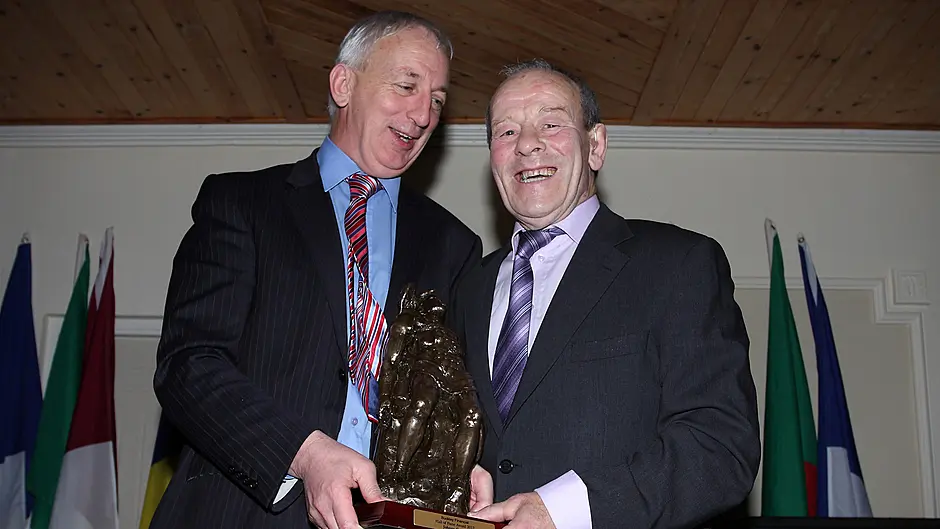
OUR hero is gone. Johnny Carroll the man has departed this world but Carroll the footballer, the legend, will live on.
BY TOM LYONS
It may be all of 60 years ago since he graced the playing fields of West Cork and far beyond but the memory of his great deeds as a footballer, especially in the green of his native Dohenys, will never be forgotten by all those who were privileged to watch him playing, especially those of us fortunate enough to play beside him.
Eamon Young of the 1940s, Denis Bernard of the 1950s and Johnny Carroll of the 1960s – Dohenys’ three greatest footballers in whatever order you wish to rank them.
ADVERTISEMENT
Growing up as young teenagers in football-mad Dunmanway in the early 60s, Carroll was our hero. We all wanted to be Doheny footballers and we all wanted to be Johnny Carroll, our hero.
When Dohenys made their way from the billiard room in Bernard’s Hotel, now the Parkway, where they togged off before there were dressing-rooms at pitches, to the Sam Maguire Park, we youngsters trailed behind the players, most behind Carroll. He was an inspiration to the young lads as he always was to his team-mates on the pitch. A hero to every man, woman and child in Dunmanway.
Dohenys were emerging from a dark period when Carroll began his juvenile career with Dohenys in the early 1950s. Everybody knew the talent was there, but then he disappeared for a couple of years when he went to Kildare to train for the Naval Service. It was Kildare’s gain as he played minor with Kildare, football and hurling, in 1957 and 1958.
Dohenys were on the march then, South West junior football and hurling champions. When they were going for the four-in-a-row in West Cork football in 1959, Carroll was back in green. They won the four-in-a-row but lost the county final – his first county final – to an illegal Dromtarriffe team that year. But the golden era was in full flow for Dohenys and Carroll was not only at the heart of it for the next 15 years, he was the great leader on the pitch. Himself and John Crowley, the terrible twins of Doheny football.
Back then, South West football was fiercely competitive, with Clonakilty the division’s only senior club and no intermediate grade in the county. Dohenys, Newcestown, Bandon, O’Donovan Rossa, Ballinascarthy and Bantry produced epic battles in the 1960s, and few players were more admired – or feared – than Johnny Carroll.
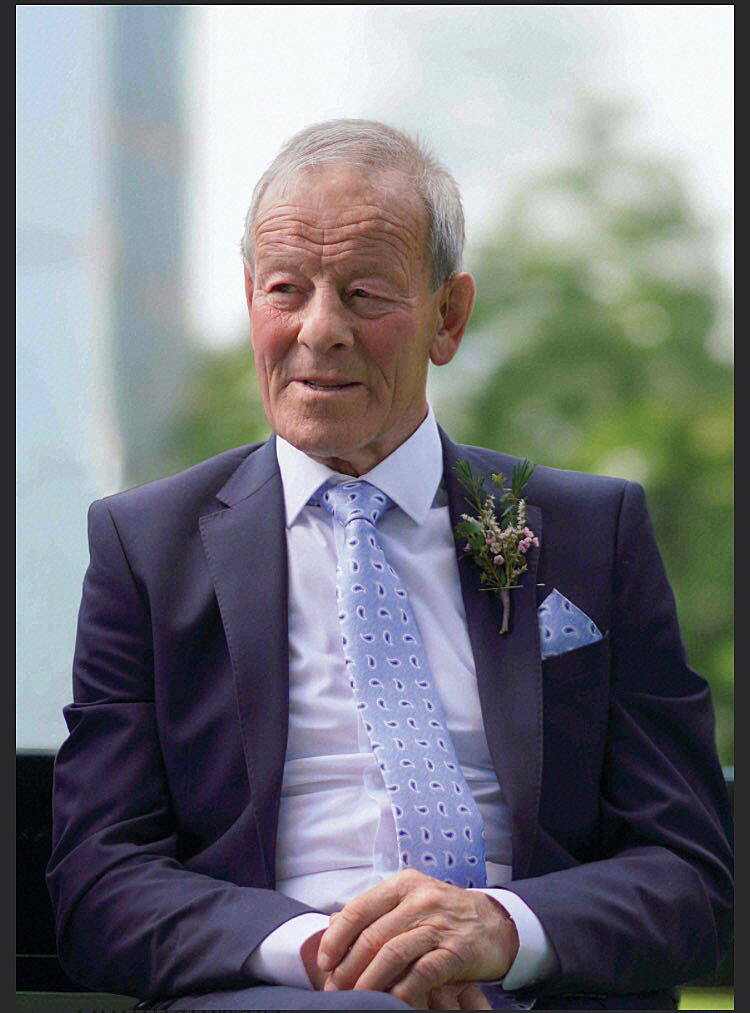 Doheny great Johnny Carroll.
He made his first appearance for Cork seniors in the league in 1961-62 but took a couple of years to establish himself in the forward line as he was playing most of his football at midfield with Dohenys.
Though small in stature, he was built like a tank, fit as a fiddle and a ball of energy. He had an amazing leap, often outfielding much taller opponents. He had the great knack of holding in the air at the peak of his jump, probably thanks to playing basketball for Cork Gunners, a great basketball team of the time.
Carroll’s greatest asset was his marvellous burst of speed when on a solo run – spectacular and unstoppable. He scored some great goals in his time, thanks to that solo run. If there was a fault, it was his kicking. He could kick points from acute, amazing angles but could never kick it straight. I would safely say he actually fisted more points than he kicked with his boot as he knew his shortcoming.
Which reminds me of an incident in the Clon v Carbery county semi-final in 1964 in Skibbereen that I watched as a 15-year-old outside the wire. Carroll was always a target for the opposition and early in the game he was the recipient of a thundering hit that laid him out. Tough as nails, he got up and played on.
He got the ball 40 metres from the Clon goal and instead of tearing off on his usual solo run, he tried a kick for a point. A fiercely-hit kick, the ball struck the top of the right-hand post, flew across, hit the left-hand post and rebounded 30 metres out the field. I never saw it happen in a game again.
Carroll collapsed in a heap after kicking, having to be taken off, probably concussed. It was the first time Carbery ever beat Clon in championship football but, with Carroll back in action, split by the Ned Roche affair, they lost the county final to UCC.
1966 was a great year for Carroll. Beaten in the 1965 county final, Dohenys won the final against Grange in 1966 – the majestic Carroll collected his first county medal at the fourth attempt.
When Cork surprised Kerry in the Munster final in Killarney, Carroll was flying at corner forward, scoring two goals, though one was disallowed, in a 2-7 to 1-7 win. Cork ran the great Galway team that won three in-a-row to two points in the All-Ireland semi-final. He was selected on the Irish football team to play in the Cardinal Cushing games in New York, the precursor to the All-Star tours. Later that year he was named as Cork Footballer of the Year, to crown a great year for him. He also played for the Munster football team in the mid-60s.
In 1967, Cork beat Kerry again in the Munster final but disaster struck before the All-Ireland final against Meath when Carroll got injured at work. He fell from a height and his great athleticism probably saved his life as he managed to grab a bar and landed feet first, breaking his wrist. He did manage to come on as a late sub against Meath but Cork lost by a goal. Had Carroll, in his prime, been playing Cork would probably have won. Echoes of the 1959 county final with Dohenys when he played with his arm in plaster.
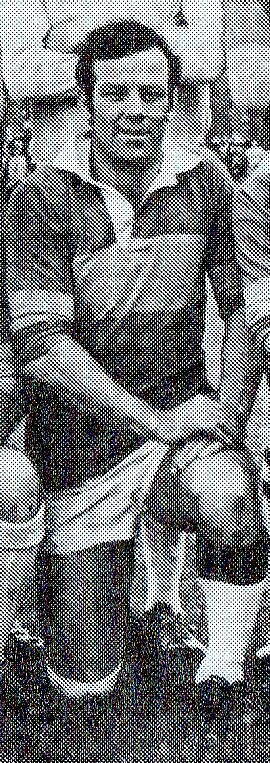 Local hero Johnny Carroll.
His senior career with Cork ended in 1970 but he was called back to the junior team in 1972 when the All-Ireland was won. By then he had picked up three more county medals, in 1968 and 1971 with outstanding senior Carbery teams and in 1972 with Dohenys in the county intermediate championship.
Carroll went on to play in the county senior final with Dohenys in 1975, losing to Nemo Rangers. He played his last championship game with his beloved Dohenys in 1977. He never really retired, as he was still togging out to play league games in 1984. When he settled in Ballincollig, he became an integral part of their underage set-up, coaching various teams. He was also called on by other clubs to help them out and coached the Bandon junior team that surprised Newcestown in the South West final in 1989 in Clon.
Carroll had a great sense of humour, always good for a thundering laugh and a great man to sing a song, ‘The Holy Ground’ being his favourite. When we met him before the 1989 junior final and asked him how good his Bandon team were, his reply, with a laugh, was, ‘Sure, Old Chapel Lane would beat those lads.’
Hurling was never his strong point but he dabbled in it with Dohenys. His problem was striking the sliotar so he would just place it on his hurley and tear off down the field on his famous solo runs. Like an egg and spoon race.
From awe-struck youngsters in the early 60s, we were fortunate to play with Carroll on the Doheny team in 1965 as a raw 16-year-old. Top scorer with Coláiste Iosagáin, Baile Mhúirne, in the Corn Uí Mhuirí, Doheny selectors decided to risk me at corner forward in the first round of the county championship against Kilshannig in Millstreet. The 45-year-old Eamon Young was in the other corner.
In atrocious weather and pitch conditions, Dohenys played with the gale of wind and rain in the first half and coming up to half time, the score stood at a point each. Doom for Dohenys, we thought. Then just before half time, Carroll won possession just outside the Kilshannig 21-yard line, back to the goal, facing out the field. He made no effort to turn in the mud but kicked the ball back over his head and over the crossbar. It proved to be the winning point as there was no further score in the entire game. It finished 0-2 to 0-1. Carroll the hero again. But the county final was lost in another battle of the mud in Macroom against Na Piarsaigh.
We met Johnny many times at matches and at Doheny reunions down the years and his wife’s brother lived a few doors from us in Clon. Every meeting was a treasure, always the laugh and the craic.
So many stories could be told about one of Dohenys’ greatest footballers. So many great memories he gave us down the years. Never to be forgotten. Míle buíochas, Johnny. May the green sod rest as lightly on your grave as the green jersey did on your back. Slán.