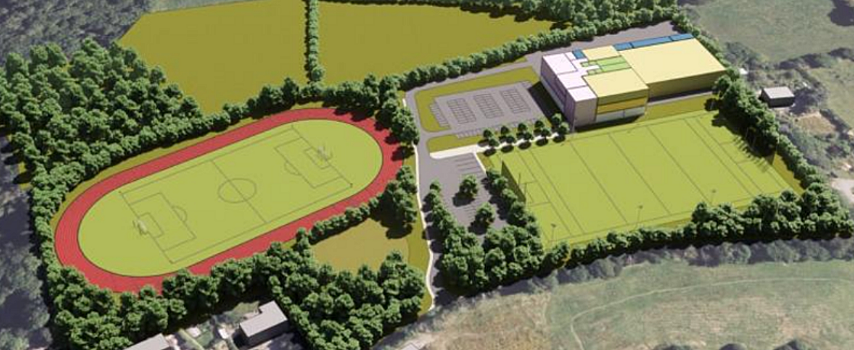
PLANS for new rugby and athletics facilities at Kilnagleary have grown into a much bigger vision for Carrigaline – a Community Sports Campus that could serve clubs, schools, families and community groups across the town and wider south Cork area.
The project comes at an important time for Carrigaline, a town that has changed dramatically over recent decades. What was once a village has grown into the largest town in Cork, with a population now approaching 20,000 people and further growth expected in the years ahead.
Despite its appearance, Carrigaline has expanded rapidly beyond its traditional village centre.
In many ways, Carrigaline has been playing catch-up over recent years. New schools to cater for the growing number of families were the first priority, followed by improvements to roads and other essential infrastructure.
ADVERTISEMENT
Good progress has been made, but the next challenge is ensuring that sporting, recreational and community facilities keep pace with the needs of a growing town.
The scale of that need extends well beyond Carrigaline itself.
The Community Needs Assessment completed last summer found around 70,000 people live within seven kilometres of Carrigaline. Almost 3,700 people responded to the survey, alongside 26 organisations and 15 schools, with 99 per cent supporting the project
The facilities identified as the highest priorities included a swimming pool, large indoor sports hall, athletics track and additional outdoor playing pitches.
While the swimming pool was identified as a key priority by the community, it is not included in the immediate scope of the Kilnagleary development plans. Cork City and County Councils are currently completing a strategic review of existing swimming facilities and future requirements across the region.
The Community Sports Campus group has submitted the findings of the Community Needs Assessment to support this review and will continue to advocate for the development of a swimming facility to serve Carrigaline and the wider area.
While many people will be familiar with plans for Kilnagleary, the story behind the project goes back many years and reflects the determination of local volunteers who refused to give up.
The project started with Carrigaline Rugby Club, later joined by Carrigaline Athletics Club, as both organisations faced the same problem – two thriving clubs with growing memberships but no permanent home.
Carrigaline Rugby Club has been one of the casualties of the rapid development of the town. For many years the club operated from a leased facility in Ballyorban, where volunteers had developed two excellent playing pitches, a training pitch and dressing room facilities. It was home to a thriving club, from minis and underage teams right through to senior men’s and ladies’ rugby. However, in 2017 the lease was not extended as the site was identified for housing development. Since then, the club has effectively been without a permanent home while continuing its efforts to develop Kilnagleary as a long-term solution.
During this time, Carrigaline Community School has played an important role in supporting local sport by opening its facilities to the wider community, including Carrigaline Rugby Club and Carrigaline Basketball Club. This support has been invaluable in allowing clubs to continue providing opportunities for young people, but demand has continued to grow beyond what existing facilities can accommodate.
Carrigaline Athletics Club faced similar challenges. Despite a large and successful juvenile and adult membership, the club has no athletics track.
During the winter months, young athletes have trained under street lights in the Carrigaline Primary Care Centre car park – an arrangement that often requires six adult volunteers at each session, with two coaching and four others helping manage traffic to keep children safe.
The journey to develop Kilnagleary over the last eight years shows the scale of the challenge facing community volunteers trying to deliver major facilities.
The Carrigaline Rugby and Athletics Sports Partnership volunteers had to navigate rezoning the land from light industrial use to leisure, complete ecological, wildlife and archaeological surveys as well as extensive geological assessments to prepare a detailed planning application.
At every stage the Rugby and Athletics Partnership volunteers found a way forward.
After years of work, including Covid delays and planning objections, permission was eventually secured.
However, approval came with 44 planning conditions, including a public road upgrade and the enormous task of levelling the site, requiring approximately 38,000 cubic metres of soil to be removed!
These challenges are compounded by the site's yellow clay (Marla Buí) subsoil, which is unsuitable for sports pitches and necessitates significant ground engineering, drainage infrastructure and the importation of suitable soils and aggregates before any pitches can be constructed.
Fundraising efforts, including the hugely successful campervan raffle, allowed the group to continue technical studies, design work and planning preparation. That work has now provided the foundation for the next stage of the project.
‘While it has been a long road, the vision was always to create a permanent home for rugby in Carrigaline and facilities that future generations could benefit from,’ said Billy Barrett, President of Carrigaline Rugby Club.
‘The progress made to date is thanks to the commitment of volunteers, supporters and the wider community who believed in what could be achieved at Kilnagleary.’
Larry Hickey, chairman of Carrigaline Athletics Club, added: ‘For Carrigaline Athletics Club, having a proper athletics facility has been a long-held ambition. The opportunity now is not only to provide a home for athletics, but to be part of a much wider Community Sports Campus that can support sport, health and wellbeing across Carrigaline and the surrounding area.’
However, as plans progressed, it became clear that the potential of Kilnagleary was much greater than solving the facility challenges of two clubs.
The Carrigaline Community Sports Campus group was established as a subcommittee to build on the work completed by the Rugby and Athletics Partnership and bring together a wider group of sporting, voluntary and community organisations who could benefit from shared facilities at Kilnagleary.
The group, chaired by John McNulty of Carrigaline Basketball Club, includes representatives from a range of local organisations working together on a shared vision for a facility that can serve the needs of the wider community.
The approach recognises that while each organisation has its own needs, many face similar challenges – growing participation, increasing demand and limited access to suitable facilities.
It also became clear that delivering a development of this scale would require a wider partnership approach, with Cork County Council involvement and leadership.
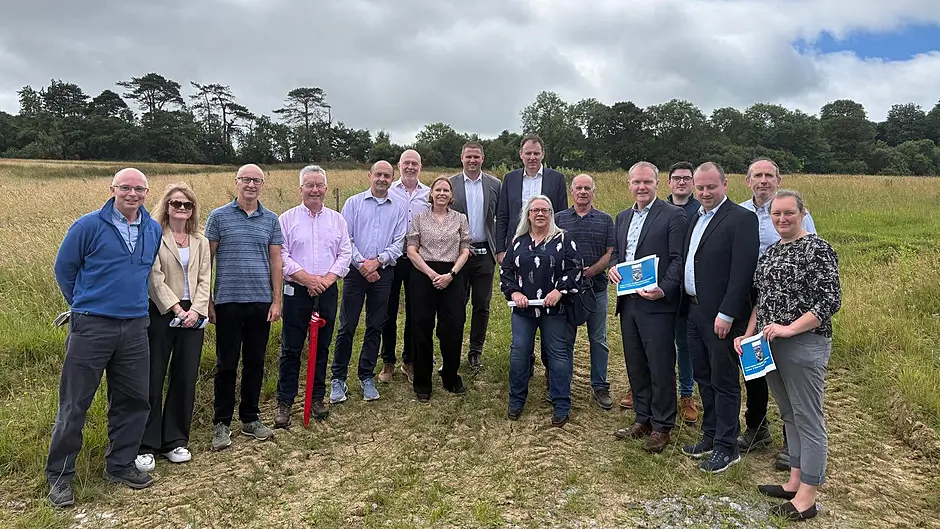
That wider vision received further support on July 3rd when Minister Charlie McConalogue TD, Minister of State at the Department of Culture, Communications and Sport, visited Kilnagleary to meet representatives from the Rugby and Athletics Partnership, the Community Sports Campus group, local organisations and public representatives.
As Minister of State with responsibility for sport, Minister McConalogue plays an important role in supporting the development of sporting facilities throughout the country, including national sports infrastructure investment programmes.
Seamus McGrath TD, who facilitated the Minister's visit and is an active member of the Community Sports Campus Committee, commented: ‘The Community Sports Campus has the potential to be a transformative project for Carrigaline and the wider area.’
Following continued engagement with the clubs, community organisations and local representatives, Cork County Council has now stepped in to assess the opportunity and work with the community on the next stage of development for Kilnagleary.
The wider Community Sports Campus vision has brought together sporting clubs, voluntary groups and organisations who all share a common challenge: growing participation and increasing demand, but limited access to suitable facilities.
Carrigaline Rugby Club and Carrigaline Basketball Club provide two clear examples of both the growing demand for sport in Carrigaline and the limitations created by the lack of appropriate facilities.
After several years without a senior men's side, Carrigaline Rugby Club successfully revived its adult men's team last season. Despite having no home ground of its own and being forced to play all of its home league fixtures at Virgin Media Park, the team enjoyed a highly successful season. The successful return of adult rugby demonstrates the continued appetite for the sport in Carrigaline and offers a glimpse of what could be achieved once the club finally has the opportunity to play on its own home ground at Kilnagleary.
Carrigaline Basketball Club faces similar challenges. The club has seen huge growth, with hundreds of young players now taking part across boys' and girls' teams. However, the club continues to depend on limited school hall availability, restricting training times and future growth. Even the club's senior men's team is forced to play its home fixtures at the Parochial Hall in Gurranabraher because of a lack of facilities in Carrigaline.
For the project, the next phase will involve refining the overall plans for the site, confirming the facilities required, developing a sustainable operating model and progressing the steps needed to secure future funding.