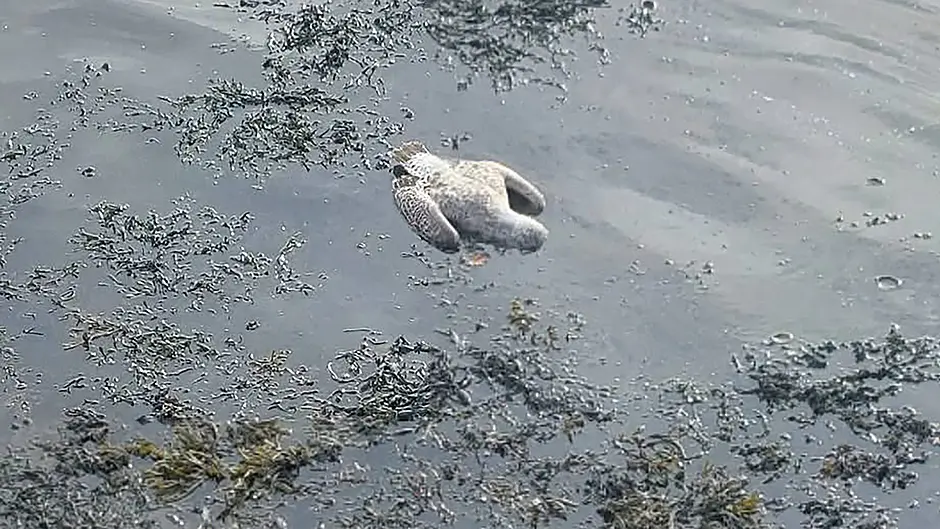
PEOPLE are being advised to exercise caution when they see dead birds in the sea, on the shore, or on land in West Cork, after a confirmed case of avian flu was reported at the Lough in Cork, and in dead geese at Fota wildlife park in Carrigtwohill earlier this week. A veterinarian at the park became concerned after three geese were found dead at the park, and the virus was confirmed on Wednesday morning.
Meanwhile, images of dead birds throughout West Cork are appearing with greater frequency on social media, which has led the Department of Agriculture to urge people to avoid coming into close contact with any dead or sick birds. The Department have confirmed that a total of 41 wild birds tested positive for the highly pathogenic avian influenza so far this year.
With sightings of dead birds on the rise in West Cork, the Department has renewed its appeal for all sick or dead birds to be reported via the department’s Avian Check App.
ADVERTISEMENT
While not all dead birds will be collected for testing, the Department said the reporting would provide important information for surveillance and risk assessment. The virus is very contagious amongst birds and can survive for several weeks in the environment. The faeces of infected birds contain a high level of virus and so the area can remain infective, irrespective of whether bird carcasses are removed from an area or not. It will be up to Cork County Council to display signs or warnings at any busy areas, if they feel it’s appropriate.
Niall Hatch of BirdWatch Ireland is also urging people to report sightings to the National Parks and Wildlife Service.
‘It is important that they are aware of it as well,’ said Niall, who believes the number of positive tests can be misleading because very few suspected cases are ever tested.
‘BirdWatch Ireland is concerned over the potential impact on sensitive wild bird populations,’ he added.
People are being asked not to touch sick or dead wild birds, and to keep pets away. Dogs should be kept on a leash where sick or dead wild birds are present.
Avian Influenza is a highly contagious viral disease affecting the respiratory, digestive and nervous system of many species of birds. It can also pose a threat to people and other animals in certain circumstances, but these types of infections are rare.
Experts say that 90% of infection comes directly from contact, and that presents a worry for commercial flocks. The virus can even be carried home on people’s shoes.