
‘When good things happen, I write them down.’ Such advice may sound almost too simple to matter, but might it be more significant than you think?
ADVERTISEMENT
The British newspaper The Guardian has a series called The One Change That Worked, where writers talk about the lifestyle change that had the biggest impact on their lives.
In a recent piece, one contributor mentioned she had always been a chronic worrier.
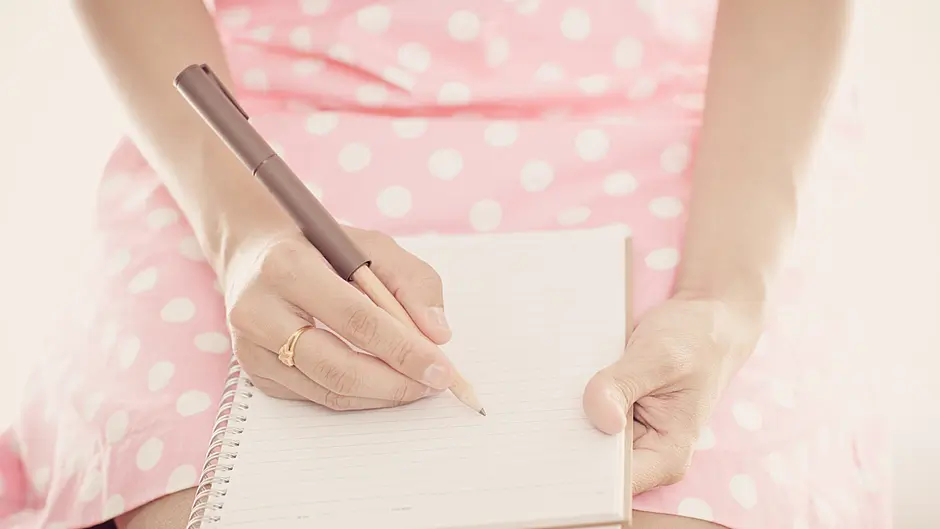
Through therapy, she came to see that she was prone to catastrophising. Various therapeutic recommendations helped, but the biggest change was when she got into the habit of writing down every good thing that happened to her. The habit began on a day where she found a £20 note on the ground. Not wanting to forget how fortunate she felt, she jotted it down in her notes app.
Later, walking up to a traffic crossing, the light turned green, as did the next two traffic lights. Noting this ‘funny Truman Show-esque moment’, she jotted it down. From that day on, she began listing every single good thing that happened, big or small. A train arriving just in time, a neighbour dropping round with cake, finding an umbrella in her bag on a rainy day – she kept adding to her notes app.
She didn’t try to feel grateful, or try to draw lessons from them. She simply wrote them down. Over time, her mindset shifted. The sense that things would go wrong – familiar to any worrier – began to loosen. There was more room for the idea that things might go just fine. What’s going on here is less about optimism than about attention. If you’re a worrier, your internal running list of ‘evidence’ tends to be skewed. Awkward moments, near-misses, things that didn’t work out – these are easier to notice and easier to remember. Over time, they start to look like the whole story, thus supporting an anxious mindset. Writing down good things ensures you gather evidence in the other direction. You’re not pretending things don’t go wrong, but you are making sure the bad things are not the only ones that get registered and remembered. Over time, that makes it harder for the mind to rely only on a one-sided version of
events. When you keep a rolling list of the good things, you build a personal dataset of small wins, benign interactions, and moments where things were easier than expected. On their own, these are trivial, but taken together, they start to carry weight.
Gratitude
The exercise is additionally useful in that it avoids the slightly heavy tone that can come with gratitude diaries. Gratitude diaries can be helpful, but for some people, ‘be grateful’ may feel like an instruction to feel something on demand. If the feeling isn’t there, the exercise can feel forced or insincere. This is different. It is closer to keeping a record. Something went well; you note it. Something didn’t go wrong; you include that too. No particular emotion is required. That small shift – from gratitude to recording facts – makes the whole thing more workable. Similarly, this is where positive affirmations often fall down. Statements like ‘things work out for me’ try to jump straight to the conclusion, but without supporting examples, they can feel thin. What the writer did was slower but more convincing. She assembled the examples first and became more optimistic over time. This isn’t because an optimistic mindset was imposed, but because it fit the record a little better. Finally, we all have an in-built negativity bias because the mind is built to prioritise threat and potential loss. Negative events loom large and can be sharper, more memorable, more likely to be revisited.
In contrast, positive moments are often brief and easily lost. This negativity bias was a useful survival mechanism in the past, but it can distort our outlook on life. Writing down the good stuff gives the positives a bit more staying power. The overall picture becomes more even. As the Guardian writer put it, the list ‘is real and evidence-based. It’s not part of a morning positivity ritual. It is as simple as: this happened and it was objectively good’. Is this a cure for worry? No. There will still be days when things go wrong, and periods when the mind slips back into old patterns.
However, there is a logic to making this a small, repeatable habit. It doesn’t ask you to think differently in any direct way. It simply changes what you notice and what you remember. From that, different expectations – expectations that are healthier, more balanced, more optimistic – can begin to emerge.
Linda Hamilton is a Kinsale-based cognitive behavioural therapist. If you would like to get in touch with her, call 086-3300807 For more information, go to www.kinsalecbt.com