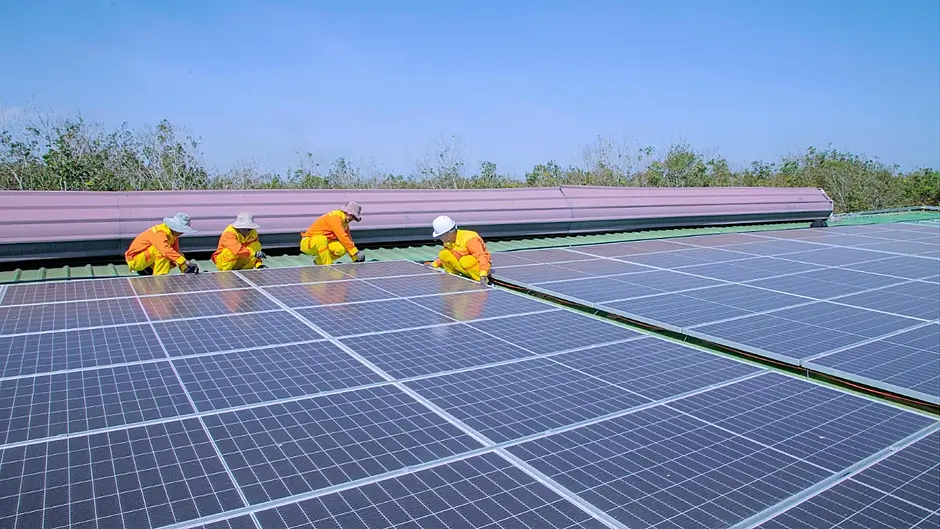
The sustainability trend, uncertain geopolitical situation, fuel supply disruption, and market volatility constantly question energy security.
Once seen as beneficial for the climate, renewable sources of energy are now positioned as strategic assets that strengthen both national and corporate energy resilience.
The continued operation of Ukraine renewable energy sources demonstrated how solar panels and wind turbines can support the energy system during a severe crisis.
ADVERTISEMENT
DTEK, the largest private investor in Ukraine's energy sector with a diversified portfolio, is one of the companies that assists in maintaining stability in the energy system.
It demonstrates how renewable sources can enhance stability, reduce dependence on imported fuels, and support long‑term energy security worldwide.
Reducing dependence on imported fuels
Many countries rely heavily on imported coal, gas, or oil. This leaves them vulnerable to price spikes and supply interruptions. Renewable energy changes this and allows countries to use their domestic resources, like sunlight, wind, water, and geothermal heat.
Given that those resources are available locally, they are not influenced by geopolitical situations like they are with fuels.
Stabilising long‑term energy costs
It is relatively easy to predict the cost of sources of renewable energy. Solar panels and wind turbines have no fuel expenses and minimal operating costs. This makes them far more stable than fossil‑fuel‑based generation.
As a result, those governments that diversify their systems with energy from solar panels and wind turbines can stabilize electricity prices and improve budget planning. This cost stability is a major reason why renewable sources are now central to long‑term energy strategies.
Improving system resilience through decentralisation
Cleaner energy often supports decentralised and distributed generation models. As solar panels and wind turbines are scattered all over the country, the role of large centralised plants and long transmission lines becomes less significant. In fact, long transmission lines can be vulnerable to natural disasters, cyber-attacks, or physical disruptions. That is when the system's resilience decreases.
Decentralised energy systems, on the contrary, have a set of benefits that make them popular, namely:
- reduced vulnerability to failures and disruptions;
- improved continuity of service for critical facilities;
- faster recovery times thanks to localized generation and storage;
- lower transmission losses due to the short distance between the generation means and the consumer.
As more countries modernise their grids, decentralisation is increasingly recognised as a core component of the resilient energy model in the country.
Supporting grid stability with modern technologies
Current renewable solutions use advanced digital tools that enhance grid stability. Technologies such as smart inverters, real‑time forecasting, automated controls, and grid‑scale storage help balance renewable output that constantly changes. Moreover, companies also obtain storage solutions like batteries or pumped hydro to have backup capacity during peak demand or low‑generation periods.
Renewable energy sources have become key to global energy security. Many countries choose to decrease their dependence on fuel resources through solar panels and wind turbines. This strategy offers them long-term benefits and allows them to make their energy system more stable and durable.