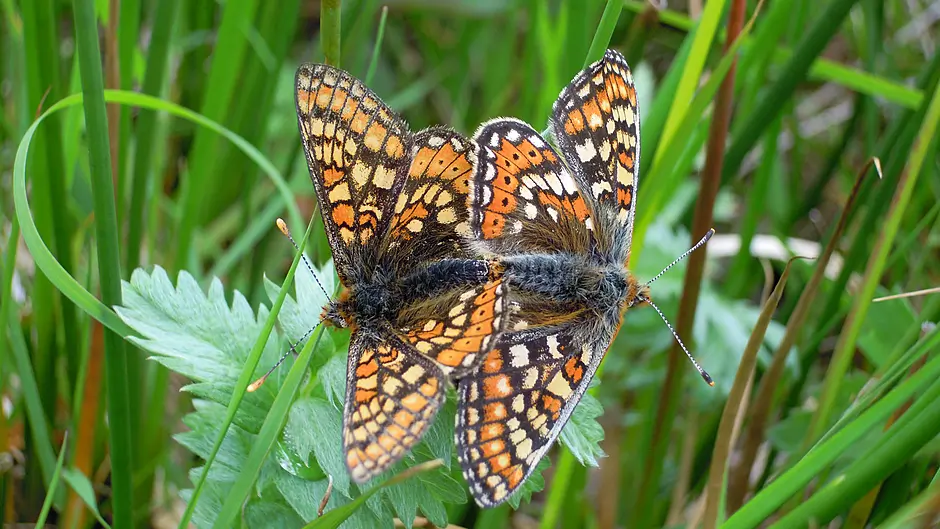
THE Marsh Fritillary butterfly is rare, but it can be found on Eoghan Daltun’s farm near Eyeries on the Beara Peninsula.
BY KATHRYN M CROWLEY
Butterflies aren’t just pretty things. They recycle nutrients, support crop pollination and offer natural pest control.
ADVERTISEMENT
Eoghan took over 73 acres of land in 2009. It had been left alone for many years.
Native sessile oak had populated a large section along with birch, alder, hawthorn and others.
Today, the temperate rainforest is a flourishing sanctuary for lesser horseshoe bats (extinct in many other parts of Europe), otters and pine martens.
People interested in biodiversity often request visits, but the Daltun family rewilding project is not open for public tours.
Nobody should be told what to do with their farm, Eoghan believes.
‘Choice is the key word. If farmers were given the option to rewild that would be fantastic for nature and for them because it’s giving them another choice. It’s not forcing anything on them. It has to be something that they could choose to do, or choose not to do,’ he said.
Eoghan used to keep sheep, but replaced them with Dexter cattle.
Some 1,600 Irish farms had sheep in 2020, according to census data.
Today, sheep farming still supports an estimated 34,000 families, but it is in decline.
‘We’re in a time of catastrophic nature loss,’ stated Eoghan.
‘Ireland is one of the worst impacted places on the planet for that. A lot of people have no idea because they just don’t see it, but it’s happening all around us. A field of perennial rye grass has no nature in it. Nor do our mountains that are grazed by sheep, but obviously for farmers their farms are their livelihood. So they can’t stop doing these things because that’s how they survive. So we have to give farmers other options that benefit nature.’
Government funding is available to support tree planting on land not previously under forest.
A State website mentions that financial aid intends to provide sustainable jobs, tackle climate change and increase biodiversity.
Does Eoghan see any benefits to afforestation?
‘I’m not really in favour of afforestation,’ he admittted.
‘I’m in favour of rewilding because rewilding is about letting the land decide the state it wants to be. If it wants to be forest, grand. If it wants to be bog, grand. If it wants to be something else, grand. That’s what I’m in favour of.
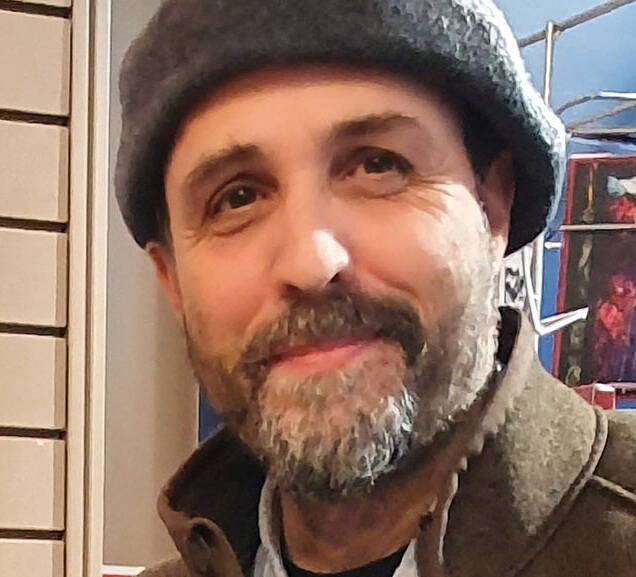 Eoghan Daltun.
‘I’m not in favour of us deciding this should all be forest, or this should all be something else. The other problem with afforestation is that it generally involves planting trees that very often are not the right trees. So it could be Sitka spruce, which is a disaster for nature, or some other kind of plantation. Natural regeneration is so much better because it only happens if it’s the right thing for that place. Nature knows.’
Back in 2009, productivity and Sitka’s ‘shorter payback on investment’ was lauded by organisations here. Fast forward 17 years, we know that large-scale monoculture displaces Irish flora and fauna. A booklet promoting sitka forestry -Sitka spruce, The Amazing Timber Tree- was distributed to every primary school in Ireland recently. It caused outrage.
Originally produced by a British construction company, it mainly focuses on one species and one forestry model instead of accurately depicting the roles of native woodland and commercial plantations. Trees grown for timberare sprayed with pesticides. When all the trees are harvested at once or within a short period, it leaves an open area of barren, vulnerable land.
On the topic of State funding for ecological initiatives, Eoghan elaborated: ‘It’s not going to cost the taxpayer one extra penny. There is absolutely nothing to lose. There really is no reason why that couldn’t be introduced. Giving farmers the choice of getting the same subsidies for rewilding as for farming, there is no down side to it. There’s no money to be made out of natural regeneration, that’s the problem. You can’t turn it into a racket.’
Education is key. Eoghan was hired to deliver talks in schools to young learners over the years. What would he like to see introduced within the education system? ‘I think nature and ecology should be a really important part of education for all children. And I don’t just mean another subject, I mean taking them out into nature.’
Last year, Dr Natalie O’Neill and Dr Karen Kerr outlined how Ireland is being driven by economic demands. They highlighted the erosion of botanical education which is occurring in tandem with the progression of STEM polices that foster links with industry and commercialisation. The research advocates for education to help us learn to co-exist with other species. It calls for biology education to shift to an eco-centred approach.