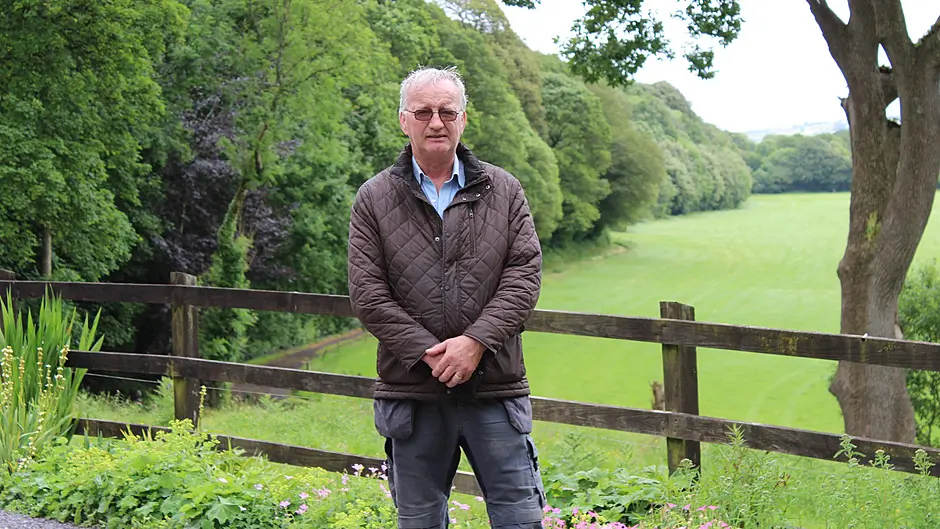
Retired farmer Roy Kingston, who is the current chair of the Better Farming for Water oversight committee in the Bandon Ilen and Lee Catchments, reflects on farming throughout the generations.
In 1919 Roy’s grandfather bought the farm at Laragh and moved from their home farm near Union Hall.
Being a cattle dealer, the more central location near Bandon meant he could walk cattle to and from fairs as far apart as Macroom, Skibbereen, and Carrigaline.
ADVERTISEMENT
Roy’s father Kenneth, who was the second youngest of seven, had his bags packed to go to Trinity college in 1944 when his father asked him to stay at home farming.
This farm was then taken over in turn by Roy in 1982, which he later passed to his son Scott in 2023.
‘Youth is the most valuable resource we have in the country,’ reflected Roy.
‘What they lack in wisdom, they more than make up for in enthusiasm, vision and energy … Farming must be that the older person is comfortable and feels respected for experience and the younger person can have the freedom to make their own choices and make a good return for their efforts.’
One of Roy’s earliest and most precious memories was of the Bandon River shimmering about a hundred meters away from him with a salmon run.
A lot has changed environmentally since then both on land and out at sea where the salmon spend a lot of their life cycle.
Back then every fisherman would have come home with salmon. Nowadays they must put their catch back in to help build the stocks.
Even though Roy doesn’t expect to see this abundance again he was delighted to see shoals of six-inch trout recently as well as dragon fly which is another good indicator of biodiversity.
‘Nature has a huge capacity to recover,’ he observed, ‘we can be proactive when it comes to nature and biodiversity, deciding on an informed course of action to have positive consequences in the natural environment.’
The farm has seen many changes over the years, mixed farming changed to intensive winter finishing of cattle together with specialised crop production including a lot of sugar beet as a break crop which was later followed by oilseed rape for biodiesel production when the beet factory closed in 2005.
The beef enterprise also changed to keeping similar cattle numbers all year round together with a reduced acreage of sugar beet for cattle feed. Vegetables including onions, French beans and carrots were also grown at field scale in recent decades.
However, it was difficult to meet the supermarket specification consistently. In the 1990’s the winter cereals were replaced by spring cereals to reduce soil erosion on the farms flood plains and increase profitability.
Practices like grazing on beet tops in situ and outwintering large numbers of livestock ceased. Ploughing for reseeding has been replaced by disk harrowing where FYM didn’t need to be ploughed in. More recently since the closed period regulations were introduced, it was found that slurry spread during the growing season saved a lot of money on bought in fertilizer.
The decision to go dairy farming was made in 2016. ‘It became apparent gradually through continuing education and a strong interest that care of the environment particularly the soil and water quality was becoming increasingly important,’ Roy says.
The awareness of the need for change over time has helped future-proof the business. Since changing to dairying, measures have been taken to benefit water quality including fencing further out from watercourses and putting in more water troughs in the middle of fields, allowing vegetation to grow on the banks to soak up the excess nutrients that may run off the fields.
Using modern granular fertilizer spreaders and LESS slurry spreading equipment and watching the weather forecast before applying have become standard practice. Catching silt from the grey water leaving the farmyard in two earthen bank sediment traps also helps clean the water leaving the farmyard.
The farm currently has 24% space for nature according to the DAFM, and Roy continues to plant 20 – 30 trees each year as he has done for many years.
They are delighted to be supplying Carbery who he considers to be tops about sustainability, encouraging farmers to be as good as they can be while maximising profitability.
Roy also mentions four pillars of sustainability as being nature, economics, society and personal wellbeing, noting: ‘Carbery takes each one seriously and are actively ensuring their suppliers benefit from being serious about sustainability in the broadest sense of the word.’
Nowadays Roy is at the stage of giving more back to the wider community in many ways, feeling honoured to chair the Better farming for Water oversight committee, saying ‘I had a great interest in the river and what it offered all my life. I’m more educated and make more informed choices now being more aware of the consequences of our actions in the natural environment.’