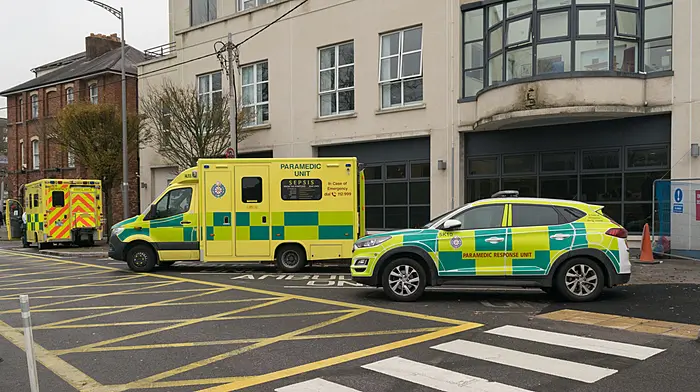
It is said that hospitals are where someone is having their worst day, someone their best, someone their last, and someone their first.
ADVERTISEMENT
I came to Cork in 1996 and walked through the doors of CUH in 1998. Over the last 27 years, I’ve had the privilege of meeting many of the 5,000 people who work there.
Among those 5,000 staff, many have been doing what they do for more than 20 years. When you add it all up, that’s more than 100,000 years of experience under one roof. Across our hospitals there is very little that comes through the doors that someone hasn’t seen before.
We’ve become very good at treating cancer. Diagnosing it, operating on it, managing it, and increasingly, curing it. That’s the good news. The challenge is what’s coming next.
Each year, around 40,000 people in Ireland are diagnosed with cancer. With a rising and aging population, by 2045 that number may double. In the space of one generation, we’ll need to double the footprint of our cancer services just to stand still.
And that’s why we need to stop waiting for problems and start offering solutions.
In the developed world, most health systems spend only about 4 to 6% of their budgets on prevention. In Ireland, total health spending is around €6,000 per person per year, of which about €200/€250 goes toward preventive care. If prevention is better than cure, why are we spending roughly 20 times more on treating disease than on trying to prevent it?
It’s not because we don’t care. It’s because our healthcare system, like most in the developed world, is built around responding to illness.
It’s driven by developments in industry, and at one level, that’s good. It gives us incredible treatments, many of which change or save lives. But only a small fraction of pharmaceutical research and development goes into prevention. That’s because prevention doesn’t pay.
You can’t sell a cure for a disease that doesn’t happen. So if we want prevention to be a priority, we need countries, and communities, to step in and say, ‘This matters to us. Fund it.’
While we push for better investment in prevention, there’s still something powerful we can do right now: give people the knowledge to protect themselves. As we said in the first article, prevention strategies can’t stop all cancers. There are some tickets in the inverse lottery that is cancer that we are born with. But when it comes down to it, prevention does matter: it’s the armour you carry into battle.
In the early 1300s, Scotland was fighting for its independence. One of the most critical figures in that struggle was Sir James Douglas, known as ‘The Good Sir James.’ Although sometimes controversial in his actions, as a loyal companion of Robert the Bruce, Douglas fought in some of the most brutal battles of the Wars of Scottish Independence.
During the pivotal Battle of Bannockburn in 1314, it is said that Douglas fought in the thick of the melee wearing traditional maille (chainmail) with reinforcing steel plates.
This was no ceremonial armour, it was his second skin. Struck multiple times, sometimes seriously, his armour absorbed the worst of the attacks.
Earlier in the war, during a skirmish at Douglas Castle, it is thought that he was badly wounded, but again, his armour blunted what might otherwise have been a fatal blow.
Tradition has it that the 14th-century chronicler John Barbour described Douglas as, ‘Oft sore hurt, but never felled.’
Douglas didn’t walk away from battle untouched. He walked away because his protection allowed him to.
And he didn’t just survive, he helped lead a movement that achieved Scotland’s independence, changed its future, and became a symbol of courage, resilience, and loyalty.
He remains one of Scotland’s most admired historical figures.
Prevention is our modern armour. It doesn’t stop every blow. It doesn’t guarantee that you’ll avoid cancer. But it can blunt the impact, reduce the harm, and give you a much better chance of survival.
Just like the armour that kept Douglas in the fight, today’s prevention strategies, vaccination, screening, healthier choices, won’t make you invincible. But they can be the difference between a fatal blow and a survivable wound. And sometimes, that’s all it takes to change a life, or a country.
To finish, I want to leave you with a simple tool, ‘Douglas’s armour’. We call it BE CLEAR, and this is your armour. A reminder of the most powerful choices you can make, starting today.
B – Be active
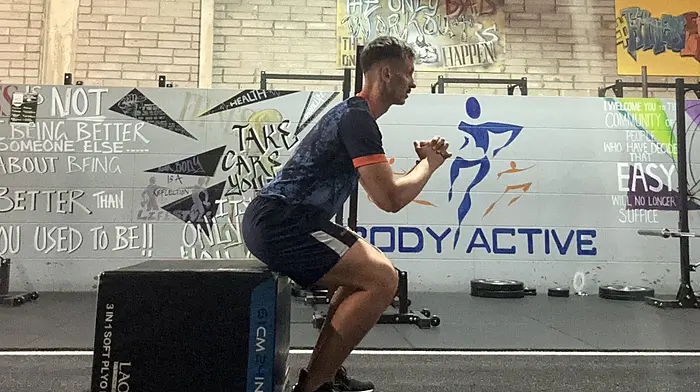
Just 30 minutes a day of walking, cycling, or anything that gets your heart going can reduce your cancer risk by 7-13%, and your risk of dying from heart disease by 29%.
E – Eat healthy
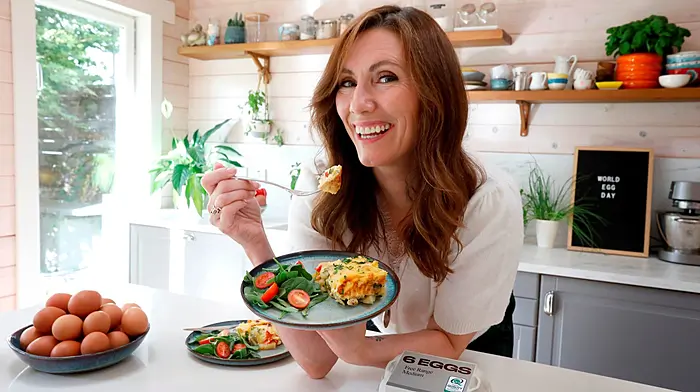
Eating five portions of fruit and veg a day lowers cancer risk by up to 9%. Wholegrains help too. Regular wholegrains reduces bowel cancer risk by up to 17%. Even swapping fish for red meat once a week can cut your risk of cancer.
C – Cut smoking
Smoking makes your risk of cancer over ten times higher. It’s also expensive, costing around €33,000 over five years.
L – Limit alcohol
Alcohol is linked to between 4-5% of cancers, including breast, bowel, liver and mouth.
E – Engage in screening
Screening can prevent cancer by finding pre-cancerous growths, but it also can catch it early. That’s when it’s easiest to treat, and most likely to be cured.
A – Avoid sunbeds
Repeated bad sunburns before age 20 can increase your melanoma risk by up to 80%. Using sunbeds under 35 can increase your risk by 75%. Always use at least factor 30 sunscreen (SPF against UVB) with four-star UVA protection.
R – Radon test your home
Radon gas causes about 350 lung cancers every year in Ireland. A test costs around €50. Some homes have been found with radon levels 185 times the safe limit.
That’s it. Twelve articles later, we’ve looked at everything from factory floors inside your cells to ancient surgery in Borneo. We’ve talked about vaccines, viruses, diets, DNA, and the dangers of tanning beds.
But in the end, it comes down to this: know the facts, own your risk, and decide for yourself.
Share what you’ve learned. Pass it on. Small changes today protect lives tomorrow, yours, and the people you love.
Remember that like Douglas, we may be oft sore hurt, but we need not be felled.