IS the Government Implementation Plan a manifesto of utopian buzzwords or a ‘to-do’ list that will be seen as genuinely meaningful in years to come? Time will tell.
By Kathryn M Crowley
The ambitious actions —79 in total— aim to empower councillors, increase financial autonomy, and reshape municipal councils. The plan was published by The Local Democracy Taskforce, which is made up of unelected civil servants, management executives, and independent experts. Led by Minister James Browne and Minister of State John Cummins, the group considered four key pillars for 2026–2029; structure, finance, functions and governance/ accountability.
ADVERTISEMENT
The 79 measures are intended to enhance accountability and give more decision-making powers at local level before the next local elections. Elections are held every five years, and voters choose councillors to represent them at local level.
In 2014, local authorities were cut from 114 to 31, with all 80 town councils abolished. All second-tier town councils were dissolved, and municipal districts were set up. The thinking at the time was that some work was being duplicated, and one aim was to save €400m, but this was not achieved.
Today the country’s 31 local authorities are responsible for housing, roads, recreation, amenities, planning, libraries, environmental protection and fire services. Every county, city, and city and county council is divided into local electoral areas. Each one has a certain number of councillors to elect.
According to the 43-page report, eight changes to legislation are required to enable local government to be more responsive and engaged with communities.
Public attitudes
A prevailing sense of apathy has been the reaction from most voters according to anecdotal evidence. One older voter mentioned that it is time for something different “after a few hundred years of Fianna Fáil and Fine Gael failure.” Nationwide, many people have lost hope due to what they perceive to be government incompetence.
Half of the Irish public (49.9%) didn’t vote for councillors in 2019, but things improved post-pandemic. Theresa Reidy, a politics professor at University College Cork, has noted that the number of people who voted in 2024 was higher than in 2020.
The Government Implementation Plan includes notes on:
- empowering councillors to give elected members a stronger voice in local priorities
- faster response requirements from executives, and better access to information
- strengthening municipal bodies with dedicated local budgets
- establishing a new National and Local Government Forum to improve dialogue between state departments and local authoritie improving transparency and digital tools by 2028
Debates continue about a proposed tourism tax. It would make Ireland a less attractive destination, according to The Irish Hotels Federation. Nothing has been decided, and a tax cannot be introduced without new legislation.
Communication
Unclear boundaries between departments has led to diffused responsibility. Page 28 of the report calls for training to improve communication and a citizen-focused plan to make information accessible to all. This is crucial, especially for those who live
with a disability.
In recent years, people reported in customer satisfactions surveys how frustrated they felt when unable to reach local councillors by phone. Some people did not receive a reply to their email for months.
While seeking comments for this piece, I found that the quality of care around communication varied. Just one councillor out of nine had bothered to set up an auto-reply on her email informing people that she was on holidays.
The worst scenario I encountered was the use of an AI phone answering service by one politician. A robotic voice told me to state my reason for getting in touch. It did not tell me that I was through to the right number. At no point did the AI mention the name of the person whom I was calling, and yet I was expected to share information.
It would be more respectful to the public if every councillor recorded a personal message on their phone, as well as making their holiday periods and office hours clear across all channels.
Disability
Among the eight key objectives in the Government Implementation Plan is “Promoting greater representation and inclusivity in local government.” One fifth (21%) of County Cork’s population, which is over 75,600 people, live with at least one disability.
The late Cllr Patrick Gerard Murphy, a wheelchair user, served as Mayor of the County of Cork with distinction from 2018-2019, and represented his Beara constituents for decades at council level, but overall, disabled people have an extremely low rate of participation as elected officials in Ireland.
Researchers have identified many systemic barriers facing disabled candidates who wish to participate in political life, such as financial costs and difficulty canvassing.
Between €11,500 and €15,350 is spent local election campaign European regulations came into force in 2020, and public sector bodies in Ireland must now ensure their websites and mobile applications are accessible to everybody, including people with disabilities.
Unfortunately, DCU found significant issues needing to be addressed in nearly all local authority websites. Many of the issues are neither difficult to implement nor costly. Websites contain errors, as well as browser incompatibility, and are non-compliant with accessibility, technical web standards and usability guidelines.
Between 2021 and late 2023, Cork County Council spent nearly €12m on overall IT services, equipment, and support, and yet Cork County Council’s Online Forms and user interface are not up to standard yet. An access officer has been appointed (see contact details below).
Alan Coleman is an Independent county councillor representing the Bandon-Kinsale Municipal District. He has been in politics for over 35 years, and is no fan of the current government.
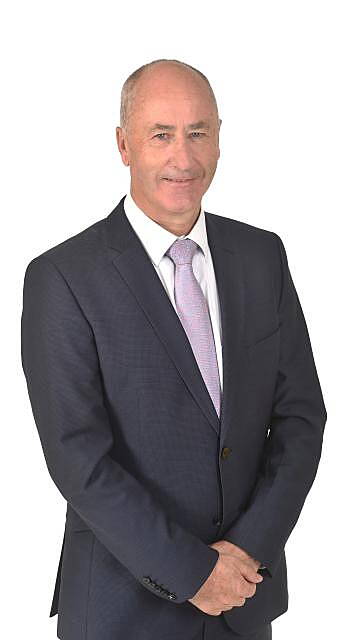
“They’ve farmed out things to agencies and there needs to be accountability. They don’t have elected councillor members, these agencies. They answer to the directives. Look at Uisce Éireann! But that’s all. They should be forced to meet with local authorities and government agencies, ” he says.
Isn’t everything being privatised? “Not really”, Alan replies. “It’s agencies. That’s kind of different. They take politics out of services. The Taoiseach has perfected the art of saying ‘we should do this, and the agency should do that. It’s a pity we don’t have it.’ It’s putting a firewall in place.” he elaborates.
To put Alan’s annoyance in context, Ireland now has 109 specialised state agencies to manage public services, regulation, and policy.
He continued: “If an agency fails to deliver services, the political establishment, ministers and the Taoiseach say with a straight face, it’s awful they’re not being provided. As if the agency is out there in the ether. Nothing to do with us. Nothing to see here....”
In July, Cllr Coleman met with TFI (Transport for Ireland).
Transport
A devolution of transport to local government is being considered. The demand for public transport needs more than infrastructure investment. While expanding capacity and improving infrastructure are important, demand is huge. A workplace parking levy may be introduced. The thinking behind it is that higher costs would reduce people’s use of private cars to commute, which in turn could generate funding for sustainable transport initiatives.
Other ideas include exploring insurance models that reward lower annual mileage, and the introduction of congestion charges in urban areas that experience significant congestion pressure. Again, no plans are concrete. All topics mentioned here, whether you consider them positive or negative, are only at the discussion stage.
Deputy County Mayor Cllr Finbarr Harrington (Ind) sees some merit in the proposed reforms. “Like most plans and supports there are certain good things in it,” he said. “Giving power back to local parties would be good. It’s been eroded in recent years. The sooner it’s back the better.
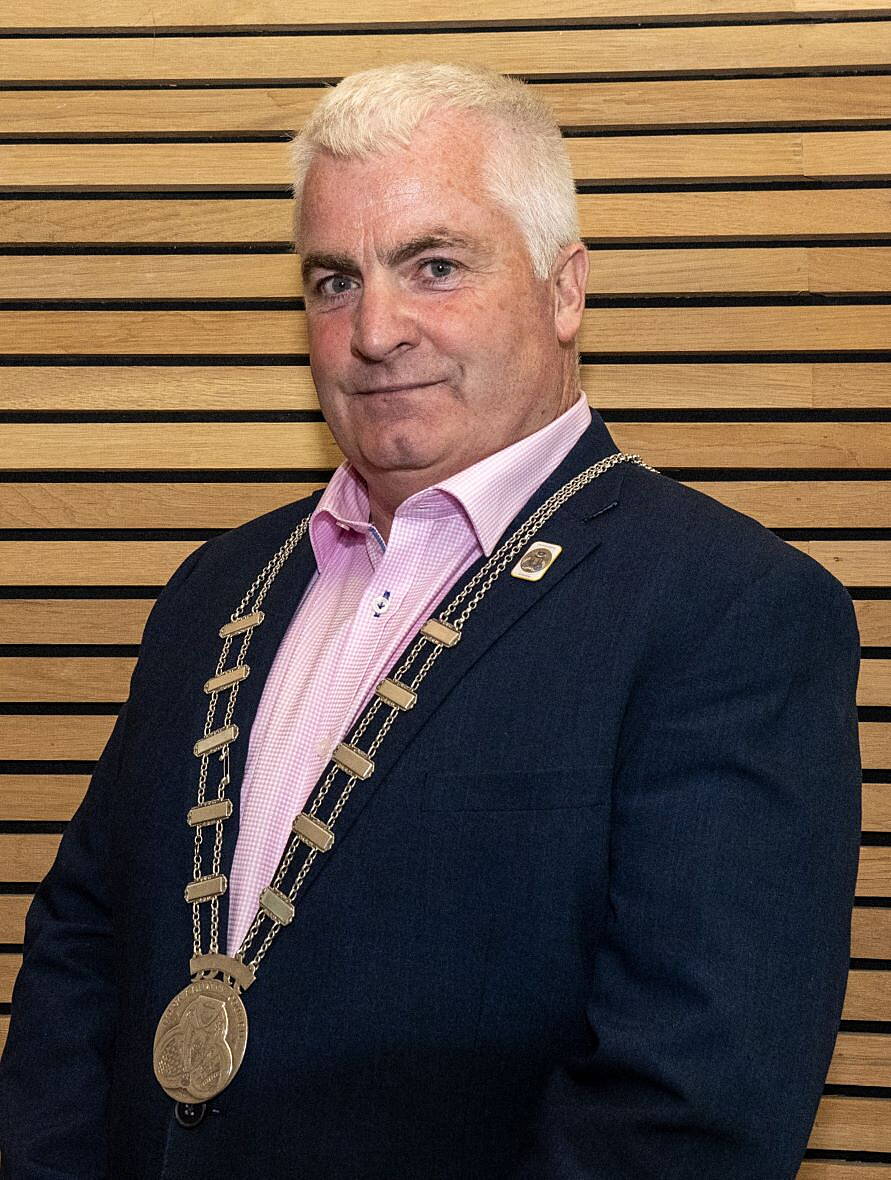
“One thing that stands out is improving links between the local and national. The likes of TII and Uisce Éireann, all these different government departments make a lot of work for us. If they do what they say they’re planning to do, and improve ties, that will be good. Inclusion is important too, and increasing the public’s understanding of what we do: that will be good.
“We can find it frustrating whether it’s planning permission or water utility.
For example a young couple could be applying for planning permission and the site is adjoining the N71.
“We’ve to deal with staff nationally now not locally, and it’s a lot more work. Heritage areas too. It’s the same. National bodies, Parks and Wildlife, all these different reports it makes it more difficult both for the people making the applications and for us.”
Cllr John Collins (Ind Ire) said: “I thought it was very short-sighted of them to abandon the old system. Now there’s talk of bringing them back, and that’s a good idea. I was in a meeting in Ballinascarthy at 9.30pm about walkways and greenways, and didn’t finish work till after 11pm. We try to solve problems for people. It’s a full time job on a part time wage.
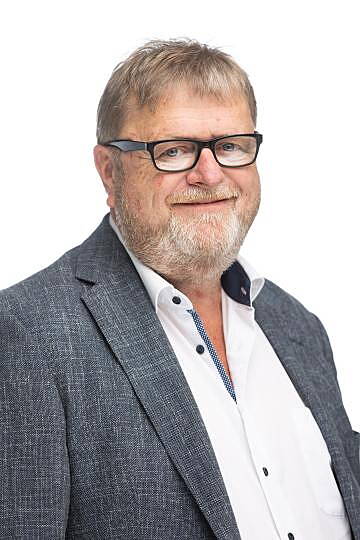
“I’ve been on the phone to people for the last three to four hours trying to sort out stuff for them. It would be better if just one person could bring a problem.”
There has never been a better time for action, and the hunger for political change in Ireland is palpable.
Trust and accountability
At the core of it all, the relationship between the governing elite and the people of Ireland hinges on trust. Corruption is an issue locally and globally In 1999 for example, the whole European Commission was forced to resign over charges of fraud, cronyism and mismanagement.
A spokesperson for Cork County Council told The Southern Star: “Cork County Council welcomes the publication of the Local Democracy Taskforce Report. The council will work over the coming months on the implication measures as will be set out by the National Implementation Working Group.”
Funded by the Local Democracy Reporting Scheme.
It’s a start but a lot left to do
AS an expert on local government and a senior lecturer at the Institute of Public Administration on Public Management, Dr Mark Callanan knows better than most how slowly things change in Ireland.
He has published in numerous international peer-reviewed journals. He also teaches Public Management, Economic Science in Policy Analysis, and Governance.
Mark is convinced that the whole process will be slow-moving. “The government did not publish this in March because they wanted to make plans. To operate under task force reporting and set proposals, government set out principles, and an implementation plan that eventually will become legislation.” he said.
There is a lot to do.
“The big deadline is the next local election in 2029 which is required by constitutional law. They have that national juncture so if stuff is not on the statute book by time the elections roll around...
“I wouldn’t suggest that I’m an expert on West Cork. In the past there were town councils, now we could have municipal councils. The main thrust of the conversation is to have more decision making happening locally that would be appropriate to say, Skibbereen, or Clonakilty.
“Municipal level responsibilities would include financial decision making as well as their own budgetary powers. Another thing they’re looking at is rural transport. It may devolve. It may revert back to local authorities.”
No doubt rural transport will be more important in the future, considering Ireland has an ageing population? “Yes, and to reduce reliance on cars,” Mark added.
Do another topics stand out? “I find it interesting that the report is silent on the issue of a locally-elected mayor.” Mark said, and went on to mention John Moran, the mayor of Limerick who was elected on June 11, 2024.
“Directly elected mayors are not yet established in Ireland. The model has been rolled out in countries such as France, the UK, and the United States, albeit with differing levels of satisfaction.”
Mark continued: “Limerick’s scenario is not the first attempt at establishing elected mayors. In 2019, pilot votes were held in Cork, Limerick, and Waterford. Only Limerick voted in favour.
“Additionally, the Local Government Act 2001 included a provision for the election of mayors, starting with the 2004 local elections, but this was repealed in 2003.”