On a recent visit to Fenit in Co. Kerry, I joined a marine biodiversity recording expedition surveying a stretch of rocky shore.

It sounds very formal, but in reality we spent five indulgent hours exploring the intertidal zone, the area between high and low tide, marvelling at and identifying as much sea life as we could.
ADVERTISEMENT
Although the site was in Kerry, I kept thinking that anything we found could just as easily turn up in West Cork and was worth watching for in future.
Sea slugs
The highlight was finding three different species of sea slug.
Officially known as nudibranchs, these curious creatures are the marine counterparts of our familiar land slugs, though far more ornate and colourful.
Some debate their common name, as they possess shells in their juvenile stages, which they later lose, but whether they are called sea slugs or snails, they remain a fascinating group.
They occur worldwide, from tropical waters to the Arctic. In Ireland, they range from a few millimetres in length to around 20 centimetres.
There is still much to learn about them. Around three thousand species have been described globally, though scientists suggest there may be up to ten thousand.
In Irish waters, the exact number is uncertain due to a lack of targeted surveys, but it is likely to exceed one hundred species.
Special strategies
Unlike their terrestrial relatives, sea slugs must survive underwater.
They do so using gills that absorb oxygen directly from the surrounding water.
These gills may form a cluster on the body surface or extend along the back as projections known as cerata. These structures often sway gently with the movement of the water, adding to their delicate appearance.
Sea slugs are favourites among divers and rock poolers for their striking colours and intricate forms.
Many display vivid shades of orange, red, pink, blue, purple, and even fluorescent-yellow.
These colours are not merely decorative; they act as a warning to deter predators because brightly coloured creatures often signal toxicity.
This warning is often genuine. Many sea slug species feed on stinging animals such as sea anemones and jellyfish and repurpose their stinging cells, known as nematocysts, for their own defence.
Remarkably, they avoid harm while feeding thanks to a protective lining in their digestive tract.
Like their terrestrial relatives, sea slugs possess tentacles but, unlike them, have additional specialised sensory organs called rhinophores.
These are projections which resemble bunny ears at the front of the head.
They detect chemicals and changes in the water and, among other functions, help to locate food and potential mates.
Solar powered
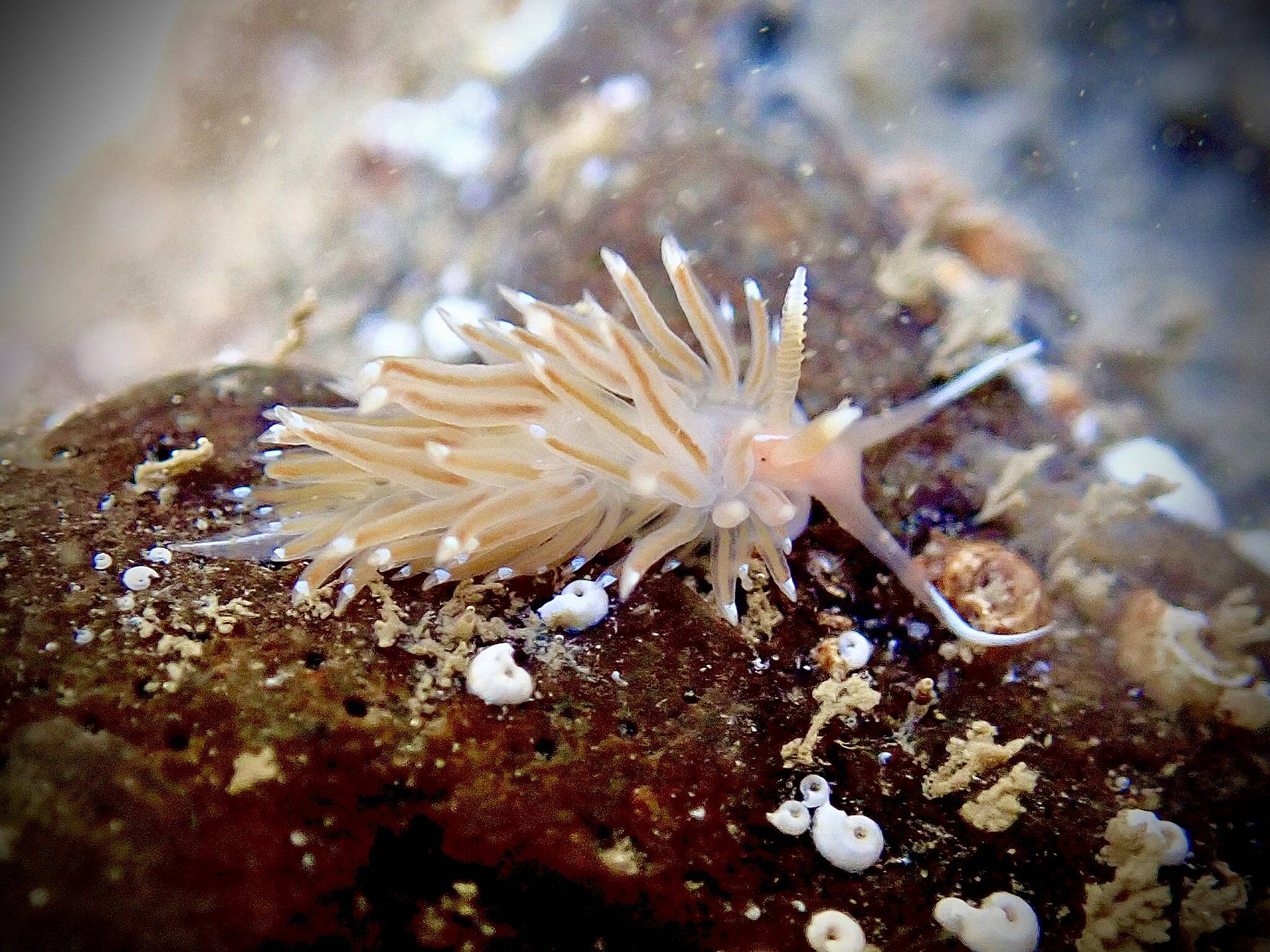
One particularly remarkable species is the solar powered sea slug, Elysia viridis.
While not officially a nudibranch, they are classed as a sap-sucking sea slug and for all intents and purposes can be lumped in.
They may appear dark green, red, or brown and grow to about five centimetres.
Most Irish records come from the west coast, including the Sheep’s Head and Beara peninsulas.
While most nudibranch sea slugs are carnivorous, feeding on sponges, sea anemones, jellyfish, and even one another, this species is different.
They feed on seaweed, but in a highly specialised way.
They pierce the seaweed and extract chloroplasts, the structures responsible for photosynthesis, keeping them intact.
These are then incorporated into their own tissues, allowing them to produce energy from sunlight.
It is a similar concept to recycling stinging cells, but this process, using the photosynthetic cells of algae, is known as kleptoplasty.
Their colour, logically, reflects the seaweed they consume, whether green, red, or brown.
The chloroplasts spread throughout their bodies, appearing like tiny glistening points when the light catches them.
They can also flatten their bodies into a leaf-like shape, increasing the surface area for photosynthesis while blending in with the seaweed on which they feed.
Coastal challenge
This summer, why not set yourself the challenge of finding a sea slug. Look beneath rocks, among seaweed, or watch carefully in rockpools for movement across submerged surfaces.
If you are lucky enough to spot one, take a photograph and share your record with the National Biodiversity Data Centre’s Explore Your Shore scheme.
There is even the chance of finding something new and claiming a ‘first’.
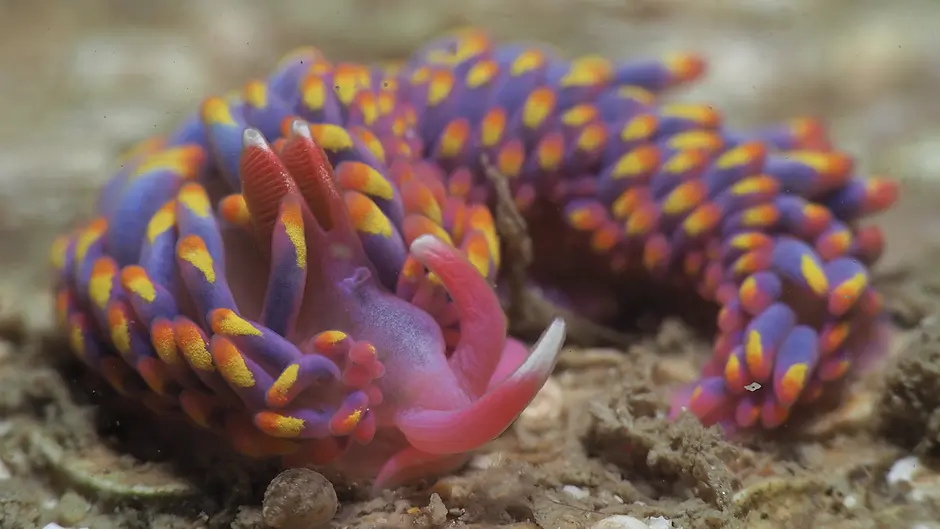
One species to watch for is the rainbow sea slug, Babakina anadoni, widely regarded as one of the most striking.
This species has been expanding northwards from Spain, Portugal, and France and was first recorded in southwest Britain in 2022.
The southwest coast of Ireland may well be next.
Photographing sea slugs can be challenging. It is best to take images through the water, as lifting them out causes their delicate structures to collapse.
If necessary, they can be moved briefly into a shallow container of seawater.
If attached to seaweed, a small section can be placed in the container, or they may be gently coaxed free using water. As they attach themselves firmly with a muscular foot, pulling should be avoided to prevent damage.
Give it a try. You may be surprised by what you find.
Even if a sea slug proves elusive, the shore is full of wonders.
Like the recent arrival of by-the-wind sailors along our coasts, there is always something waiting to catch the eye.